Designing for Recyclability: How to Align Your Products with APR and RecyClass Guidelines
Author : Todd Beddard | Published On : 24 Sep 2026
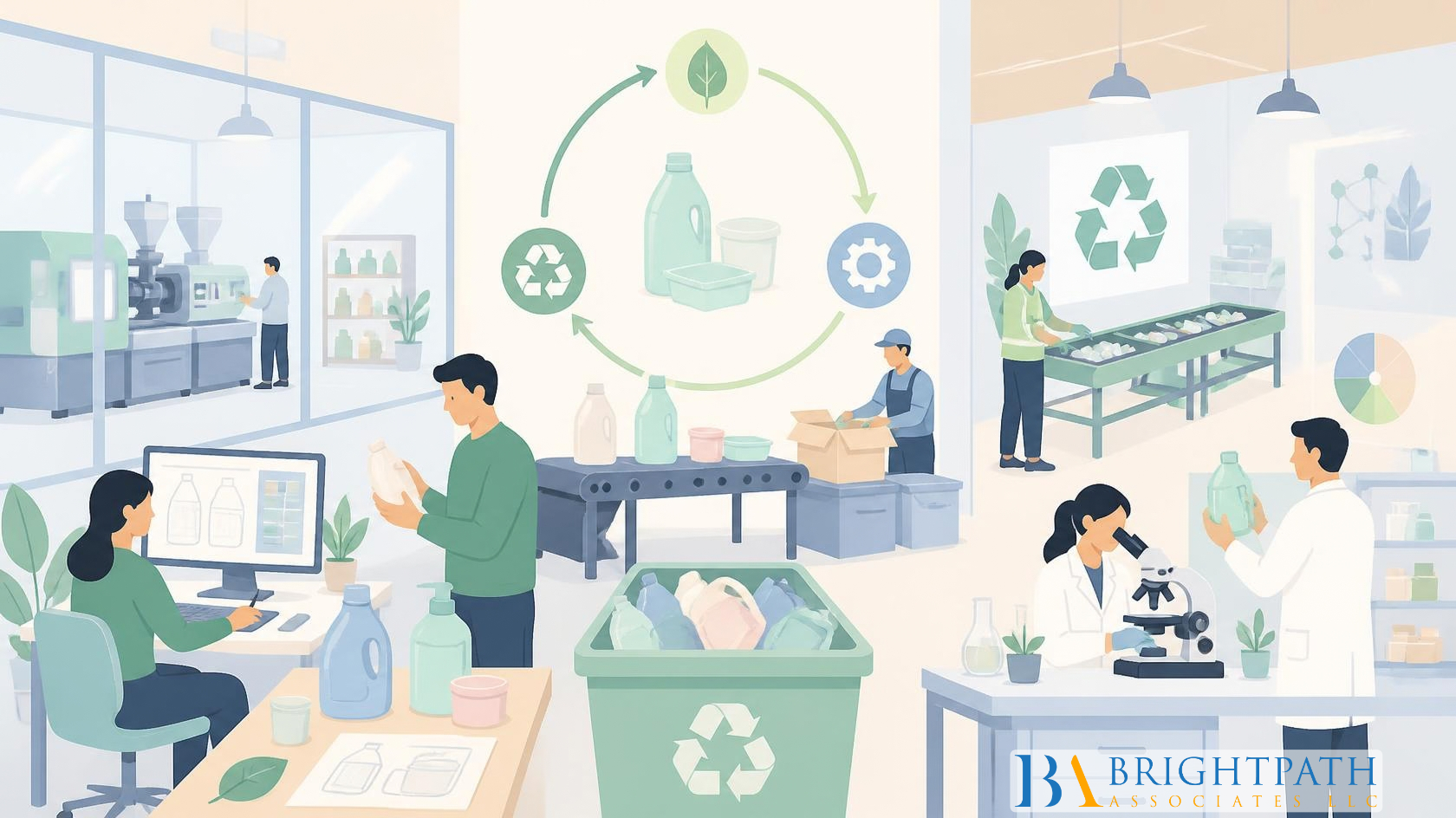
Recyclability is no longer a consideration reserved for the final stage of packaging development. For manufacturers, brand owners, and packaging companies, it is increasingly becoming a design requirement that must be considered from the beginning of the product-development process.
A package may look recyclable on paper, but its actual performance within a recycling system depends on much more than the primary material. Closures, labels, adhesives, pigments, additives, coatings, material combinations, and package construction can all influence whether a product can move efficiently through collection, sorting, and recycling processes.
This is why design-for-recyclability principles are becoming increasingly important across the packaging and container sector. Guidelines developed by organizations such as the Association of Plastic Recyclers (APR) and RecyClass provide manufacturers with frameworks for evaluating packaging choices and understanding how those choices interact with existing recycling infrastructure.
For companies operating in the modern Packaging and Containers Industry, these considerations are becoming connected not only to sustainability objectives but also to product development, regulatory preparedness, supply-chain strategy, and leadership decisions.
Recyclability Begins at the Design Stage
One of the biggest misconceptions about recycling is that recyclability can simply be added to a package after the product has already been designed. In reality, many important decisions are made much earlier.
A packaging development team determines the material, shape, thickness, color, label format, closure, adhesive, barrier properties, and manufacturing process. Each decision can influence the package's compatibility with recycling systems.
Designing for recyclability means evaluating these choices together rather than treating them as independent components. For example, selecting a recyclable polymer for the primary container does not automatically guarantee that the entire package will perform well in a recycling stream. A problematic label material or incompatible closure could affect sorting or processing.
What APR and RecyClass Bring to the Conversation
APR and RecyClass provide valuable reference points for companies attempting to understand packaging compatibility with recycling processes. While their approaches and specific guidance can vary by material and application, both emphasize the importance of considering how packaging components behave within real recycling environments.
How will the package be identified by sorting equipment? How will different components behave during processing? Could a label, adhesive, colorant, or additive interfere with recycling? Does the package fit within established design recommendations?
These questions can help product-development teams identify potential problems before they become expensive manufacturing or market issues.
Material Selection Is Only the Beginning
Material selection remains fundamental to recyclable packaging design, but it should not be viewed in isolation. Packaging engineers increasingly need to consider the interaction between multiple materials and components. A package might combine a container, cap, label, adhesive, ink, coating, and barrier layer.
Each component may serve an important functional purpose. However, combining materials without considering their end-of-life implications can create challenges for recyclers. This creates a difficult engineering balance.
Packaging must protect products, maintain shelf life, meet performance requirements, remain attractive to consumers, control costs, and increasingly demonstrate compatibility with recycling objectives. Successful design therefore requires collaboration between packaging engineers, material scientists, manufacturing teams, sustainability specialists, procurement professionals, and commercial leaders.
Recyclability Can Become a Product Innovation Opportunity
Designing for recyclability should not necessarily be viewed as a limitation on innovation. Instead, it can create opportunities to rethink packaging architecture. That approach can turn sustainability from a compliance exercise into a source of product differentiation.
Manufacturers can explore simplified structures, compatible material combinations, improved labeling systems, reduced component complexity, and designs that work more effectively within existing recycling infrastructure.
The most successful innovations may come from treating recyclability as a design parameter alongside cost, performance, aesthetics, and manufacturability.
The Strategic Question for Packaging Leaders
The packaging industry is entering an environment where product design, sustainability, technology, and manufacturing are increasingly interconnected.
For executives, the important question is no longer simply whether their packaging can be described as recyclable. A more meaningful question is whether the organization is designing packaging with the entire recycling journey in mind.
That requires technical knowledge, reliable data, collaboration across departments, and leadership capable of connecting sustainability ambitions with practical manufacturing execution. The broader principles behind this transition are explored in BrightPath Associates' Designing for Recyclability: How to Align Your Products With APR and RecyClass Guidelines.
As packaging expectations continue to evolve, companies that integrate recyclability into the earliest stages of product development will need skilled leaders who can bridge engineering, sustainability, manufacturing, and business strategy.
