Dental Implant Treatment in Pune: A Practical Guide to Replacing Missing Teeth
Author : Dr. ONKAR JABADE | Published On : 13 Aug 2026
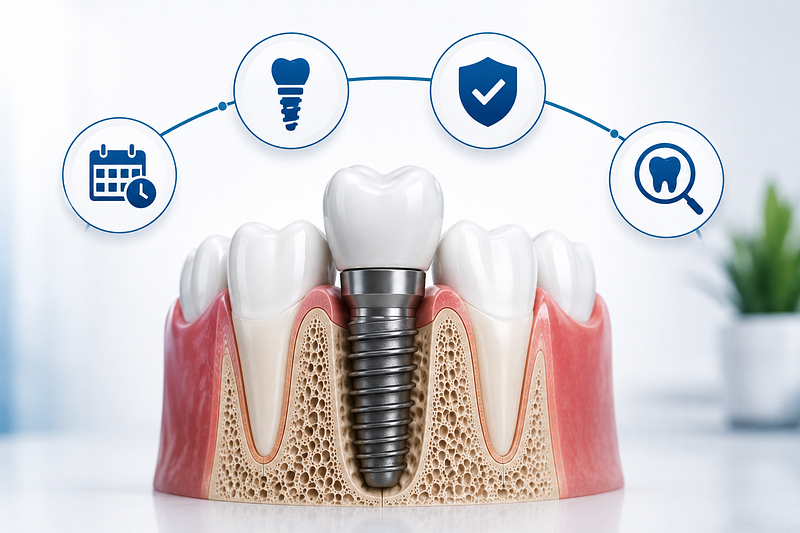
A missing tooth can affect much more than your smile. It may make chewing difficult, change the way your teeth meet, and influence your confidence in everyday situations.
Dental implants offer a fixed approach to replacing missing teeth. However, successful implant treatment involves careful diagnosis, planning, surgery, healing and restoration.
If you are researching dental implants in Pune, understanding the treatment journey can help you know what questions to ask during your consultation.
At Jabade Dental, Pune, Dr. Onkar Jabade has placed thousands of dental implants and provides treatment based on each patient’s individual dental and anatomical requirements.
What Makes a Dental Implant Different?
A dental implant is designed to replace the root portion of a missing tooth.
The implant is generally made from titanium and is positioned within the jawbone. After placement, the surrounding bone gradually integrates with the implant through a process known as osseointegration.
A connector called an abutment can then support the final crown or another implant-supported restoration.
Unlike a conventional removable denture, an implant-supported restoration is designed to remain fixed in the mouth.
Your Treatment Starts With a Consultation
The first appointment is important because your dentist needs to determine whether implant treatment is appropriate.
Your dental evaluation may include:
- Examination of the missing tooth area
- Gum assessment
- Evaluation of remaining teeth
- Review of your medical history
- Assessment of your bite
- X-rays or 3D imaging
- Discussion of your expectations
The information collected during this stage helps establish an appropriate treatment pathway.
Understanding Your Bone Condition
Jawbone condition is one of the important considerations in implant planning.
After a tooth is lost, the surrounding bone can gradually change. Long-term tooth loss, gum disease, trauma, or previous infection may contribute to reduced bone volume.
Your dentist may therefore use imaging to determine whether there is adequate bone for the planned implant.
If additional support is required, bone grafting may be considered.
When Is Bone Grafting Needed?
Bone grafting is not required for every dental implant patient.
It may be considered when the available bone does not provide sufficient volume for the planned implant.
The need for grafting depends on factors such as:
- Bone width
- Bone height
- Implant location
- Previous tooth loss
- Gum disease
- Previous infection
- Planned implant position
After evaluating your scans, the dentist can explain whether bone augmentation is necessary.
What If the Tooth Is Still Present?
Some patients seek implant treatment because a tooth is severely damaged or cannot be restored.
In such situations, extraction may be recommended.
Depending on the condition of the tooth and surrounding bone, immediate implant placement may sometimes be possible.
In other cases, the site may need to heal before implant placement.
There is no single extraction-and-implant approach suitable for every patient.
Planning the Implant Position
Implant placement requires more than simply selecting a location in the jaw.
The dentist must consider:
- Available bone
- Surrounding teeth
- Nerve structures
- Sinus anatomy
- Gum position
- Bite
- Final crown position
- Overall smile design
Digital imaging can help the dentist evaluate these factors before surgery.
The Implant Placement Procedure
Once the treatment site is ready, the titanium implant is placed into the jawbone.
Local anaesthesia is generally used to keep the area numb during the procedure.
The treatment time can vary depending on the number of implants and complexity of the case.
After placement, the implant enters a healing phase.
The Importance of Osseointegration
The implant needs time to establish a stable relationship with the surrounding bone.
This biological process is called osseointegration.
During this period, bone gradually forms around the implant surface, helping create a stable foundation for the future restoration.
Healing can take several months, although the exact duration differs between patients.
Bone quality, implant location, medical health, smoking, oral hygiene and additional procedures can all influence healing.
What Happens During the Healing Period?
Patients receive specific instructions after implant placement.
These may include guidance about:
- Eating and drinking
- Cleaning the mouth
- Protecting the surgical area
- Taking prescribed medication
- Avoiding excessive pressure
- Attending follow-up appointments
Depending on the treatment, a temporary restoration may be provided.
Whether a temporary tooth is appropriate depends on factors such as implant stability, location and bite forces.
Completing the Implant Restoration
After adequate healing has been confirmed, the next stage involves restoring the implant.
An abutment can be connected to the implant and used to support the final crown.
The crown is custom-made according to the patient’s dental anatomy.
The restoration can be designed to complement:
- Existing tooth colour
- Tooth shape
- Size
- Bite
- Smile appearance
This final stage completes the visible part of the tooth replacement.
How Long Does Dental Implant Treatment Take?
There is no universal treatment timeline.
Some patients may have relatively straightforward treatment, while others may require additional procedures.
Treatment duration can be influenced by:
- Tooth extraction
- Bone grafting
- Number of implants
- Implant location
- Healing rate
- Gum treatment
- Full-mouth rehabilitation requirements
The implant placement appointment itself may be relatively short, but complete treatment can take several months because adequate healing is essential.
Are Dental Implants Suitable for Everyone?
Dental implants can be considered for many adults with missing teeth, but suitability needs to be assessed individually.
Your dentist may evaluate:
- Bone support
- Gum health
- Oral hygiene
- General health
- Smoking habits
- Existing dental conditions
- Ability to maintain regular dental care
Some patients who initially have insufficient bone may still become candidates after appropriate preparatory treatment.
Single Tooth, Multiple Teeth or Full Mouth?
Dental implant treatment can be adapted to different patterns of tooth loss.
Single Dental Implant
A single implant may support a crown when one tooth is missing.
Multiple Implants
Several implants can be used to support replacement teeth when multiple teeth are missing.
Full-Mouth Dental Implants
Patients with extensive tooth loss may be evaluated for implant-supported full-mouth rehabilitation.
All-on-4 Dental Implants
In selected full-arch cases, an All-on-4 approach may be considered.
The appropriate treatment depends on individual anatomy, bone availability, gum health and restoration requirements.
Why Experience Is Important
Implant dentistry involves both surgical precision and restorative planning.
An implantologist needs to consider not only where the implant can be placed, but also how it will function with the final restoration.
Dr. Onkar Jabade of Jabade Dental, Pune, has placed thousands of dental implants and has experience with different implant treatment requirements.
This includes patients requiring single-tooth replacement, multiple implants, bone-related procedures and full-mouth rehabilitation.
Looking After Dental Implants
Good maintenance remains important after treatment is complete.
Patients should continue to:
- Brush regularly
- Clean around and between the teeth
- Maintain healthy gums
- Attend dental check-ups
- Follow professional cleaning recommendations
- Avoid habits that place excessive stress on the restoration
Although an implant cannot develop conventional tooth decay, the tissues around it still need proper care.
What Can Affect Long-Term Implant Health?
Several factors can influence the condition of an implant and its surrounding tissues.
These include:
- Plaque accumulation
- Gum inflammation
- Smoking
- Poor oral hygiene
- Excessive biting forces
- Certain medical conditions
- Irregular dental follow-up
Regular professional monitoring allows potential problems to be identified earlier.
Choosing an Implant Dentist in Pune
When researching implant treatment, patients may want to consider:
- Clinical experience
- Diagnostic facilities
- Treatment planning approach
- Implant systems used
- Availability of bone grafting when required
- Restorative options
- Follow-up care
- Experience with complex cases
A consultation gives patients an opportunity to understand their specific condition rather than relying only on general information available online.
Dental Implant Care at Jabade Dental
At Jabade Dental in Pune, Dr. Onkar Jabade provides implant treatment based on individual patient assessment.
Treatment options may include:
- Dental implant surgery
- Single-tooth implants
- Multiple dental implants
- Full-mouth dental implants
- All-on-4 dental implants
- Bone grafting for dental implants
Each treatment plan is developed according to the patient’s dental anatomy, oral health and restoration needs.
Final Takeaway
Dental implant treatment is a step-by-step process that combines careful diagnosis, surgical placement, biological healing and final restoration.
From the initial examination and imaging to implant placement, osseointegration, crown fitting and long-term maintenance, every stage contributes to the overall treatment outcome.
If you have missing teeth and are considering dental implants in Pune, an individual consultation with an experienced implantologist can help you understand whether implants are appropriate and which treatment approach may suit your needs.
Jabade Dental — Dr. Onkar Jabade
Law College Road, Pune
Dental Implants Pune | All-on-4 Dental Implants | Full Mouth Dental Implants
🌐 Website: https://jabadedentalpune.in/
📞 Phone: 9226525757
📍 Google Business Profile:
https://share.google/lnmEkfNkvyqknDYAu
https://share.google/xDmKgfyqK7ypnseRq
#DentalImplant #DentalImplants #DentalImplantSurgery #DentalImplantCost #DentalImplantNearMe #DentalImplantPune #DentalImplantSpecialist #FullMouthDentalImplants #AllOn4 #SameDayDentalImplants #ToothReplacement #Pune
