Death of Commodity Cycle: How Digitization Enables Product Differentiation
Author : Alex Turner | Published On : 08 Oct 2026
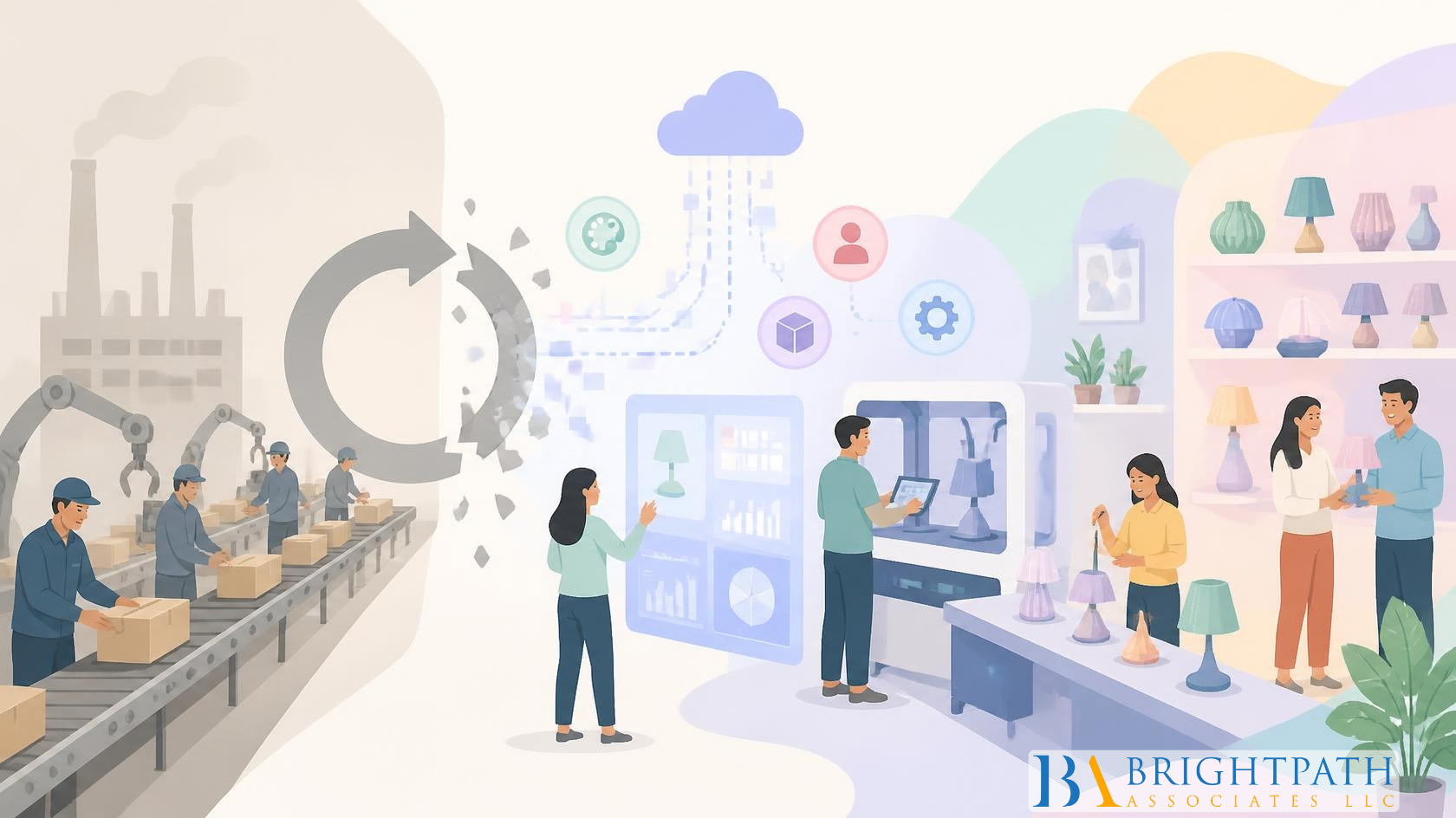
For generations, agricultural businesses have operated within a commodity-driven model. Farmers produce crops or livestock products, markets establish prices, and producers compete primarily on yield, cost efficiency, quality, and scale. While these fundamentals remain important, digitization is creating a new opportunity: agricultural businesses can increasingly differentiate what they produce, how they produce it, and the value they deliver to customers.
The traditional commodity model is not necessarily disappearing. Instead, technology is making it possible for agricultural businesses to build additional layers of value around standardized products.
Data, precision agriculture, traceability, farm-management platforms, automation, biotechnology, and digital supply chains are changing how producers understand their operations and communicate value to customers. For small and mid-sized agricultural businesses in particular, this transformation could create opportunities to compete on more than volume and price.
The Problem With Competing Only on Price
Commodity markets naturally place significant pressure on producers. When multiple suppliers offer products with relatively similar characteristics, buyers have limited reasons to pay a premium for one producer over another.
However, constantly competing on cost can become difficult when producers face rising labor expenses, changing input costs, weather uncertainty, equipment investments, transportation challenges, and shifting customer expectations.
Instead of treating agricultural products as completely interchangeable, producers can use technology to create measurable distinctions around quality, origin, production practices, sustainability, freshness, consistency, and traceability. The product may still be a commodity at its most basic level, but the information and services surrounding that product can create differentiation.
Data Is Becoming Part of the Agricultural Product
Sensors can monitor soil conditions. Weather stations can track environmental changes. Satellite imagery can provide information about crop health. Connected machinery can record field operations. Farm-management software can consolidate production and financial information.
Customers increasingly want greater visibility into how agricultural products are produced. Food manufacturers, retailers, distributors, and consumers may care about characteristics such as responsible water use, production methods, geographic origin, input management, and sustainability.
A producer that can document these characteristics has an opportunity to communicate a stronger value proposition. In this environment, data becomes more than an internal management resource. It can become part of the product's story.
Precision Agriculture Creates Measurable Differentiation
Precision agriculture provides one of the clearest examples of how digitization can change agricultural economics. Instead of treating an entire field as a uniform production environment, farmers can use data to understand variations in soil, moisture, crop health, nutrient requirements, and other conditions.
Variable-rate applications, GPS-guided machinery, remote sensing, and field-level analytics can help producers make more targeted decisions. Over time, the combination of measurable production practices and transparent data can become a competitive differentiator.
Precision agriculture can help producers establish greater consistency and document how resources are being managed. This information can support conversations with buyers who place value on quality, sustainability, resource efficiency, or specific production standards.
The Leadership Challenge Behind Digital Agriculture
A farm can purchase sensors, software, automated equipment, and analytics platforms without creating meaningful business value if the organization does not have people capable of integrating those technologies into its operating strategy.
Agricultural companies increasingly need leaders who can connect agronomy, operations, technology, finance, supply chain, sustainability, and commercial strategy. For small and mid-sized agricultural companies, this leadership requirement can be especially significant. A single executive or senior specialist may influence technology investment, operational transformation, workforce development, and market strategy simultaneously.
BrightPath Associates' Farming Industry practice reflects this changing requirement, with recruitment capabilities spanning farm management, crop production, agricultural supply chains, AgTech, precision agriculture, sustainability, food safety, and technology leadership.
From Commodity Producer to Data-Enabled Enterprise
The transformation of agriculture is not about eliminating commodities. It is about adding value around them. Together, these capabilities can transform how an agricultural business competes.
The original BrightPath discussion, Death of the Commodity Cycle: How Digitization Enables Product Differentiation, explores this fundamental shift and the role technology can play in helping agricultural businesses move beyond traditional commodity economics.
A producer can use precision agriculture to improve production, digital systems to document practices, traceability technologies to demonstrate origin, analytics to understand customers, and automation to improve consistency.
Conclusion: Agriculture's Next Competitive Advantage May Be Information
Digitization is changing the economics of farming by giving producers new ways to understand operations, demonstrate value, build customer relationships, and differentiate agricultural products. Precision agriculture, farm-management software, automation, traceability, analytics, and connected supply chains can transform data into a strategic asset.
But technology alone will not end commodity pressure. The organizations that benefit most will be those that combine technology with strong commercial thinking, operational discipline, customer understanding, and capable leadership.
