Data Tiering: Managing Information According to Its Real Usage
Author : 10petabyte 10PB | Published On : 21 Sep 2026
Digital information is becoming a larger part of everyday business operations. Companies manage customer records, application data, project files, backups, media, reports, logs, and analytics datasets across their technology environments. As the amount of information increases, organizations need a clear strategy for deciding how different types of data should be stored and managed.
Not every dataset has the same usage pattern.
Some information may be accessed constantly by applications and employees, while other information may remain untouched for long periods. Some datasets require quick availability, whereas others mainly need reliable long-term retention.
This is where data tiering can provide a practical framework.
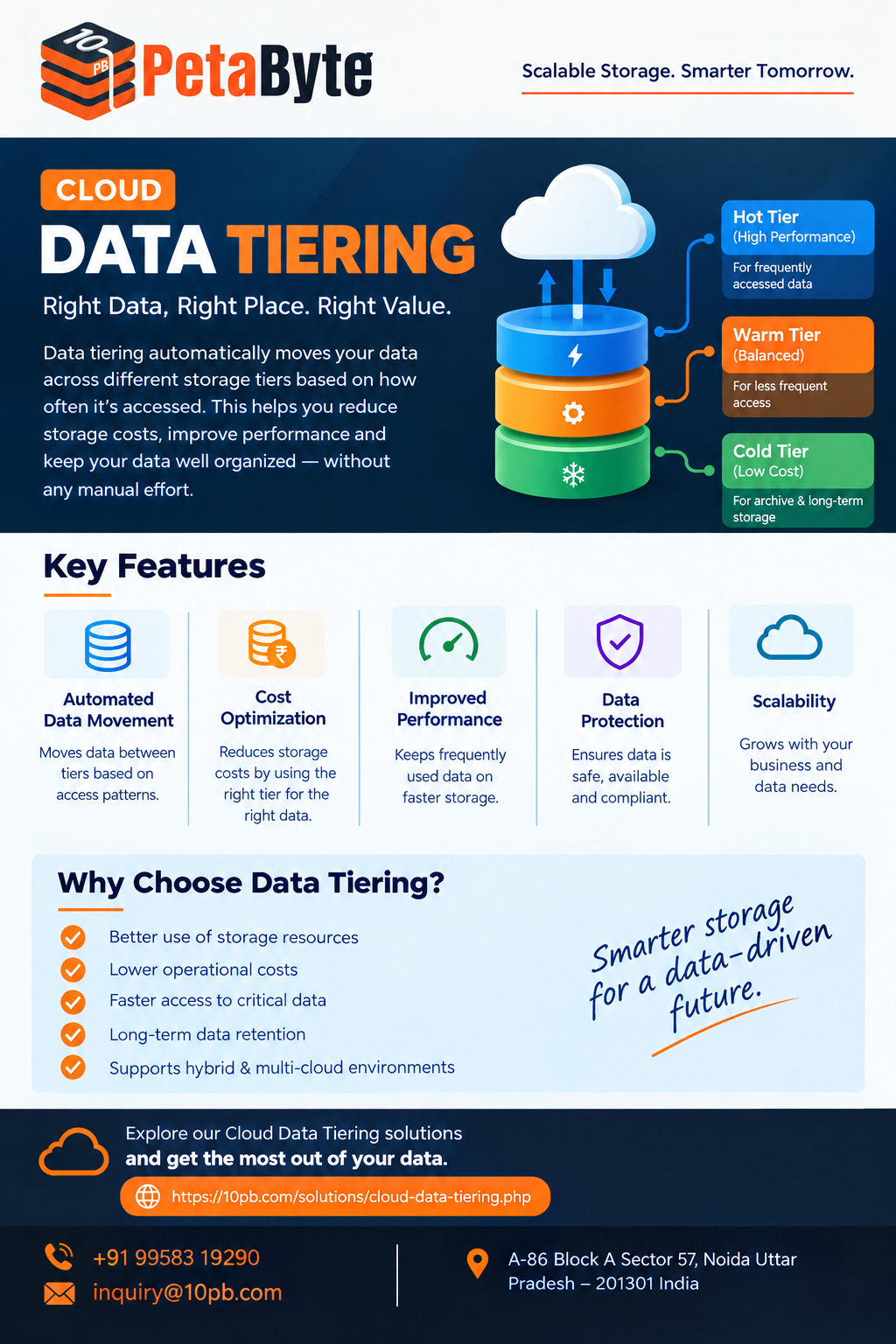
Data tiering organizes information across different storage levels based on factors such as access frequency, performance requirements, age, workload, business importance, and retention needs. Rather than applying the same storage approach to every dataset, organizations can align storage management with actual data behavior.
Understanding Data Activity
Data activity can change considerably over time.
A newly created project file may be accessed frequently while a team is actively working on it. Once the project is completed, access may decline. The file can still be valuable, but its role in everyday operations has changed.
the same pattern can appear with application logs, reports, media files, and business records A tiering strategy recognizes these changes and provides a way to manage information according to its current requirements.
Why Storage Needs Can Be Different
Imagine a business operating an online application. Its active database may require regular access because applications depend on current records. At the same time, the company may maintain older reports and historical records that are rarely opened.
Both datasets are important, but their storage requirements are not identical.
Data tiering allows organizations to distinguish between these workloads and create storage policies that reflect their actual usage.
Connecting Tiering With the Data Lifecycle
Data generally moves through different stages during its lifetime.
It may begin as highly active information, become less frequently accessed as business activities change, and eventually become long-term retained information.
Organizations can use these lifecycle stages to establish tiering policies.
For example, teams can review data according to its age and access frequency and determine whether its current storage placement still matches its requirements.
This provides a more systematic approach than manually reviewing individual files whenever storage becomes difficult to manage.
Making Storage Management More Consistent
Large environments can contain huge numbers of files and datasets. Without clear policies, different teams may make storage decisions differently.
A well-defined data tiering framework can provide consistency.
Organizations can establish rules around access frequency, data age, application requirements, retention periods, and business importance. These rules can then be reviewed as workloads and data usage evolve.
This creates a repeatable process for managing information throughout its lifecycle.
Security Across Different Tiers
Storage organization should always work alongside data security.
Organizations should consider access permissions, encryption, monitoring, backup practices, retention policies, and governance requirements when designing their storage tiers.
Moving information into a different storage category should not mean reducing its protection.
Security requirements should remain appropriate for the sensitivity and business importance of the information being managed.
Supporting Cloud Data Growth
Cloud environments can grow quickly because businesses can continuously add applications, services, customers, and digital workloads.
As data volumes increase, having a clear storage structure becomes increasingly useful.
Data tiering provides a framework for handling different categories of information without requiring every dataset to follow exactly the same storage path.
Active information can be managed according to operational requirements, while less-active information can follow policies appropriate to its lower access frequency and longer lifecycle.
Planning a Useful Strategy
An effective tiering strategy begins with understanding the data.
Organizations should identify major datasets, examine access patterns, understand application dependencies, and determine how long different types of information need to be retained.
Once this information is available, teams can create practical storage categories and establish policies for reviewing data as its usage changes.
The process should also be reviewed regularly because business requirements do not remain static.
A Long-Term Approach to Data Management
Data tiering is more than a method for moving older information. It is a way of thinking about storage according to how data behaves.
When storage placement reflects access frequency, lifecycle stage, and workload requirements, organizations can create a more logical and adaptable environment.
For businesses managing continuously growing cloud datasets, data tiering offers a structured approach to organizing information while considering performance, access, security, and long-term retention needs.
By understanding the difference between active and less-active information, organizations can develop storage policies that remain practical as their digital environment continues to expand.
