Data Center Solutions Noida: Plan the Right Infrastructure
Author : NPOD Data Center Solutions | Published On : 05 Nov 2026
Businesses in Noida need reliable IT infrastructure to support applications, databases, cloud services and daily operations. However, investing in more infrastructure than required can increase costs and create unnecessary complexity. The right data center solutions in Noida should match actual computing needs while leaving room for future growth. Businesses can explore integrated modular data center infrastructure to understand how power, cooling, security and IT equipment can work together in a compact environment.
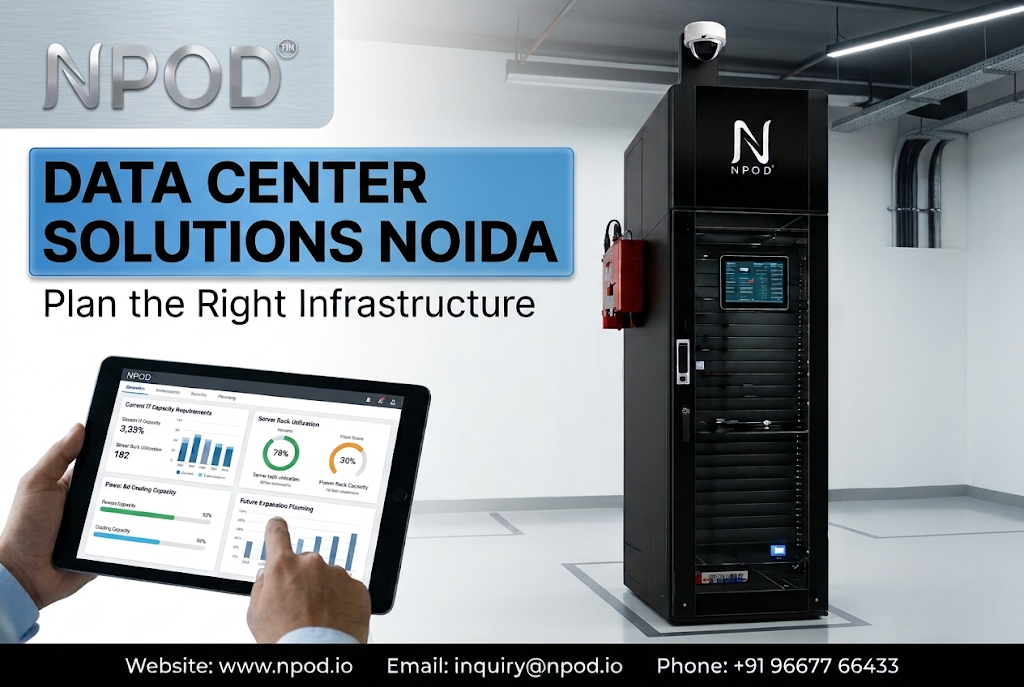
Why Data Center Planning Matters for Noida Businesses
Noida has become an important location for India's data center industry. Growing digital services, cloud adoption and enterprise IT requirements are increasing the need for dependable infrastructure.
The regional market includes large colocation facilities as well as infrastructure requirements from individual enterprises.
However, every business does not need a large dedicated data center.
A manufacturing company may need reliable local computing for production systems. A corporate office may need secure infrastructure for internal applications. A telecom operator may require computing resources closer to network users.
These requirements need different infrastructure approaches.
The first step is understanding what the business actually needs rather than selecting equipment based on capacity alone.
Five Factors to Consider When Planning Data Center Solutions in Noida
1. Calculate the Actual IT Workload
Start by identifying the applications and systems that will run inside the infrastructure.
Consider:
-
Number of physical and virtual servers.
-
Storage requirements.
-
Network bandwidth.
-
Application performance needs.
-
Expected workload growth.
This information helps determine the required rack space, power capacity and cooling requirements.
For example, a business running internal ERP applications may have very different infrastructure needs from an organisation supporting high-density AI computing.
Planning around real workloads helps avoid unnecessary equipment purchases.
2. Choose the Right Infrastructure Size
More capacity does not always mean better infrastructure.
Oversized infrastructure can increase initial investment and create additional power and cooling expenses.
On the other hand, insufficient capacity can make future expansion difficult.
Businesses should consider three things:
-
Current IT requirements.
-
Expected growth over the next few years.
-
Additional capacity needed for workload changes.
Modular infrastructure can be useful when businesses prefer to deploy according to current needs and expand as requirements increase.
This approach reduces the pressure to invest in the entire future capacity upfront.
3. Plan Power and Cooling Together
Power and cooling are closely connected.
Servers consume electrical power and release heat. The cooling system must remove that heat to maintain suitable operating conditions.
When businesses plan these systems separately, they may face capacity mismatches or inefficient layouts.
A proper infrastructure design should consider:
-
UPS and backup power requirements.
-
Power distribution.
-
Rack-level electrical load.
-
Cooling capacity.
-
Airflow management.
-
Temperature monitoring.
The design should reflect the expected equipment density rather than relying on a generic server room arrangement.
4. Consider Space and Deployment Limitations
Commercial offices, industrial buildings and branch facilities may have limited space for IT infrastructure.
Building a conventional server room can involve civil work, electrical preparation, cooling installation and coordination between several vendors.
A modular or prefabricated data center can be an alternative when a business needs an integrated IT environment within a defined footprint.
Before choosing this approach, check the available installation area, equipment access, power supply and environmental conditions.
The infrastructure should fit the site instead of forcing major changes to the existing facility.
5. Include Security and Monitoring from the Start
Data center infrastructure must protect both equipment and business operations.
Physical access controls, fire protection and environmental monitoring should be included in the initial design.
Businesses should also consider monitoring for:
-
Temperature and humidity.
-
Power consumption.
-
Equipment health.
-
Smoke and water leakage.
-
Unauthorized access.
Centralized monitoring gives IT teams better visibility into infrastructure conditions and helps them identify issues before they affect operations.
When Should a Business Consider a Modular Data Center?
A modular data center can be suitable when a business needs a controlled IT environment but does not want to build a traditional server room from scratch.
It may be worth considering for:
-
Corporate offices with growing IT requirements.
-
Manufacturing facilities with local computing needs.
-
Educational institutions managing internal IT systems.
-
Telecom and edge computing deployments.
-
Businesses operating from multiple locations.
An integrated modular solution can combine IT racks, UPS, cooling, security and monitoring within a pre-engineered environment.
The final configuration should depend on workload, site conditions and operational requirements.
How to Evaluate Data Center Solutions in Noida
Before selecting an infrastructure provider, ask for a solution based on your actual requirements.
A useful technical proposal should explain the infrastructure scope, power design, cooling arrangement, security features, monitoring capabilities and expansion options.
It should also clarify installation responsibilities and post-deployment support.
Avoid comparing proposals only by the number of racks or equipment included. Two solutions with similar physical capacity may have very different operating requirements.
The better option is the one that supports your workload without adding unnecessary infrastructure.
Conclusion
Planning the right data center infrastructure is about finding a balance between performance, cost and future readiness.
Noida businesses should evaluate their IT workload, available space, power requirements and expansion plans before investing in a new setup.
A modular approach may help organisations avoid overbuilding while maintaining an integrated and manageable IT environment.
If your business is planning a new infrastructure setup or upgrading an existing server room, explore NPOD's data center solutions to understand the available modular options.
Frequently Asked Questions
1. What are data center solutions used for?
They provide the infrastructure needed to operate servers, storage, networking, power backup, cooling, security and monitoring systems.
2. Are modular data centers suitable for businesses in Noida?
Yes. They can suit offices, industrial facilities and enterprises that need integrated IT infrastructure within limited space. The right configuration depends on workload and site requirements.
3. How can businesses avoid investing in oversized data center infrastructure?
They should assess current workloads, estimate realistic growth and select infrastructure that can expand when needed instead of purchasing all future capacity upfront.
