Dairy Industry Strategic Intersection of Climate Regulation and Profitability
Author : Alyssa Miller | Published On : 06 Oct 2026
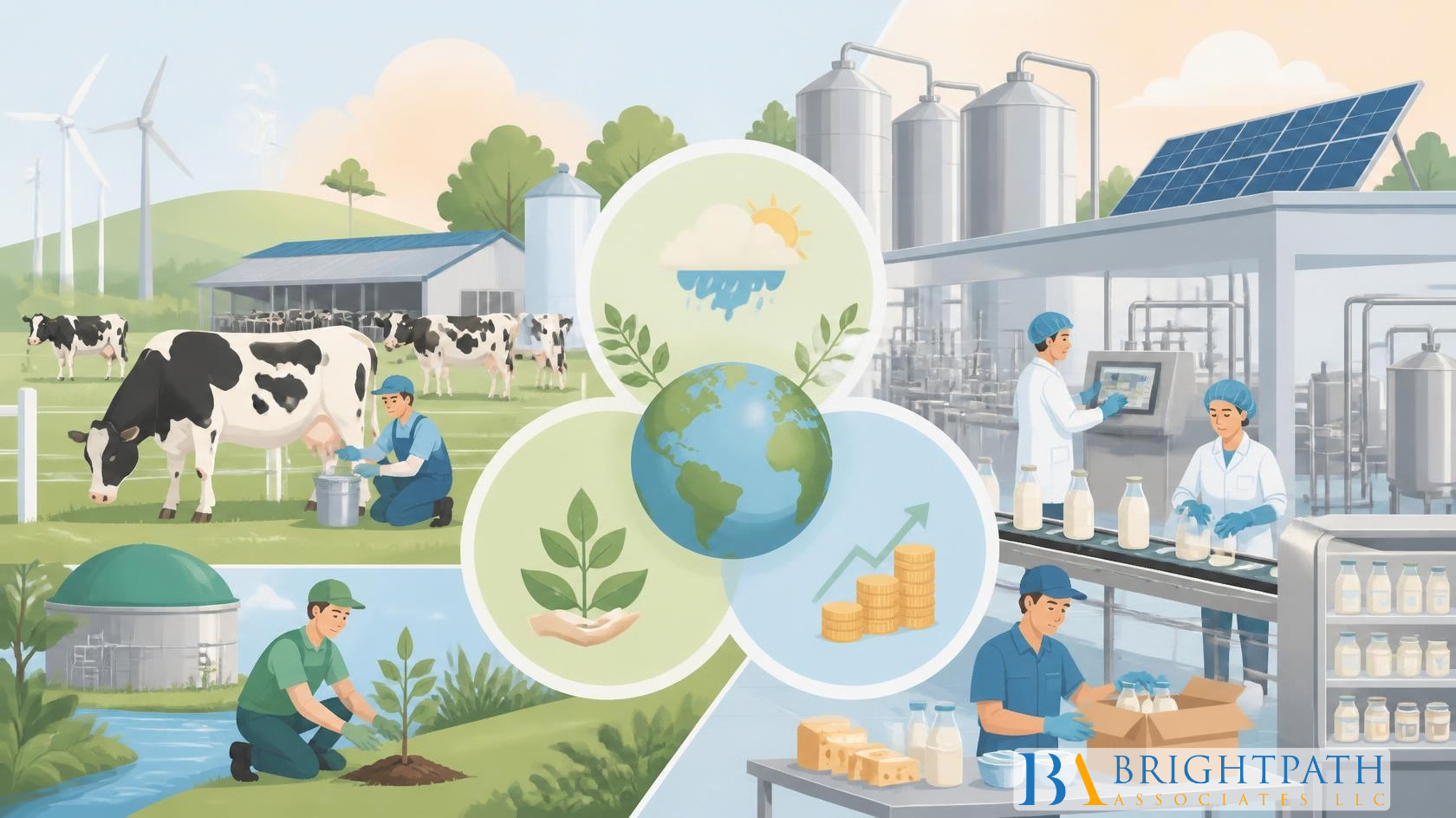
The dairy industry is entering a period in which environmental responsibility and commercial performance are becoming increasingly connected. Dairy producers and processors are facing pressure to manage emissions, water consumption, energy use, waste, animal health, transportation, and resource efficiency while continuing to deliver affordable, high-quality products.
The answer increasingly depends on how companies approach sustainability. When climate initiatives are treated solely as regulatory obligations, they can appear to be additional expenses. When they are integrated with production, technology, supply chain management, product development, and workforce strategy, they can uncover opportunities to reduce costs, improve resilience, and create new sources of value.
Climate Pressure Is Becoming an Operational Issue
Environmental performance is no longer isolated within a sustainability function. Decisions involving feed, herd management, water, energy, refrigeration, processing, packaging, and transportation can all influence both environmental impact and operating costs.
For executives, this means climate strategy needs to become part of everyday business planning. These examples demonstrate an important principle: the most effective sustainability strategies often begin by eliminating operational inefficiencies.
A dairy company that reduces unnecessary water consumption may lower utility and wastewater costs. A processor that improves refrigeration efficiency can potentially reduce energy expenses. A farm that optimizes feed utilization may improve animal productivity while reducing resource waste.
Companies operating across the broader Dairy Industry are increasingly looking at technology, process improvement, and leadership capabilities as interconnected components of this transition.
Sustainable Farming Can Improve Farm Economics
Much of the dairy industry's environmental footprint originates before milk reaches a processing facility. Feed production, animal health, manure management, water use, and farm energy consumption all influence the overall resource requirements associated with milk production.
Sustainable dairy farming practices therefore need to be evaluated not simply through an environmental lens but also through their effect on productivity. The key is to identify sustainability measures that improve the economics of the underlying operation rather than treating environmental performance as a separate objective.
Feed optimization provides one example. Better nutritional planning can help producers use feed more efficiently while supporting herd health and milk production. Similarly, effective manure management can reduce environmental risks while creating opportunities to capture methane or generate useful energy.
Water efficiency can offer another practical opportunity. Improved cleaning systems, leak detection, water recycling, and optimized irrigation can reduce consumption while potentially lowering operating costs.
Technology Can Connect Sustainability With Productivity
Technology is becoming an important tool for managing the relationship between dairy production and resource efficiency. Precision feeding, automated milking, smart environmental controls, and automated cleaning systems can improve consistency while reducing unnecessary labor and resource consumption.
Modern monitoring systems can provide information about milk yield, animal health, feeding behavior, reproduction, environmental conditions, and equipment performance. When this information is converted into actionable decisions, dairy operators can identify problems earlier and allocate resources more effectively.
A sophisticated system that generates large amounts of data but does not improve decision-making may create additional complexity rather than value. The strongest technology investments are those that connect directly to measurable improvements in productivity, quality, resource consumption, or cost.
Leadership May Determine the Success of Climate Strategy
Technology and sustainability initiatives ultimately depend on people. Dairy companies need leaders who can understand production economics while also navigating technology, regulation, sustainability, supply chain complexity, and changing consumer expectations.
This is especially important for small and mid-sized organizations where a limited number of executives may influence multiple strategic functions. This is why Dairy Industry: Strategic Intersection of Climate Regulation and Profitability is ultimately a leadership discussion as much as it is an environmental one.
The right leader can turn sustainability from a cost center into an operational improvement program. They can connect farm-level initiatives with processing efficiency, supply chain resilience, product development, and commercial strategy.
Turning Climate Challenges Into Competitive Opportunities
The dairy industry's relationship with climate and environmental pressures will continue to evolve. Companies that treat these pressures only as regulatory obligations may focus primarily on compliance. Those that view them as catalysts for operational improvement may uncover a broader range of opportunities.
The path forward involves better resource management, smarter technology adoption, resilient supply chains, efficient processing, innovative products, reliable data, and leadership capable of connecting these elements.
Share your perspective and join the conversation. For dairy companies looking to build leadership teams capable of navigating this changing operating environment, BrightPath Associates LLC can help identify experienced talent aligned with your organization's growth, technology, sustainability, and operational objectives.
