Cybersecurity for Dairy Processing: Protecting Your Proprietary Formulas and Data
Author : Alyssa Miller | Published On : 01 Sep 2026
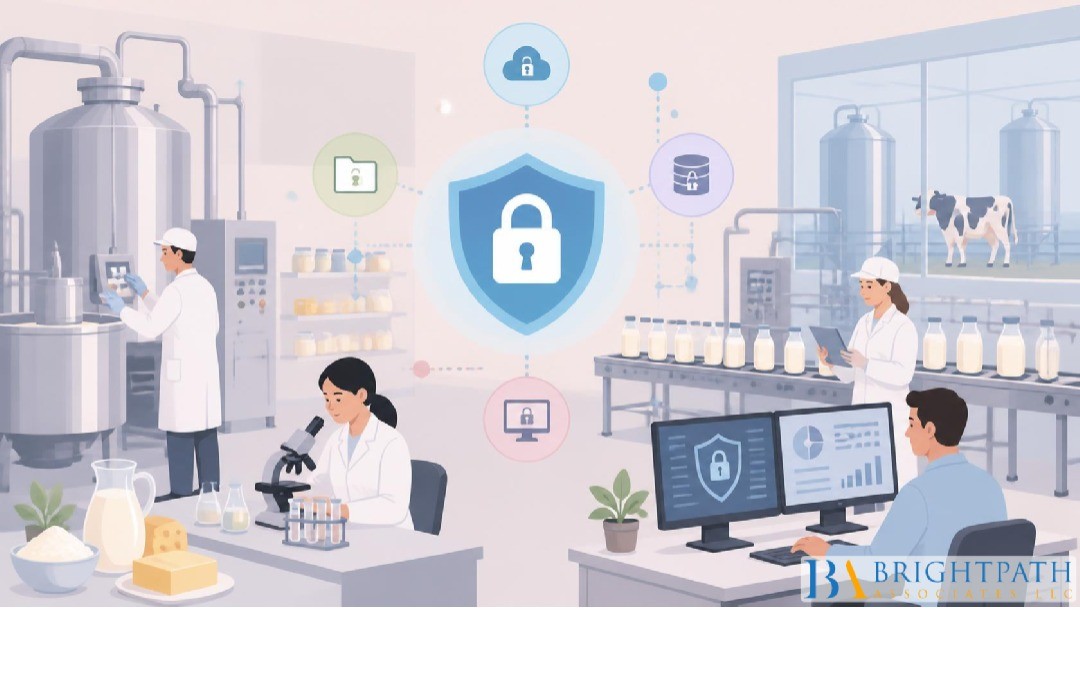
The modern dairy processing facility is increasingly digital. Automated production lines, connected sensors, enterprise resource planning systems, laboratory technologies, cloud platforms, digital supply chains, and remote equipment monitoring are transforming how dairy companies operate.
For small and mid-sized dairy businesses, cybersecurity can be particularly challenging. Many organizations are modernizing legacy systems while operating with limited technology resources and increasingly complex supplier relationships. A cyber incident can therefore affect much more than office computers. It can disrupt production, compromise sensitive information, interrupt supply chains, and potentially expose proprietary product formulas.
Cybersecurity should consequently be viewed as an operational and strategic priority rather than simply an IT responsibility.
The Expanding Digital Footprint of Dairy Processing
Dairy processing depends on an interconnected network of physical equipment and digital systems. Automated filling machines, pasteurization systems, refrigeration controls, packaging equipment, laboratory instruments, inventory platforms, and logistics systems may all generate or exchange data.
This connectivity creates important operational advantages. Production managers can monitor processes more closely, maintenance teams can identify equipment issues earlier, and executives can access information that supports faster decisions.
Older industrial equipment can be particularly difficult to secure because it may operate with outdated software or communication protocols. Replacing critical machinery simply to address cybersecurity concerns may not be economically practical, especially for smaller processors.
A more realistic approach is to identify the systems that are most important to production and establish appropriate layers of protection around them.
Protecting Proprietary Dairy Formulas
One of the most valuable assets within a dairy processing company may not be a physical machine. It may be information. Product formulas, ingredient ratios, processing parameters, research data, quality specifications, product-development plans, and customer-specific formulations can represent years of investment and experimentation.
A cybersecurity breach that exposes this information can create competitive consequences even if production itself remains uninterrupted. Proprietary formulas may be stored across laboratory systems, employee computers, cloud platforms, shared drives, manufacturing databases, and product-development applications.
The more locations where sensitive information exists, the more important access controls and data governance become. Companies should determine which information is genuinely confidential, where it is stored, who requires access, and how that access is monitored.
Operational Technology Requires Special Protection
Cybersecurity strategies designed for ordinary office environments are not always sufficient for industrial processing environments. Dairy plants depend on operational technology to control and monitor physical processes. A cyber incident affecting production systems could potentially interrupt processing, alter operating parameters, create equipment downtime, or affect product quality.
Network segmentation can help separate critical industrial environments from general corporate networks. Strong authentication can reduce unauthorized access. System monitoring can help identify unusual behavior. Regular backups can support recovery when systems are compromised.
The objective is not simply to prevent unauthorized access. It is to ensure that critical production systems remain reliable and recoverable.
Remote Access Creates New Opportunities and Risks
Remote monitoring and technical support can be extremely valuable for dairy processors. Equipment manufacturers and specialized technicians can diagnose problems without always needing to travel to a facility. However, remote access can also introduce cybersecurity risks.
Third-party vendors may require access to equipment or industrial systems to perform maintenance, troubleshooting, software updates, or diagnostics. Companies need to understand who has access, what systems they can reach, how long that access remains active, and how activity is monitored.
Temporary access should not automatically become permanent access. A structured remote-access policy can help dairy companies gain the operational benefits of digital support while reducing unnecessary exposure.
Employees Are Part of the Cybersecurity Equation
Even advanced technical controls cannot completely eliminate human risk. Employees may encounter phishing attempts, suspicious attachments, fraudulent requests, compromised credentials, or social-engineering attacks. An employee working in procurement may face different threats from someone working in quality assurance or production.
Employees should understand how to recognize suspicious activity, protect credentials, report potential incidents, and handle confidential information. Management should reinforce that reporting a potential mistake quickly is preferable to concealing it. Creating this culture can significantly improve an organization's ability to detect and respond to threats.
Cybersecurity and Dairy Traceability
Digital traceability is becoming increasingly important throughout the dairy sector. Connected technologies can help organizations track products, ingredients, processing information, inventory, and distribution.
The Dairy Industry is experiencing broader technological transformation involving automation, robotics, artificial intelligence, IoT sensors, blockchain, and real-time data systems. These technologies can strengthen transparency and operational efficiency, but they also increase the amount of information that organizations must protect.
Traceability data can have operational and commercial value. Companies should therefore consider cybersecurity as part of the overall design of digital traceability systems rather than treating it as a separate concern.
Conclusion: Protecting Information Protects the Business
Proprietary formulas, production data, customer information, operational technology, traceability records, and intellectual property all require thoughtful protection. Cybersecurity must therefore extend beyond traditional IT systems and become part of the broader strategy for operational resilience.
For small and mid-sized dairy processors, the most effective approach begins with visibility. Companies need to understand what systems and information they possess, who can access them, which external partners are connected to them, and what would happen if a critical system became unavailable.
From there, organizations can build stronger access controls, network protections, employee awareness programs, supplier-security processes, backup strategies, and incident-response capabilities. For a deeper look at protecting sensitive information and digital infrastructure in dairy processing, explore BrightPath Associates' original analysis, Cybersecurity for Dairy Processing Protecting Data.
