Cyber-Resilience in Extraction: Protecting Critical OT Systems from Ransomware
Author : Shawn Fisher | Published On : 27 Aug 2026
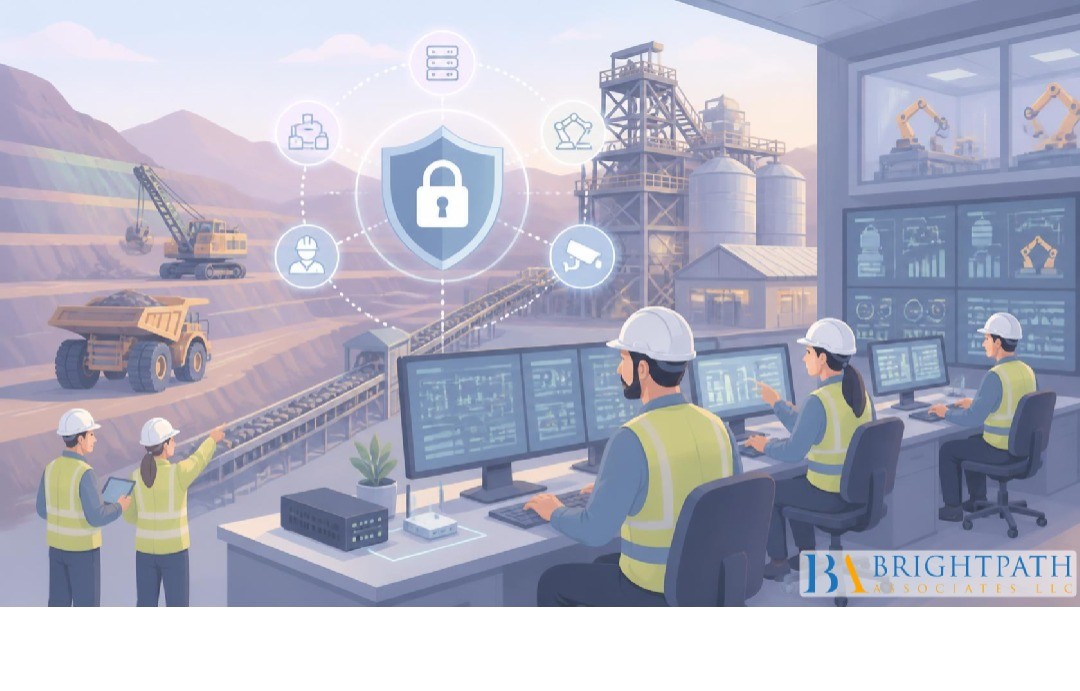
Mining and metals companies have always operated around physical risks. Equipment failures, geological uncertainty, extreme weather, supply-chain interruptions, and workplace hazards can affect production and profitability. But as mines become increasingly connected, another risk is moving higher on the executive agenda: cyberattacks against operational technology (OT).
Modern mining operations rely on industrial control systems, automated machinery, remote monitoring, sensors, communications networks, fleet-management platforms, and data-driven decision-making. These technologies can improve productivity and safety, but they can also create additional pathways for cyber threats.
For organizations operating in the Mining and Metals Industry, cyber resilience is therefore no longer simply an IT concern. It is becoming an operational continuity, safety, and leadership issue.
Why OT Systems Are Different
Information technology and operational technology serve different purposes. IT environments primarily manage information, applications, communication, and business processes. OT environments control or monitor physical processes.
In a mining operation, OT may influence equipment, processing systems, ventilation, conveyors, pumps, crushers, sensors, and other critical infrastructure. An attack against a conventional office system might prevent employees from accessing email or files. An attack against a critical OT environment could potentially disrupt physical operations.
That distinction makes ransomware particularly concerning. A cyber incident affecting production systems could create downtime, interrupt supply commitments, affect maintenance schedules, and potentially introduce safety considerations.
Mining's Digital Transformation Expands the Attack Surface
Mining companies are increasingly adopting automation and connected technologies. Autonomous haulage, remote equipment monitoring, predictive maintenance, industrial IoT, digital twins, cloud-based analytics, and centralized control centers can generate significant operational benefits.
But every connected device, application, network connection, and remote access pathway must be considered within the organization's cybersecurity strategy. The challenge is not to stop digital transformation.
Companies need to understand which systems are connected, what those systems control, who can access them, and how they would continue operating if part of the digital environment became unavailable.
Ransomware Is an Operational Risk, Not Just a Data Problem
Ransomware is often associated with encrypted files and demands for payment. For mining companies, the consequences can extend beyond information systems.
If critical applications or supporting infrastructure become unavailable, production may slow or stop. Dispatch systems, maintenance information, process monitoring, communications, and other operational functions may be affected.
Even when attackers do not directly control industrial equipment, disruption to supporting systems can create operational consequences. This is why cyber resilience needs to focus on business continuity, not merely malware prevention.
Network Segmentation Can Limit the Impact
One important strategy is separating critical OT environments from other networks. If an attacker compromises an employee workstation, unrestricted access to industrial control systems could increase the potential impact.
Network segmentation can create barriers between different environments. Critical systems can be isolated from less sensitive networks while controlled communication is maintained where operationally necessary.
The exact architecture depends on the mine, processing facility, equipment, and technology environment, but the underlying principle is straightforward. This can limit lateral movement and help contain an incident.
Remote Access Requires Special Attention
Remote connectivity has become increasingly important for modern mining operations. Specialists may need to troubleshoot equipment, monitor operations, analyze data, or provide technical support from locations far from the mine.
However, remote access can also introduce cybersecurity risks. Organizations need to know who has remote access, why they have it, what systems they can reach, and how access is authenticated and monitored.
Access should be reviewed regularly, particularly when contractors or external service providers are involved. Strong identity controls and multi-factor authentication can provide additional protection where appropriate.
Leadership Must Treat Cyber Resilience as Business Resilience
Mining executives should consider cybersecurity alongside other operational risks. What happens if a critical control system becomes unavailable? How long could production continue? Which systems are essential to maintain operations? Who has authority to make decisions during an incident? How quickly can critical systems be restored? Which external suppliers or contractors could affect recovery?
These questions help transform cybersecurity from an abstract technology issue into a practical business-continuity strategy. For a deeper look at protecting extraction operations from ransomware and strengthening OT resilience, read Cyber Resilience in Extraction: Protecting Critical OT Systems From Ransomware.
The Future of Mining Requires Resilience by Design
Digital technologies are likely to become even more important to mining. Automation, autonomous equipment, artificial intelligence, remote operations, connected sensors, and advanced analytics can improve productivity and decision-making.
But greater connectivity must be accompanied by greater resilience. The objective should not be to eliminate technology because it creates risk. Instead, mining companies need to design systems that can continue operating, detect abnormal activity, recover from disruptions, and protect critical processes.
As mining and metals companies modernize their operations, they need leaders who understand the intersection of OT cybersecurity, automation, engineering, operations, risk management, and digital transformation. If your organization needs specialized technical leaders or executive talent to strengthen its cyber and operational capabilities, connect with BrightPath Associates LLC to discuss your recruitment requirements.
