Cyber-Hygiene for Food Manufacturers: Protecting Your Industrial Network
Author : Jimmy Patel | Published On : 25 Sep 2026
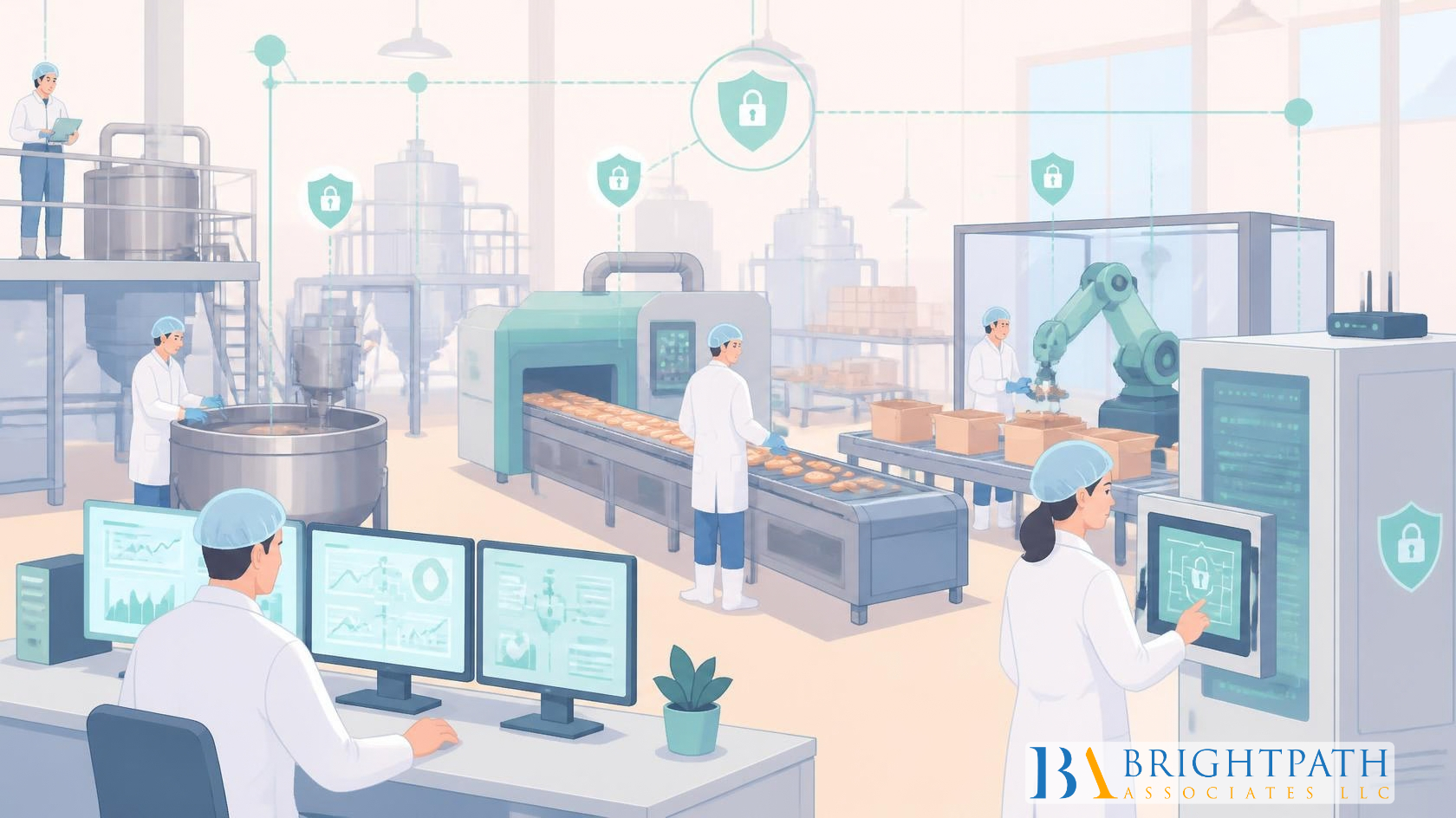
Food manufacturing is undergoing a major technological transformation. Production facilities increasingly depend on programmable logic controllers, supervisory control and data acquisition systems, robotics, machine vision, sensors, industrial networks, and connected enterprise platforms. These technologies can improve production efficiency, quality control, traceability, and operational visibility, but they also create a more complex digital environment.
For food manufacturers, cybersecurity is therefore no longer limited to protecting office computers and business data. A cyber incident can potentially interfere with production processes, refrigeration systems, packaging equipment, quality-control operations, and distribution schedules. As industrial environments become more connected, cyber hygiene needs to become an everyday part of operational management.
The challenge is particularly significant for small and mid-sized manufacturers. These businesses often operate with lean technical teams, mixed generations of equipment, and limited resources for major infrastructure upgrades. Building cyber resilience requires a practical strategy that protects critical systems without unnecessarily disrupting production.
Understanding the Expanding Industrial Attack Surface
Modern food plants rarely operate as completely isolated environments. Production systems may exchange information with enterprise resource planning platforms, maintenance applications, quality-management software, cloud services, suppliers, and remote technical-support teams.
This connectivity creates operational advantages. Managers can obtain production information more quickly, maintenance teams can monitor equipment remotely, and business leaders can gain better visibility into plant performance.
A facility may contain PLCs, HMIs, SCADA servers, engineering workstations, robots, cameras, sensors, network switches, and other devices installed at different times by different vendors. Some may have been designed decades ago, before cybersecurity became a major consideration.
The first step toward improving security is therefore visibility. Manufacturers need to know what is connected, where it is located, what software or firmware it uses, how it communicates, and who has access.
Separating IT and OT Environments
Office computers and production machinery should not automatically operate on one unrestricted network. Separating information technology from operational technology can create additional barriers between business systems and equipment responsible for physical production.
Additional zones can also be created around particularly critical systems. For example, engineering workstations, SCADA infrastructure, production-control systems, and other sensitive assets can receive more restrictive access controls.
This approach does not mean eliminating connectivity. Instead, it means determining which systems actually need to communicate and limiting unnecessary traffic. For food manufacturers, segmentation can be particularly important because operational disruption can have consequences beyond lost data. A compromised production environment could affect manufacturing schedules, product quality, temperature monitoring, packaging, or other processes.
Protecting the Controllers Behind Production
PLCs are among the most important components of automated manufacturing environments. They can control conveyors, pumps, mixers, filling equipment, packaging systems, and other production machinery. Because PLCs directly influence physical processes, unauthorized changes to their programming can create serious operational consequences.
Manufacturers should restrict access to PLC programming environments and maintain clear procedures for making changes. Engineering workstations should be protected, credentials should be controlled, and critical PLC programs should be backed up.
Change management is equally important. Every modification to control logic should have an identifiable purpose, an authorized owner, and a recovery option. This becomes more complicated when external integrators, equipment manufacturers, or contractors require remote access. Temporary technical access may be necessary, but permanent connections and shared credentials can create unnecessary exposure.
Cybersecurity Is Also a Leadership Challenge
Manufacturers increasingly need professionals who understand both technical systems and operational realities. An automation engineer may need to understand industrial cybersecurity, while an IT leader working inside a manufacturing facility needs to appreciate how a software or network change could affect production.
As companies expand their automation programs, they may need executives and technical leaders who can balance productivity, cybersecurity, capital investment, workforce development, safety, and long-term digital transformation. BrightPath Associates works with organizations seeking leadership talent across the evolving industrial automation industry, including automation, robotics, control systems, IIoT, and digital transformation roles.
Building Cyber Hygiene Into Automation Projects
Cybersecurity should not be added after an automation project has already been commissioned. Security considerations should be included when manufacturers evaluate new equipment, automation vendors, system integrators, software platforms, and remote-support arrangements.
Procurement teams can ask vendors about authentication, network architecture, patching, logging, backup procedures, remote access, software dependencies, and support practices before equipment is installed. This approach can prevent organizations from discovering cybersecurity limitations after a system has already become operationally critical.
The original BrightPath Associates discussion, Cyber-Hygiene for Food Manufacturers: Protecting Your Industrial Network, explores these considerations in greater detail and highlights why cyber hygiene needs to become part of routine industrial operations.
Preparing the Connected Factory for the Next Phase of Automation
Food manufacturing will continue to adopt robotics, machine vision, IIoT platforms, AI-enabled analytics, and increasingly connected production systems. These technologies can create significant operational opportunities, but they also increase the importance of cybersecurity expertise.
For small and mid-sized manufacturers, the challenge is especially strategic: how can the organization modernize its production environment while developing the technical and leadership capabilities required to protect it?
Manufacturers need leaders who can bring together automation engineering, cybersecurity, operational performance, risk management, and business strategy. Building that capability may require developing existing employees, redesigning responsibilities, or bringing specialized leadership talent into the organization.
