Coupang K-Beauty Product Data Scraping for Beauty Retailers
Author : Product datascrape | Published On : 26 Nov 2026
Quick Overview
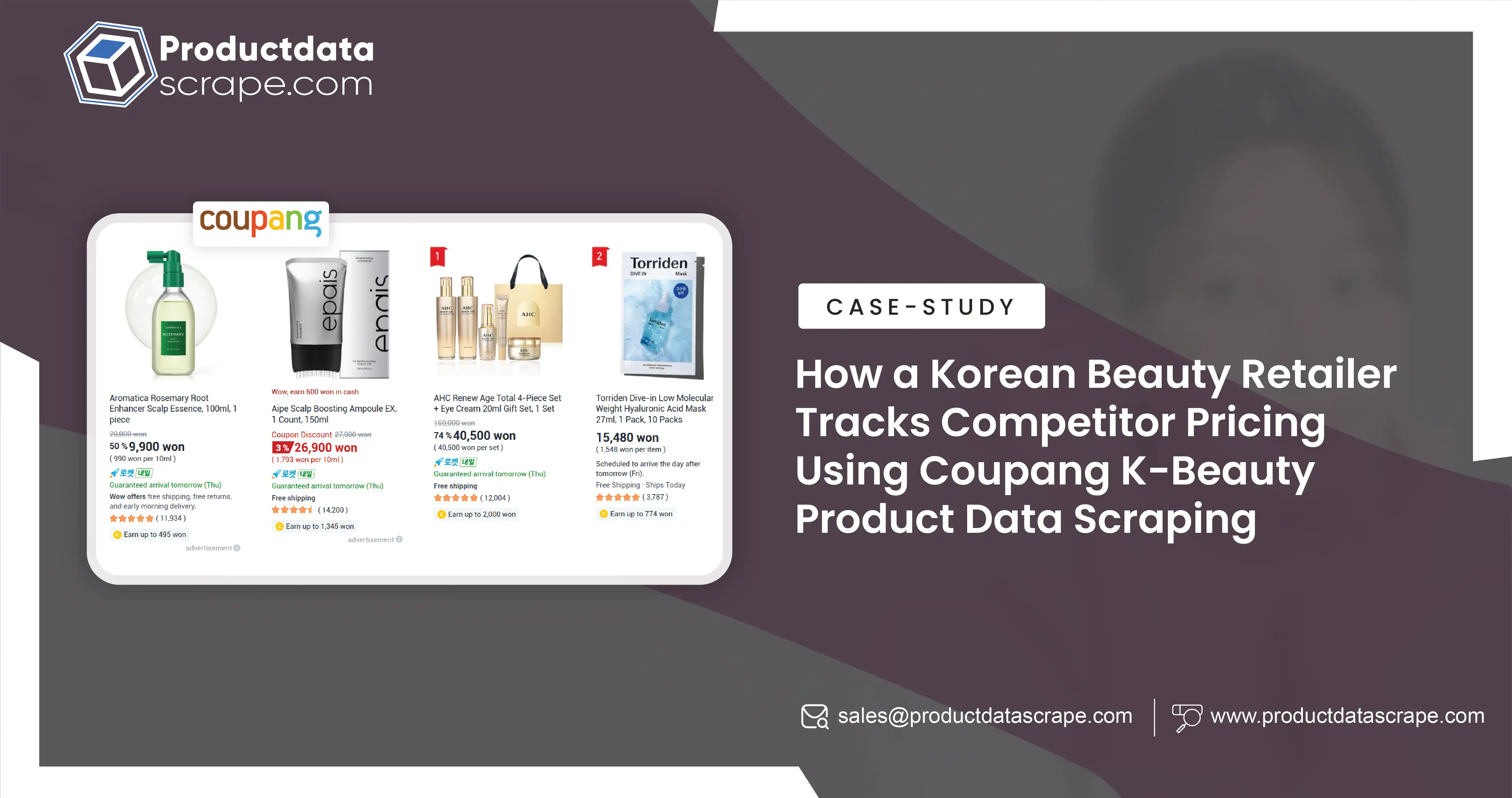
The Korean beauty retailer needed a structured way to monitor competitor prices, product ratings, discounts, and availability across Coupang. Coupang K-Beauty Product Data Scraping provides a framework for organizing marketplace information into actionable pricing intelligence. The project scope focuses on automated collection, product matching, and competitive analysis through Scrape Beauty & K-Beauty Product Data workflows.
Client Name / Industry: Confidential Korean Beauty Retailer | Beauty & Personal Care E-commerce.
Service / Duration: Marketplace product data extraction and competitor intelligence | Project duration not publicly disclosed.
Key Impact Metrics: Pricing coverage, product-matching accuracy, and data refresh frequency were the primary performance indicators. Verified numerical results were not supplied.
The Client
South Korea's beauty industry has experienced substantial expansion, increasing the importance of competitive product positioning. According to South Korea's Ministry of Food and Drug Safety, cosmetics exports reached approximately US$10.2 billion in 2024, representing a 20.6% year-over-year increase. The country also recorded strong international demand for skincare and color cosmetics.
The retailer operated in a marketplace environment where product prices, promotional offers, ratings, and customer feedback influenced purchasing decisions. Monitoring these signals manually made it difficult to maintain a consistent view of competing products. Changes in discounts, product variations, and listing information also created challenges for comparing equivalent items.
Before adopting a structured data intelligence approach, the business needed better visibility into competitor activity and product-level market information. Its transformation priorities included organizing marketplace records, identifying comparable beauty products, and improving the consistency of pricing research.
The proposed Korean Beauty Brand Review Monitoring workflow also addressed the importance of customer feedback. Reviews and ratings can help retailers understand product reception, identify recurring customer concerns, and compare consumer responses across competing skincare and cosmetics listings.
The objective was to move from fragmented marketplace observations toward standardized, repeatable competitive intelligence that could support merchandising and pricing decisions.
Goals & Objectives
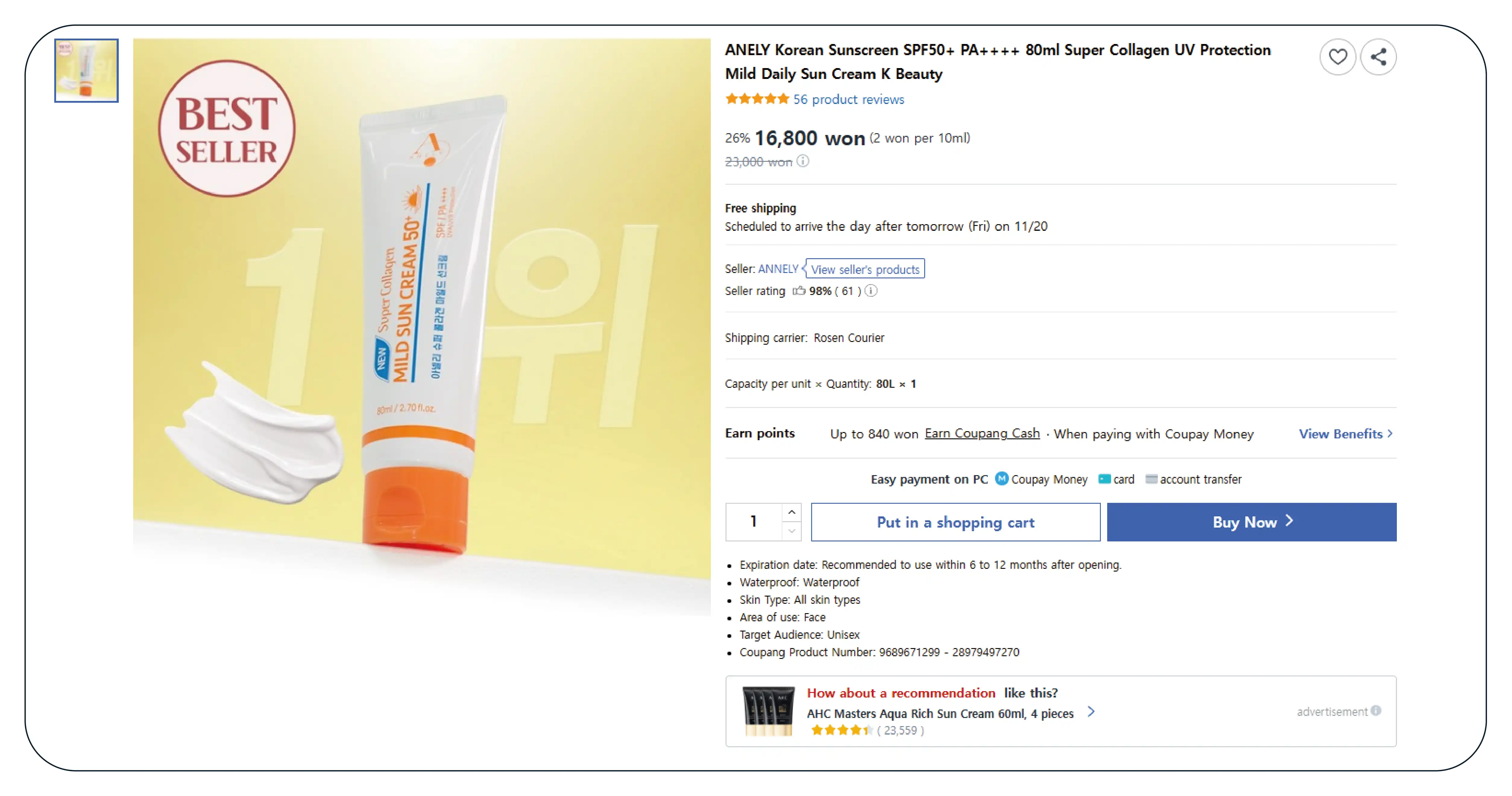
The project focused on improving the retailer's ability to understand competing K-Beauty products, monitor marketplace changes, and organize product intelligence for business teams.
- Goals
Improve visibility into competitor pricing across relevant Coupang beauty categories.
Identify comparable products from competing brands.
Track promotional changes and product availability.
Support merchandising decisions with consistent marketplace information.
Establish a scalable data collection process as monitored product categories expand.
- Objectives
Automate the collection of product titles, brand names, prices, discounts, ratings, review counts, and availability indicators.
Standardize product records to support reliable comparisons.
Integrate structured datasets with internal reporting and analytics systems.
Organize historical observations to identify price movements.
Enable scheduled data updates for more timely competitive analysis.
The Coupang Product Price and Rating Tracking workflow was designed to connect pricing intelligence with customer feedback. This allowed the retailer to evaluate price positioning alongside marketplace reputation rather than treating pricing as an isolated metric.
