Construction Management vs Project Management: Understanding the Differences, Roles, and How They Wo
Author : RDash AI | Published On : 06 Jul 2026
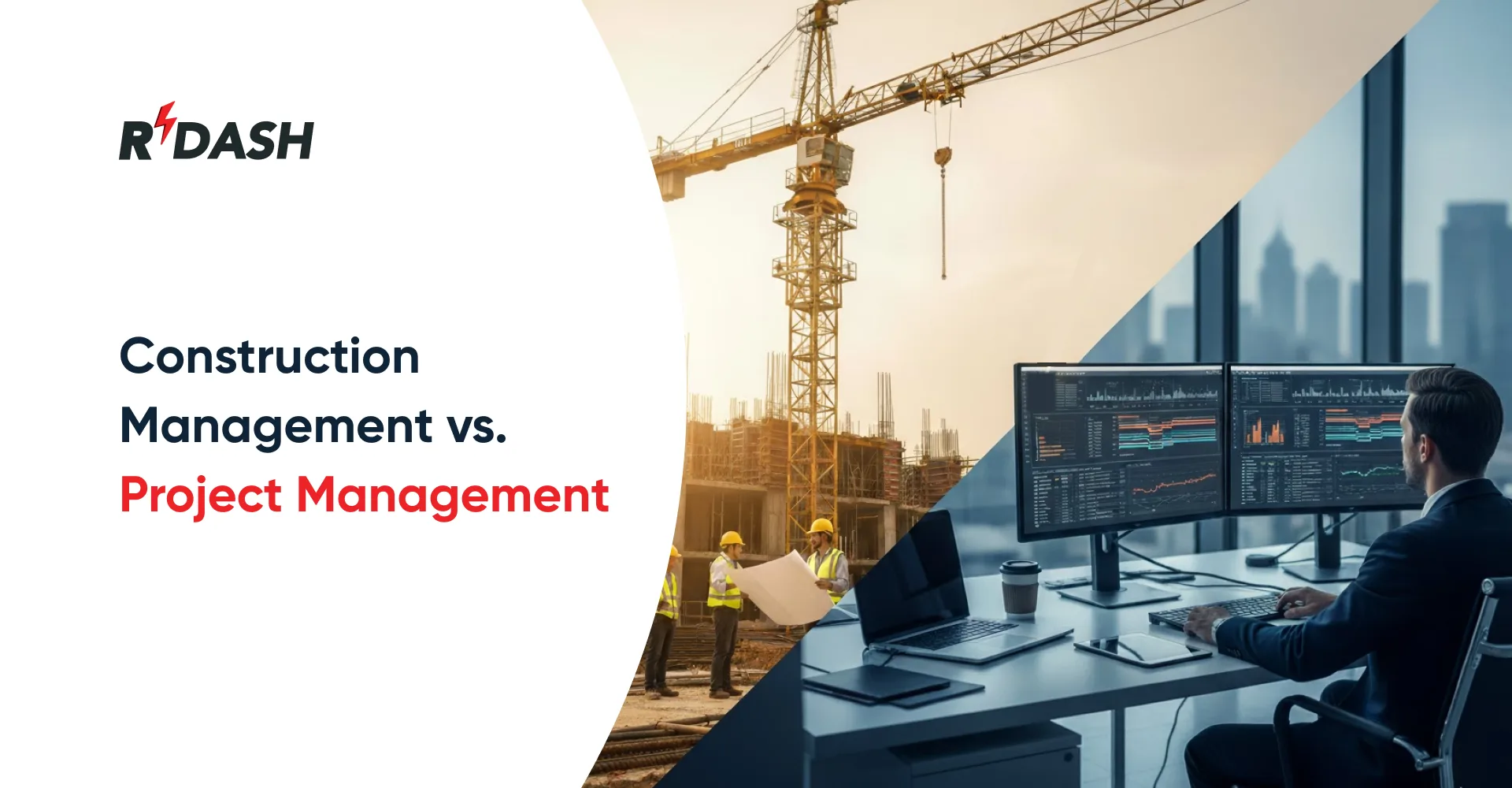
Construction management is primarily concerned with executing the physical work on-site, whereas project management focuses on the overall planning, coordination, and successful completion of the entire project lifecycle. Understanding this difference is essential for improving project performance and choosing the right career direction in the construction field.
What is Construction Management?
Construction management refers to the process of organizing, supervising, and controlling all on-site construction activities. It focuses on turning design plans into real structures through effective coordination of labor, materials, equipment, and site operations.
A construction manager plays a key role in ensuring that the construction work is carried out safely, efficiently, and according to approved specifications and standards.
Key responsibilities of construction management include:
- Supervising daily construction site activities
- Managing labor teams, foremen, and subcontractors
- Ensuring compliance with safety regulations
- Monitoring construction quality and workmanship
- Coordinating material delivery and usage
- Resolving on-site technical and operational issues
- Tracking daily progress and reporting updates
This role is highly practical and field-oriented. Construction managers spend most of their time on-site, where they oversee real-time execution and make quick decisions to keep work moving smoothly.
What is Project Management in Construction?
Project management is a broader discipline that oversees the entire lifecycle of a construction project, from initial concept and planning to completion and handover. It ensures that all aspects of the project are aligned with defined goals, budget constraints, and timelines.
A project manager is responsible for coordinating all stakeholders involved in the project, including clients, architects, engineers, contractors, and construction teams.
Key responsibilities of project management include:
- Defining project scope, goals, and deliverables
- Preparing budgets and financial plans
- Developing project schedules and milestones
- Managing contracts and procurement processes
- Coordinating communication among stakeholders
- Monitoring risks, changes, and issues
- Ensuring timely and successful project delivery
Project managers work across both office and site environments, focusing more on strategic planning and overall project control rather than day-to-day execution.
Key Differences Between Construction Management and Project Management
Although both roles contribute to the same objective—successful project completion—they differ significantly in scope and function.
1. Scope of Work
Construction management focuses on the construction phase only, while project management covers the entire project lifecycle, including planning, execution, and closure.
2. Primary Focus
Construction management is concerned with how the building is constructed on-site, whereas project management focuses on what is built, why it is built, and how the entire project is delivered successfully.
3. Work Environment
Construction managers are mainly site-based, working directly with construction teams. Project managers divide their time between office coordination and site visits.
4. Decision-Making Authority
Project managers handle high-level decisions related to budget, scope, and timelines. Construction managers focus on operational decisions such as workforce management and site execution.
5. Organizational Structure
Typically, construction managers report to project managers, who then report to clients or senior management.
Real-World Example for Better Understanding
Consider the construction of a shopping complex:
- The project manager is responsible for the overall planning, budgeting, scheduling, and coordination with all stakeholders to ensure the project meets client expectations.
- The construction manager is responsible for executing the physical construction work—managing workers, supervising site activities, and ensuring quality construction.
Both roles are essential but operate at different levels of responsibility within the same project.
Daily Responsibilities of Each Role
Understanding their daily activities further clarifies the difference.
Construction Manager’s Daily Tasks:
- Inspecting ongoing construction work on-site
- Coordinating with site engineers and subcontractors
- Ensuring safety procedures are followed
- Managing materials and equipment usage
- Addressing on-site problems and delays
- Monitoring quality and progress of work
Project Manager’s Daily Tasks:
- Reviewing budgets, costs, and financial reports
- Conducting meetings with clients and stakeholders
- Updating project schedules and timelines
- Managing contracts and documentation
- Coordinating between design and construction teams
- Handling risks, changes, and approvals
Construction managers focus on immediate execution, while project managers focus on overall project coordination and control.
Skills Required for Each Role
Both roles require leadership and communication skills, but their technical focus differs.
Skills for Construction Managers:
- Strong knowledge of construction methods and site operations
- Ability to manage labor and subcontractors effectively
- Problem-solving in real-time site conditions
- Understanding of safety standards and quality control
- Ability to interpret technical drawings and plans
Skills for Project Managers:
- Strong budgeting and cost control skills
- Strategic planning and scheduling expertise
- Stakeholder and client communication
- Contract and procurement management
- Risk assessment and decision-making ability
How Construction Management and Project Management Work Together
In successful construction projects, both roles must work in close coordination. The project manager sets the overall direction, while the construction manager ensures that the plan is executed correctly on-site.
Continuous communication between the two helps identify risks early, resolve issues quickly, and maintain alignment between planning and execution.
In smaller projects, one person may perform both roles. However, in large-scale or complex developments, separating these responsibilities improves efficiency, accountability, and overall project control.
Importance of Both Roles in Construction Projects
Construction projects involve multiple teams, strict deadlines, and significant financial investment. Without proper management, delays, cost overruns, and quality issues can easily occur.
- Construction management ensures efficient execution, safety, and quality control on-site
- Project management ensures strategic planning, financial control, and overall project success
When both functions operate effectively together, projects are more likely to be delivered successfully, meeting expectations in terms of time, cost, and quality.
Career Path: Choosing the Right Role
Choosing between construction management and project management depends on your interests, strengths, and long-term career goals.
Construction Management may be suitable if you:
- Prefer working directly on construction sites
- Enjoy hands-on technical work
- Like managing teams in real-time environments
- Are interested in construction processes and execution
Project Management may be suitable if you:
- Prefer planning and coordination roles
- Enjoy working with budgets and schedules
- Want exposure to multiple stakeholders
- Are interested in strategic decision-making and oversight
Construction management is more technical and site-focused, while project management is broader and applicable across multiple industries.
Conclusion
Construction management and project management are two closely related but distinct functions that play vital roles in construction projects. Construction management focuses on the execution of physical work at the site level, while project management oversees the entire project lifecycle from planning to completion.
Both roles are essential for delivering successful projects. When they work together effectively, they create a structured workflow that improves efficiency, reduces risks, and ensures high-quality outcomes from start to finish.
