Commodity Price Volatility: Hedging Strategies for Independent Proprietor
Author : Shawn Fisher | Published On : 24 Sep 2026
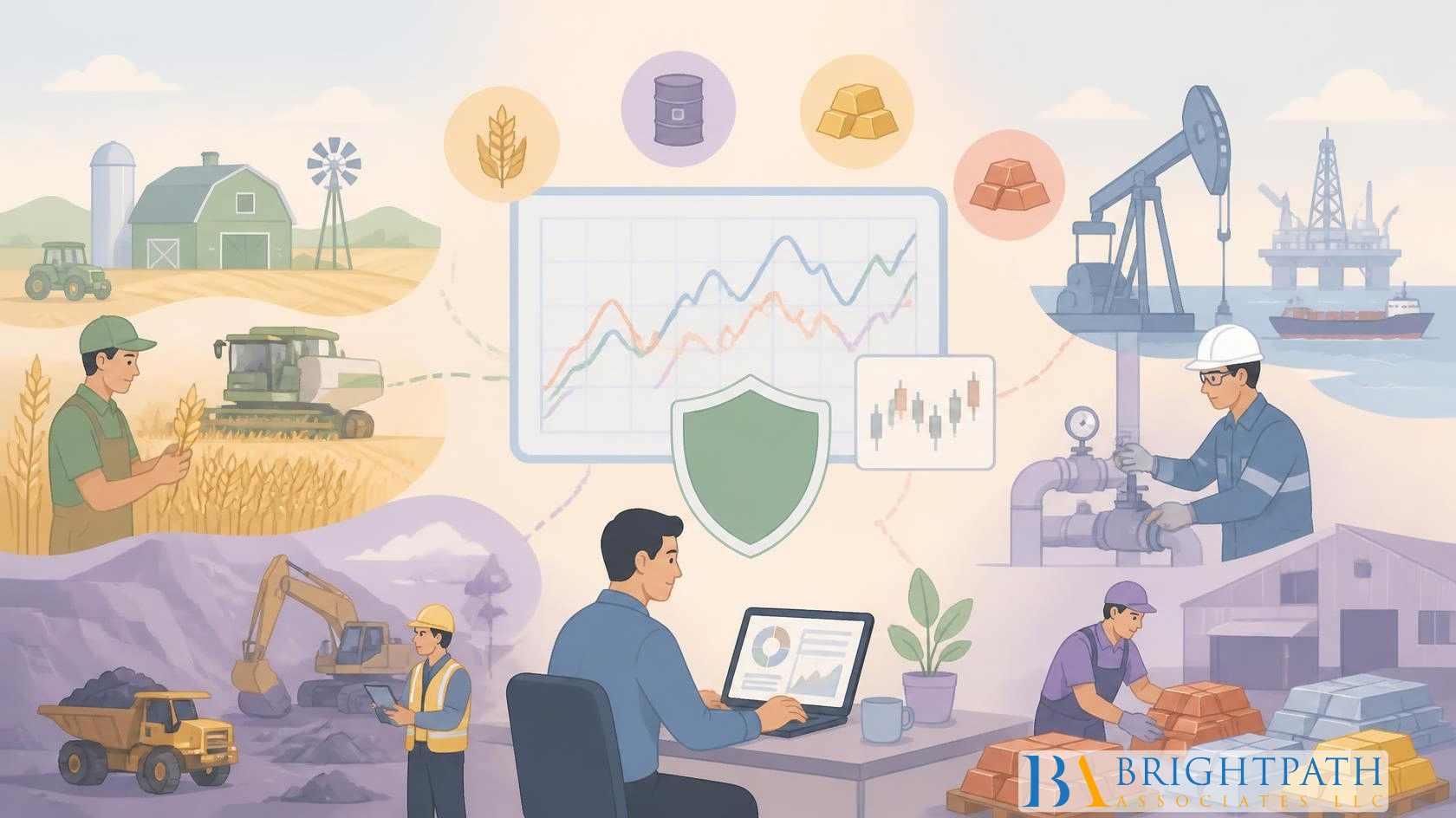
Commodity price volatility is one of the most persistent challenges facing independent mining and metals companies. Prices for metals and mineral commodities can move sharply in response to changes in global demand, interest rates, energy costs, supply disruptions, geopolitical developments, inventories, currency movements, and changing industrial consumption.
For large multinational producers, sophisticated treasury functions and diversified portfolios can provide some protection against these fluctuations. Smaller and mid-sized operators often have fewer financial and operational buffers. A sudden decline in the price of a key commodity can affect revenue, capital spending, hiring, debt servicing, production decisions, and long-term investment plans simultaneously.
This makes commodity-price risk management more than a financial exercise. For independent operators, it is fundamentally a business resilience issue.
Why Commodity Volatility Matters So Much
Mining companies have a distinctive exposure to commodity prices because their revenues are closely connected to the market value of what they produce. At the same time, many operating expenses—including labor, energy, equipment, transportation, maintenance, and processing—may remain relatively stable in the short term.
When the selling price falls while operating costs remain elevated, margins can contract rapidly. The opposite situation can also create challenges. A sharp price increase may improve revenue, but it can encourage companies to expand too quickly, increase capital commitments, or assume that favorable market conditions will continue indefinitely.
The objective of risk management should therefore not be to predict every market movement. Commodity markets are influenced by too many variables for reliable short-term forecasting to become a sustainable business strategy. Instead, independent operators can focus on creating a financial and operational structure that remains functional across different market conditions.
Hedging as a Tool for Stability
Hedging can help companies reduce the financial impact of unfavorable commodity-price movements. Depending on the commodity and market structure, businesses may use instruments such as futures, options, swaps, or forward contracts.
These instruments can provide greater predictability around future revenues or costs, although each carries its own risks, costs, liquidity considerations, and contractual requirements. The important distinction is that hedging should generally be viewed as risk management rather than speculation.
A mining company does not necessarily need to predict whether copper, gold, aluminum, or another commodity will rise or fall. Its objective may instead be to reduce the financial consequences of a price movement large enough to disrupt its operating plan.
Research on commodity-price risk management has similarly identified sourcing, contracting, financing, and organizational strategies as components of a broader risk-mitigation framework rather than treating financial derivatives as the only solution.
Start With Exposure, Not Instruments
One of the most important steps in developing a hedging program is understanding the company's actual exposure. Management should determine how much production is expected, when it will be produced, what portion has already been sold under contracts, what prices customers pay, and which operating costs are themselves linked to commodities.
For example, a producer may have a significant portion of future output subject to market prices but also have customer agreements that partially protect revenue. Similarly, energy or transportation costs may rise when commodity prices rise, creating another variable that needs to be considered. Without understanding these relationships, a company can hedge too much, too little, or the wrong exposure.
Technology Is Changing Risk Management
Digital transformation is creating new opportunities for mining and metals companies to improve risk visibility. Advanced analytics can combine production forecasts, commodity prices, inventory levels, customer contracts, operating costs, and market information into more comprehensive decision-support systems.
This broader transformation is increasingly relevant throughout the Mining and Metals Industry, where companies are simultaneously navigating technological transformation, environmental expectations, workforce challenges, and changing economic conditions. BrightPath Associates highlights the growing importance of automation, predictive analytics, AI, remote operations, and workforce digitization across the sector.
Building Resilience Instead of Predicting Markets
The most useful question for an independent mining or metals company may not be, “Where will commodity prices go next?” That shift in perspective changes the role of hedging.
Instead of attempting to identify the perfect market entry point, companies can develop policies designed around cash-flow stability, acceptable risk levels, operational flexibility, and long-term strategic objectives. The subject is explored further in BrightPath Associates' Commodity Price Volatility: Hedging Strategies for the Independent Proprietor.
For independent and mid-sized mining businesses, effective commodity-risk management will increasingly require a combination of financial discipline, operational agility, technology, commercial strategy, and experienced leadership.
