Commercializing Space Technologies: Strategies for Profit
Author : Alyssa Miller | Published On : 12 Aug 2026
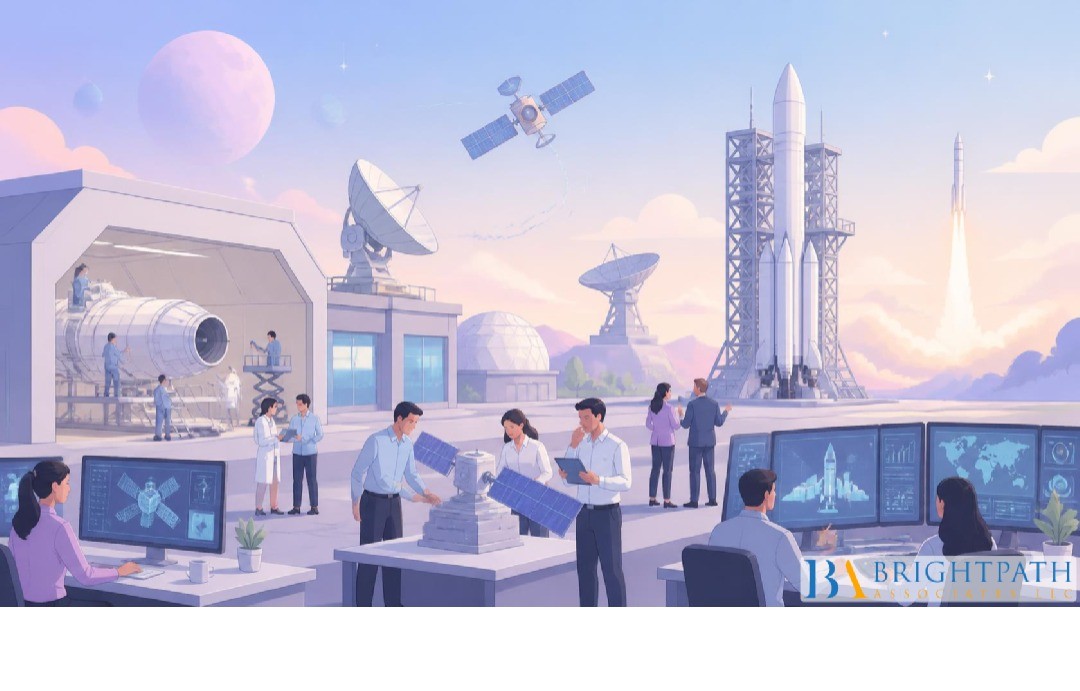
The commercial space sector is moving beyond its traditional dependence on government programs. Technologies once developed primarily for government and defense applications are increasingly finding opportunities in telecommunications, Earth observation, navigation, logistics, cybersecurity, robotics, manufacturing, and infrastructure monitoring. For small and mid-sized companies, this expansion creates an exciting opportunity: transform specialized space technologies into commercially viable products and services.
Yet technical innovation alone does not guarantee commercial success. A company can develop an impressive propulsion system, satellite component, sensor, robotic platform, or software solution and still struggle to generate sustainable revenue. Commercialization requires companies to connect technology with a clearly defined customer problem, a realistic business model, regulatory planning, financing, manufacturing capabilities, and the right leadership.
This is particularly important across the Defense & Space Industry, where companies frequently operate at the intersection of government requirements, commercial markets, advanced engineering, and long development cycles.
Start With the Customer, Not Just the Technology
Many space technologies originate in research and development environments where performance is the primary objective. Engineers naturally focus on questions such as whether a system works, how efficiently it operates, and whether it can survive demanding conditions. Commercial customers, however, ask different questions.
They want to know whether the technology solves a meaningful problem, how much it costs, how easily it can be integrated, what return it can generate, and whether the supplier can support it over time. This means commercialization should begin before the technology is completely finished. Entrepreneurs should identify potential customers during the development process and continuously test assumptions about market demand. Early customer conversations can reveal whether a technology needs to be sold as hardware, software, data, a service, or a combination of these.
Move From Selling Products to Selling Outcomes
A customer may not actually want a satellite sensor. They may want better agricultural monitoring, more accurate maritime intelligence, improved infrastructure assessment, or faster disaster response. Similarly, a customer may not need a robotic system simply because it is technologically impressive. They need the system to reduce costs, improve safety, extend asset life, or perform tasks that are difficult or dangerous for humans. This distinction can significantly change how companies design their offerings.
Space robotics, for instance, can potentially evolve from an equipment-sales model into a service model. Instead of requiring customers to purchase and operate expensive robotic platforms, a company could provide inspection, servicing, maintenance, or other capabilities as recurring services. Such models can create stronger long-term customer relationships while making revenue more predictable.
Use Government Contracts as a Foundation, Not a Limitation
Government and defense contracts remain important sources of validation and revenue for many space technology companies. Government customers can provide opportunities to demonstrate technical performance in demanding environments and establish credibility with future commercial customers. However, relying entirely on one government program can create significant business risk. Procurement schedules can change, budgets can be delayed, and strategic priorities can shift.
A stronger commercialization strategy combines government opportunities with adjacent commercial markets. A technology originally developed for defense applications may have uses in transportation, telecommunications, industrial monitoring, maritime operations, environmental assessment, or infrastructure management. The challenge is determining which elements of the technology can be adapted without creating excessive engineering and manufacturing costs.
Build Cybersecurity Into the Product
As space systems become increasingly connected, cybersecurity is becoming part of the commercial value proposition rather than simply a compliance requirement. Satellites, communication networks, ground stations, mission-control systems, and space-enabled data platforms can contain valuable information and support critical operations. Customers therefore increasingly need confidence that systems can withstand cyber threats and continue operating reliably.
Cybersecurity should be considered during product development rather than added shortly before launch. Secure communications, authentication, encryption, software integrity, access controls, vulnerability monitoring, and incident-response capabilities can become integral elements of a product's architecture. For smaller companies, strong cybersecurity can even become a competitive differentiator. Demonstrating that security and resilience were designed into the product can increase confidence among customers, investors, strategic partners, and government buyers.
Explore Recurring Revenue Opportunities
Profitability depends not only on how much a company sells but also on how consistently revenue can grow. Hardware contracts can produce substantial individual transactions, but they may create irregular revenue patterns. Recurring models such as software subscriptions, data services, analytics platforms, maintenance agreements, and managed services can provide greater predictability.
A company developing satellite monitoring technology, for example, might combine hardware deployment with a recurring analytics subscription. Customers receive ongoing insights, while the provider creates revenue throughout the operational life of the technology. The right model depends on the technology and customer, but entrepreneurs should consider recurring revenue from the beginning rather than attempting to add it after the product reaches the market.
Leadership Is a Commercialization Asset
Technology may initiate a space venture, but leadership often determines whether that technology becomes a sustainable business. Companies need executives who can understand engineering while also thinking about customers, financing, manufacturing, regulation, partnerships, and market expansion. They need leaders who can translate technical capabilities into commercial value.
As space companies scale, specialized talent becomes increasingly important. Engineering expertise must be complemented by business development, program management, cybersecurity, supply-chain, manufacturing, regulatory, and financial capabilities. The original BrightPath article, Commercializing Space Technologies Strategies for Profit, explores these commercialization strategies and the growing opportunities available to companies seeking to convert advanced space technologies into profitable ventures.
From Technical Achievement to Commercial Success
The commercial space economy is becoming increasingly competitive. The winners will not necessarily be the companies with the most sophisticated technology. They will be the companies capable of turning innovation into something customers genuinely value and are willing to purchase repeatedly.
That requires a combination of customer insight, scalable manufacturing, regulatory awareness, cybersecurity, strategic partnerships, diversified markets, and disciplined financial planning. For small and mid-sized defense and space companies, this creates both a challenge and an opportunity. Technical innovation may open the door, but the right commercial strategy—and the right leadership team—determines how far the company can go.
