Colocation Hosting Providers: 7 Things Businesses Should Check Before Choosing One
Author : NetForChoice Storage solution UAE | Published On : 04 Nov 2026
Choosing between colocation hosting providers requires more than comparing rack space and monthly prices. Businesses must check infrastructure reliability, power capacity, network connectivity, physical security and technical support before moving their servers. A reliable provider should protect business-critical equipment while giving IT teams enough control to manage their systems. Companies exploring colocation hosting services in Dubai should evaluate these factors carefully to avoid service gaps and unexpected operational costs.
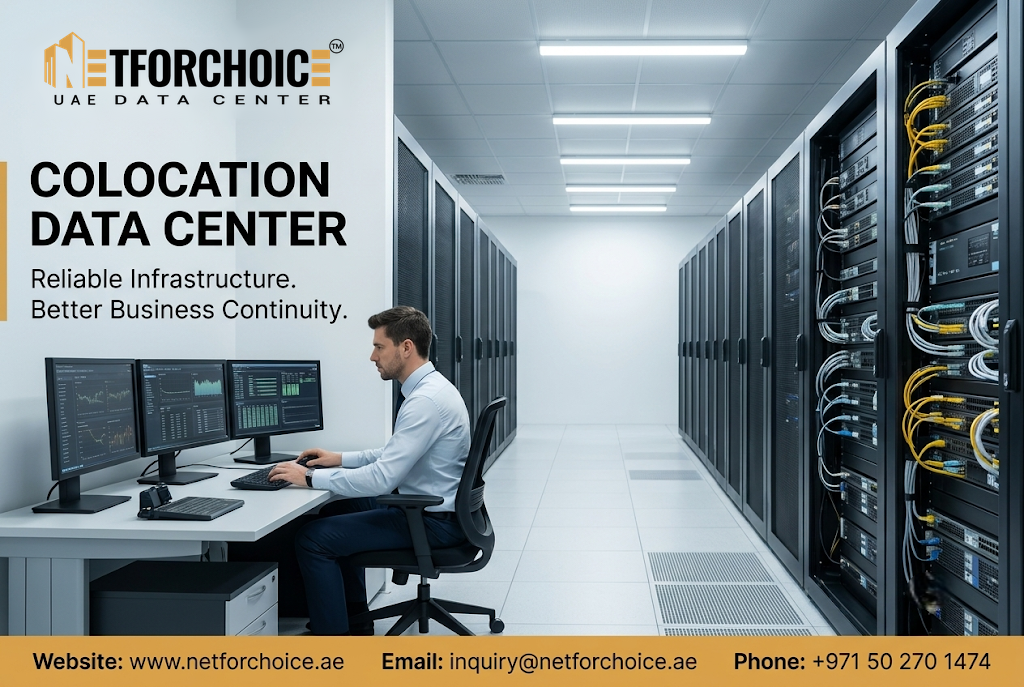
1. Check the Data Center Infrastructure
The quality of the facility directly affects the environment in which your servers operate.
Before selecting a provider, ask how the facility handles power failures, cooling issues and planned maintenance. A well-designed data center should have redundancy in critical systems so that one component failure does not immediately affect the entire environment.
Look for:
-
Redundant power distribution.
-
Backup power arrangements.
-
Reliable cooling systems.
-
Environmental monitoring.
-
Fire detection and suppression systems.
Also ask whether the provider can explain its infrastructure design and maintenance procedures. Clear answers are more useful than general claims about enterprise-grade facilities.
2. Understand Power Capacity and Expansion Options
Power requirements can change as a business adds servers or deploys more demanding applications.
A provider should explain the available power capacity per rack or server and how additional capacity can be arranged. Businesses should also understand power billing, usage limits and any additional charges.
Ask these questions before signing an agreement:
-
How much power is included in the selected configuration?
-
Can power capacity increase when hardware requirements grow?
-
How is power usage monitored?
-
What backup arrangements support the facility?
This helps prevent a situation where the available rack space is sufficient but the power capacity is not.
3. Evaluate Network Connectivity
Network performance is another important factor when comparing colocation hosting providers.
A data center may have excellent physical infrastructure but still fail to meet business requirements if connectivity is limited or unreliable.
Check whether the facility offers carrier-neutral connectivity. This gives businesses more flexibility to choose network carriers based on cost, routing and performance needs.
You should also review:
-
Available bandwidth options.
-
Network redundancy.
-
Connectivity with important business locations.
-
DDoS protection options.
-
Support for hybrid cloud connections.
For businesses serving customers across the UAE and other regions, network routing and latency should be evaluated against actual application requirements.
4. Review Physical Security Measures
Your servers may contain customer records, business applications and sensitive company information. Physical access must therefore be controlled.
Ask the provider how it protects the facility and restricts access to equipment.
Important measures include:
-
Biometric or controlled entry systems.
-
CCTV surveillance.
-
Restricted server room access.
-
Visitor authorization procedures.
-
Security monitoring.
Do not assume that a data center is secure simply because it operates around the clock. Ask about access policies and how security incidents are handled.
5. Check Technical Support and Remote Hands
Technical support becomes especially important when your own IT team cannot visit the data center.
Remote hands support allows on-site technicians to assist with physical tasks such as checking hardware connections, restarting equipment and helping with basic troubleshooting.
Before selecting a provider, confirm:
-
Whether support is available 24/7.
-
Which physical tasks are included.
-
Whether additional support charges apply.
-
How urgent requests are handled.
-
Whether on-site engineers are available.
A clear support process can save time during hardware issues and planned maintenance.
6. Read the SLA Carefully
A Service Level Agreement explains the provider's service commitments and the responsibilities of both parties.
Do not compare providers using uptime percentages alone. Read the complete SLA and check how availability is measured.
Pay attention to:
-
Uptime commitment.
-
Planned maintenance exclusions.
-
Incident reporting process.
-
Response and resolution commitments.
-
Service credits and their conditions.
For example, a 99.95% uptime commitment is not the same as a guarantee that every application will remain available. Your own server hardware, software and network configuration also affect service continuity.
7. Confirm Migration and Future Growth Support
Moving existing servers into a colocation facility needs proper planning.
A provider should help clarify rack requirements, power allocation, connectivity and deployment arrangements. Businesses should also understand whether migration assistance is included or charged separately.
Before the move, prepare a hardware inventory and document network settings, application dependencies and backup procedures.
Think about future requirements too. Check whether the provider can support additional racks, higher power density and changing bandwidth needs without forcing a complete infrastructure relocation.
How to Make the Final Provider Decision
Start by listing your current infrastructure requirements. Include server dimensions, power consumption, bandwidth, security needs and support expectations.
Next, ask shortlisted providers for detailed service information and SLA documents. Compare their actual capabilities rather than relying on marketing claims.
For businesses operating in Dubai, a local facility may also help with regional connectivity, physical access and operational coordination.
The right provider should match your technical requirements today while offering a clear path for future expansion.
Conclusion
Choosing among colocation hosting providers is an important infrastructure decision. Power redundancy, network flexibility, physical security, technical support and transparent SLA terms all deserve careful attention.
Businesses planning to host their own servers in Dubai can explore NetForChoice colocation services and discuss their rack space, power and connectivity requirements before making a decision.
Frequently Asked Questions
1. What should I look for in colocation hosting providers?
Check facility infrastructure, redundant power, cooling, network connectivity, physical security, technical support and SLA conditions. Also confirm pricing and future expansion options.
2. Why is carrier-neutral connectivity important?
It allows businesses to choose from multiple network carriers instead of depending on a single provider. This can offer more flexibility in network planning and connectivity costs.
3. Do colocation providers manage business servers?
Not always. In a standard colocation arrangement, the customer owns and manages the servers while the facility provider supplies power, cooling, physical security and connectivity. Additional managed services may be available depending on the agreement.
