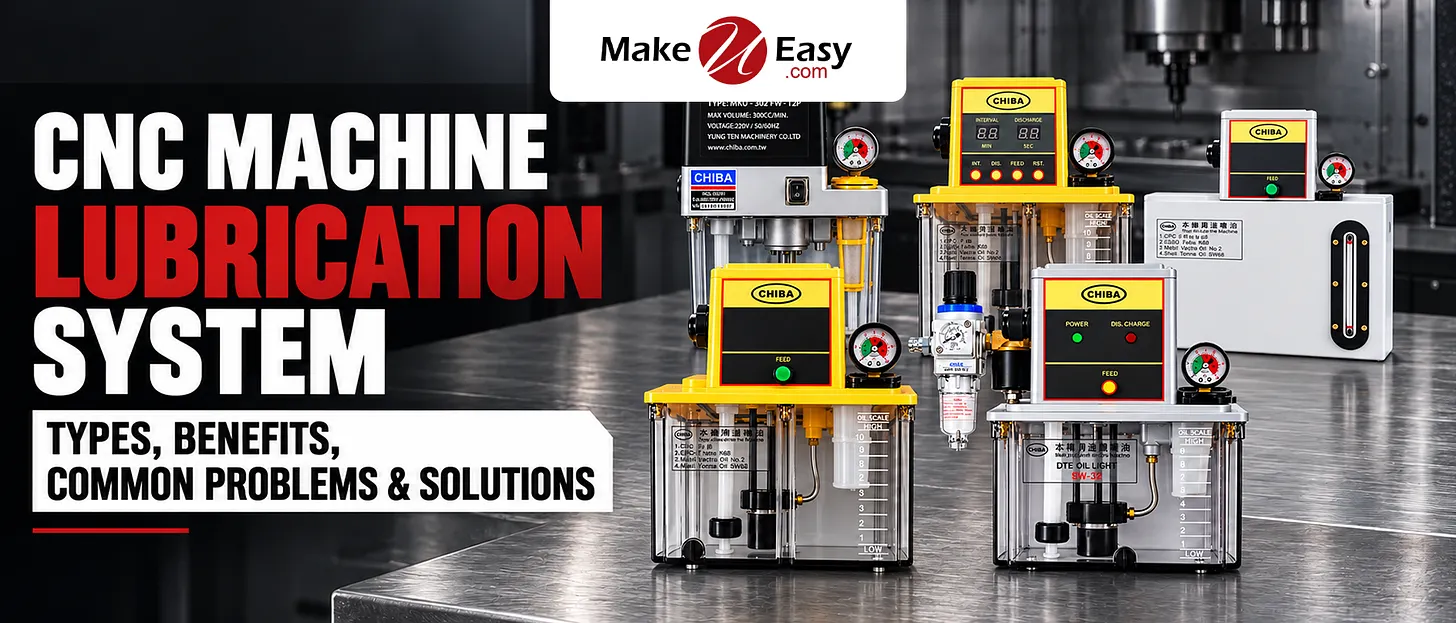
CNC Machine Lubrication System: Types, Benefits, Common Problems & Solutions
Author : Surya makeyoueasy | Published On : 14 Oct 2026
Introduction
A CNC machine depends on precise movement, controlled friction, and consistent operating conditions to produce accurate components. Without proper lubrication, moving parts such as linear guideways, ball screws, bearings, and spindle assemblies can experience excessive wear, heat, and reduced accuracy.
A CNC machine lubrication system delivers the correct lubricant to designated components at specified intervals. Depending on the machine design, lubrication may be manual, automatic, centralized, or specialized for high-speed spindles.
Understanding how these systems work helps manufacturers improve machine reliability, reduce maintenance costs, and maintain consistent machining performance.
What Is a CNC Machine Lubrication System?
A CNC lubrication system supplies oil or grease to components that require friction reduction and wear protection. Many modern CNC machines use automatic or centralized systems to distribute measured quantities of lubricant to multiple points.
A typical automatic lubrication system includes:
-
Lubricant reservoir: Stores the required oil or grease.
-
Pump: Moves lubricant through the system.
-
Distribution lines: Carry lubricant to the lubrication points.
-
Metering units or distributors: Control lubricant delivery.
-
Controller and sensors: Manage lubrication intervals and monitor selected operating conditions.
The system must deliver the correct lubricant in the required quantity and at the appropriate interval. Too little lubrication can accelerate wear, while excessive lubrication can cause leakage, contamination, or overheating in certain applications.
Types of CNC Machine Lubrication Systems
Different lubrication systems suit different machine designs, operating speeds, and lubrication requirements.
1. Manual Lubrication System
Manual lubrication uses an oil can, grease gun, or other hand-operated method to apply lubricant to specified points.
Advantages:
-
Simple design and low initial cost.
-
Suitable for basic machines and occasional lubrication.
-
Easy to implement without complex controls.
Limitations: Lubrication depends on operator discipline, and difficult-to-access points may be missed.
Best suited for: Small machines and components with manufacturer-approved manual lubrication schedules.
2. Automatic Lubrication System
An automatic system uses a pump and controller to deliver lubricant at programmed intervals or according to machine operating cycles.
Advantages:
-
Consistent lubrication timing.
-
Reduced manual intervention.
-
Better control over lubricant delivery.
Best suited for: CNC turning centers, machining centers, and machines operating for extended periods.
3. Centralized Lubrication System
A centralized system distributes lubricant from a common reservoir and pump to multiple lubrication points through pipes, metering devices, and distributors.
Common configurations include single-line, progressive, and dual-line systems. The appropriate arrangement depends on the number of lubrication points, line distances, lubricant requirements, and monitoring needs.
Advantages:
-
Supplies multiple points from one location.
-
Simplifies routine lubrication tasks.
-
Can improve consistency and reduce missed lubrication points.
Best suited for: CNC machines with multiple guideways, ball screws, and other connected lubrication points.
4. Oil-Air Lubrication System
Oil-air lubrication delivers a controlled quantity of oil with a continuous or regulated airflow. It is used in suitable high-speed spindle and bearing applications.
Advantages:
-
Enables precise oil delivery.
-
Can help manage heat and lubricant distribution.
-
Suitable for certain high-speed applications.
Best suited for: Spindles and specialized bearing arrangements designed for oil-air lubrication.
5. Oil Circulation System
An oil circulation system continuously moves oil through selected components and may return it to a reservoir for filtration and reuse.
Advantages:
-
Supports continuous lubrication.
-
Can help remove heat from suitable components.
-
Allows filtration and condition monitoring.
Best suited for: Machine assemblies and bearings designed for circulating-oil lubrication.
Benefits of a Proper CNC Lubrication System
An effective lubrication system supports several aspects of machining performance.
-
Reduced friction and wear: A suitable lubricant separates contacting surfaces and helps protect components.
-
Improved machine accuracy: Reducing excessive wear and temperature variation supports dimensional consistency.
-
Longer component life: Correct lubrication helps protect guideways, bearings, and ball screws.
-
Lower maintenance effort: Automatic systems reduce repetitive manual lubrication work.
-
Reduced downtime risk: Monitoring lubricant levels and delivery can help identify faults before severe damage occurs.
-
More consistent operation: Reliable lubrication supports smoother movement and predictable machine performance.
Actual results depend on machine design, lubricant selection, operating conditions, and maintenance quality.
Common CNC Lubrication Problems and Solutions
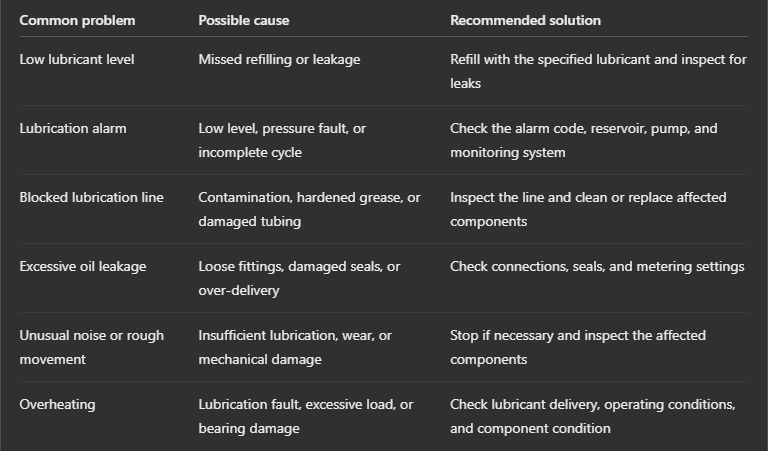
Important: Never assume that a running lubrication pump guarantees successful delivery to every lubrication point. Follow the machine manufacturer’s troubleshooting procedure and verify delivery where possible.
How to Maintain a CNC Machine Lubrication System
Preventive maintenance helps keep the lubrication system functioning correctly.
-
Check lubricant levels: Inspect reservoirs at the recommended intervals and respond promptly to low-level warnings.
-
Use the specified lubricant: Confirm the required oil grade, viscosity, or grease specification in the machine manual.
-
Inspect pipes and fittings: Look for leaks, cracks, loose connections, and damaged tubing.
-
Keep lubricant clean: Prevent dust, chips, coolant, and other contaminants from entering the reservoir.
-
Verify delivery cycles: Check controller indications, pressure readings, and cycle sensors according to the manufacturer’s procedure.
-
Inspect lubrication points: Look for abnormal wear, unusual temperatures, noise, or restricted movement.
-
Follow scheduled servicing: Replace filters and service pumps, distributors, and other components as specified.
Always isolate the machine and follow the required lockout and safety procedures before working on lubrication equipment.
How to Choose the Right CNC Lubrication System
Consider these factors when selecting or evaluating a lubrication system:
-
Machine type: A CNC lathe, VMC, and high-speed machining center may have different lubrication requirements.
-
Lubrication points: Identify the number and location of guideways, ball screws, bearings, and other components.
-
Lubricant specification: Match the oil or grease to the component manufacturer’s requirements.
-
Operating conditions: Consider speed, load, temperature, duty cycle, and contamination exposure.
-
Automation and monitoring: Determine whether automatic delivery, low-level alarms, or cycle monitoring are required.
-
Maintenance accessibility: Choose an arrangement that can be inspected and serviced reliably.
Never select a lubricant solely by price or substitute a different grade without confirming compatibility with the machine manufacturer’s specifications.
Why Choose MakeYouEasy?
MakeYouEasy helps manufacturing professionals explore CNC machining tools, accessories, and technical resources for informed purchasing decisions. Understanding machine maintenance requirements alongside tooling selection helps workshops build more reliable and efficient machining operations.
Explore the available products and resources at MakeYouEasy.com.
Conclusion
A reliable CNC machine lubrication system is essential for protecting moving components, supporting machining accuracy, and reducing avoidable maintenance issues. Whether a machine uses manual, automatic, centralized, oil-air, or circulating-oil lubrication, the system must match the machine’s specific requirements.
Regular inspections, clean lubricant, correct settings, and timely troubleshooting help maintain dependable CNC machine performance over the long term.
Frequently Asked Questions
1. What is the main purpose of a CNC machine lubrication system?
It delivers the appropriate lubricant to machine components to reduce friction, wear, and heat.
2. Which lubrication system is commonly used in CNC machines?
Automatic or centralized lubrication systems are common in many CNC machines, although the configuration varies by machine design.
3. What happens if a CNC machine does not receive enough lubrication?
Insufficient lubrication can cause increased friction, overheating, premature wear, and potential component failure.
4. How often should a CNC lubrication system be checked?
Check it at the intervals specified by the machine manufacturer, with more frequent inspections when operating conditions require them.
5. Can the wrong lubricant affect CNC machining accuracy?
Yes. An incompatible lubricant can impair component protection and contribute to wear or temperature-related changes that affect accuracy.
Popular Search Keywords
CNC machine lubrication system, CNC lubrication system types, automatic lubrication system for CNC machines, centralized lubrication system, CNC machine maintenance, CNC lubrication problems and solutions, CNC machine oil system, CNC linear guide lubrication, ball screw lubrication, CNC preventive maintenance
