Cloud Tiering: An Efficient Way to Manage Growing Business Data
Author : 10petabyte 10PB | Published On : 09 Oct 2026
Data has become an essential part of everyday business operations. Companies rely on digital information to manage customers, operate applications, maintain financial records, analyze performance, and support decision-making. As these activities expand, the amount of information that businesses need to store also increases.
However, storing more data is only one part of the challenge. Organizations must also determine how quickly different types of information need to be accessed, how long they must be retained, and which storage resources are appropriate for their requirements.
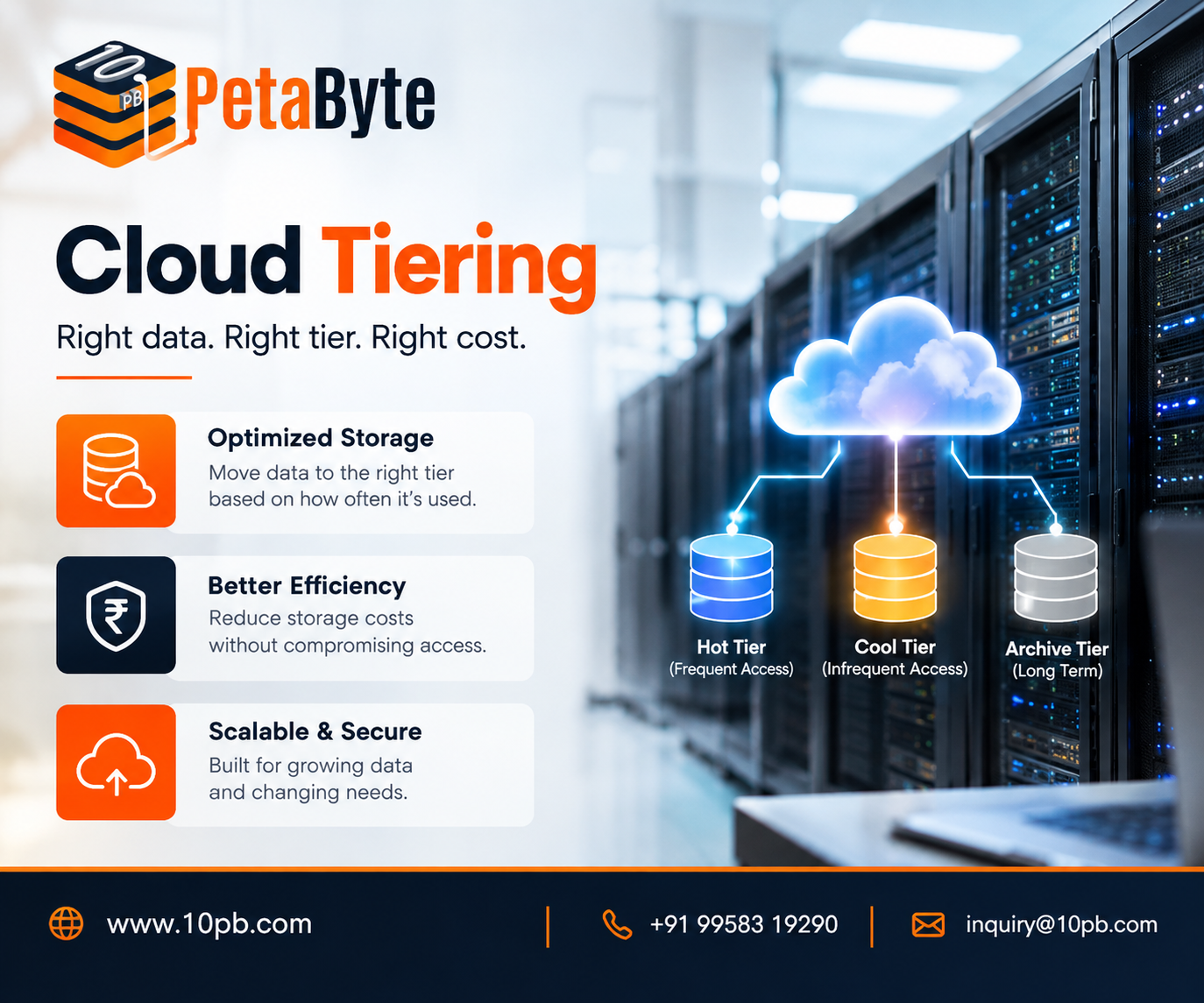
Cloud Tiering provides a practical way to address these challenges. It allows organizations to distribute information across different storage tiers according to access frequency, performance requirements, and business needs. Instead of treating every file equally, businesses can select storage options that suit the way their information is used.
What Is Cloud Tiering?
Cloud Tiering is a data storage strategy that organizes information across different storage tiers. These tiers can differ in performance, accessibility, availability, and cost.
Consider a business that maintains an active customer database alongside several years of historical reports. The database may require frequent access and consistent performance because it supports daily operations. Historical reports, on the other hand, may only be needed occasionally.
Keeping both types of information on the same high-performance storage tier may not be the most efficient approach.
A tiered storage strategy allows frequently accessed information to remain on suitable performance-oriented storage, while eligible data that is rarely accessed can be moved to more economical storage options.
The available tiers and transition mechanisms depend on the chosen cloud platform. Businesses should evaluate the capabilities of their storage provider before developing a tiering policy.
Why Businesses Need a Better Storage Strategy
As organizations grow, their data requirements become more complex. New applications generate additional records, employees create more documents, and business systems retain information for longer periods.
Without a structured strategy, storage environments can become difficult to manage. Companies may pay for high-performance capacity that certain datasets no longer require. Alternatively, placing important information on a tier with unsuitable retrieval characteristics can affect business operations.
Cloud Tiering helps organizations balance these competing requirements.
By understanding how information is used, IT teams can make better decisions about storage allocation. This approach can improve visibility into storage consumption, support capacity planning, and help businesses manage their growing information more systematically.
Key Benefits of Cloud Tiering
1. More Effective Storage Cost Management
Not every dataset requires premium storage performance.
Frequently accessed application files may justify the cost of responsive storage, whereas older documents and historical records may be suitable for more economical alternatives.
Moving eligible information to appropriate storage tiers can reduce unnecessary spending on premium capacity.
However, organizations should evaluate the complete cost structure. Retrieval charges, transition fees, minimum storage durations, and other provider-specific conditions can influence the overall financial benefit.
2. Better Resource Utilization
Storage resources should reflect the requirements of the information they hold.
For example, active databases may need consistent performance, while historical datasets may have less demanding access requirements.
A tiering policy helps organizations distribute information more appropriately. This can improve resource utilization and make it easier to understand where storage capacity is being consumed.
3. Improved Data Lifecycle Management
Information changes throughout its lifecycle. Recently created files may receive frequent attention, but their usage can decline after a project finishes or an application is replaced.
Lifecycle policies can help businesses manage these changes through predefined rules.
Depending on the platform, eligible information may transition between storage classes after a specified period or when supported conditions are met. Automation can reduce repetitive administrative tasks, provided that policies are monitored and adjusted when necessary.
4. Greater Flexibility for Growing Organizations
Growing businesses often need to accommodate new applications, larger datasets, and changing operational requirements.
Cloud Tiering provides a framework for handling these changes without requiring every dataset to use the same storage configuration.
Organizations can adjust their storage policies as data volumes increase and business priorities evolve.
5. Better Storage Planning
A well-designed tiering strategy encourages businesses to examine how much information they retain and how it is used.
This assessment can help identify storage trends, improve forecasting, and support more informed infrastructure decisions.
It also encourages collaboration between IT teams, application owners, and business departments when defining storage requirements.
Common Applications of Cloud Tiering
Business Documents and Records
Organizations generate contracts, invoices, reports, presentations, and internal documents throughout the year.
Current working files may need frequent access, while older records may be required only for reference or compliance.
A tiering strategy can help organize these documents according to their usage while ensuring that retention requirements are respected.
Backup and Recovery Systems
Backup environments contain copies of information that businesses may need after accidental deletion, system failures, or other disruptions.
Recent backups may require rapid retrieval, whereas older copies may be suitable for economical storage if recovery objectives permit it.
Before changing backup storage tiers, organizations should evaluate retrieval times, retention policies, and restoration requirements. Recovery procedures should also be tested regularly.
Analytics and Historical Data
Analytics platforms often process recent information for operational reporting and business decisions.
Historical datasets may remain valuable for research, comparisons, and long-term trend analysis, even when they are not accessed frequently.
A suitable tiering strategy can help distinguish active analytical workloads from historical information with different performance requirements.
Media and Digital Archives
Images, videos, audio recordings, and other digital assets can consume significant storage capacity.
Some assets may be accessed daily, while others remain unused for long periods. Businesses can evaluate these access patterns to determine whether different storage tiers are appropriate for their collections.
Enterprise Applications
Different applications have different performance and availability requirements.
An application supporting real-time transactions may require responsive access to its data. Another application that stores historical records may tolerate longer retrieval times for certain datasets.
Storage decisions should account for application dependencies, operational priorities, and recovery requirements before information is moved.
How to Develop an Effective Cloud Tiering Strategy
Implementing a successful strategy begins with understanding the existing storage environment.
First, identify the types of information being stored and estimate how quickly data volumes are growing. Where possible, analyze actual access patterns instead of relying entirely on assumptions.
Next, classify information according to access frequency, performance needs, business importance, and retention requirements.
Once the categories are established, compare the available storage tiers. Consider capacity charges, retrieval costs, transition fees, availability, and expected retrieval delays.
The next step is to create clear policies. These should explain which datasets are eligible for transitions, which conditions trigger a change, and which information must remain readily accessible.
Organizations should begin with a manageable group of suitable datasets and evaluate the results before expanding the strategy. Testing helps reveal potential application dependencies, unexpected costs, and retrieval problems.
Finally, review the policies regularly. Business requirements and data usage can change, so storage decisions should be updated when necessary.
Security and Compliance Considerations
Storage optimization should never compromise data protection.
Organizations should maintain appropriate access controls, encryption, monitoring, and recovery arrangements across their storage environment. They should also verify that each storage tier meets the required availability and security standards.
Compliance requirements must be considered before changing storage locations. Some records must be retained for specific periods, and automated lifecycle policies should respect these obligations.
Documentation is equally important. IT teams should understand where information is stored, which policies apply, and how important datasets can be retrieved when needed.
Regular reviews help confirm that storage policies remain aligned with business and regulatory requirements.
Choosing the Right Storage Approach
Every organization has different priorities. Some businesses require high performance for active workloads, while others need economical options for retaining large volumes of historical information.
A suitable strategy should account for expected data growth, application requirements, retrieval frequency, security, availability, and total storage costs.
Organizations exploring structured data management can learn more about Cloud Tiering through 10PB's cloud data tiering resource.
Conclusion
Cloud Tiering provides a structured way to manage growing datasets by matching information with suitable storage resources. It can help organizations improve storage utilization, simplify data lifecycle management, and potentially reduce unnecessary storage expenses.
Achieving these benefits requires thoughtful planning, accurate information about data usage, clear policies, and appropriate security controls.
By reviewing storage requirements regularly and adapting policies to changing workloads, businesses can build a flexible storage environment that supports both current operations and long-term growth.
