Cloud Storage Pricing: How to Plan a Reliable Business Infrastructure
Author : 10petabyte 10PB | Published On : 21 Oct 2026
Cloud Storage Pricing: A Practical Guide for Business Decision-Makers
Digital data supports nearly every part of a modern business. Organizations use information to communicate with customers, manage transactions, operate applications, coordinate teams, and understand performance. As data volumes increase, choosing a suitable storage environment becomes an important technology decision. Understanding cloud storage pricing helps businesses assess available options and plan for both present requirements and future growth.
Cloud storage can give organizations access to flexible resources without requiring them to maintain every component of a physical storage system themselves. However, selecting a service involves more than comparing the advertised price of storage capacity. The way data is accessed, transferred, protected, and managed can influence the overall cost.
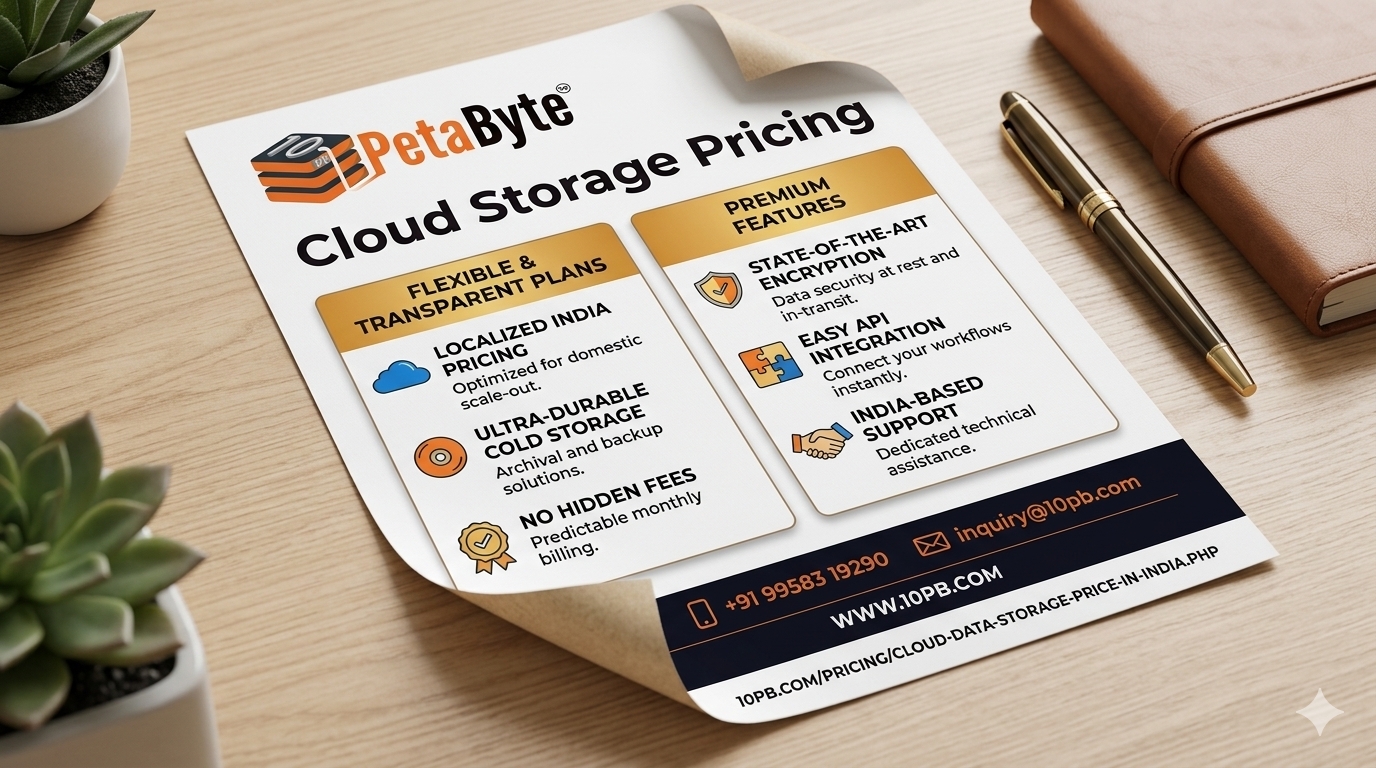
Businesses that understand these factors are better prepared to compare solutions and avoid unexpected expenses.
Why Businesses Need a Storage Strategy
Organizations maintain many types of information, including documents, application files, customer records, databases, media assets, and backups. Each category may have different availability, security, and retention requirements.
For example, data used by an active business application may need frequent access. Historical records might be consulted only occasionally, while backup information must remain suitable for recovery when something goes wrong.
A storage strategy helps businesses organize information according to its purpose and importance. It also provides a clearer basis for estimating capacity and choosing appropriate infrastructure.
Before evaluating services, organizations should calculate current storage usage, identify expected growth, and understand which applications depend on stored information.
Key Factors That Influence Cloud Storage Pricing
1. Storage Capacity
The volume of information retained is a basic consideration. Businesses should estimate current requirements and forecast future growth based on planned projects, additional users, and expanding operations.
It is also important to account for backup copies and retention obligations. Regular reviews can help identify unnecessary duplication and underused resources while ensuring important information remains available.
2. Data Access and Retrieval
Different workloads have different access patterns. Some applications retrieve information throughout the day, while archived documents may be accessed only occasionally.
Storage services may offer different performance characteristics and retrieval policies. Businesses should review these details and select configurations that match the needs of each workload.
This approach can help organizations balance cost, accessibility, and application performance.
3. Data Transfer
Information frequently moves between applications, cloud environments, offices, and remote employees. Large transfers may occur during migrations, backups, database synchronization, and analytics processing.
Depending on the service, data movement can affect network requirements and operating costs. Businesses should estimate their typical transfer volumes and review the provider's applicable transfer policies.
Understanding these patterns is particularly important for organizations that work with large datasets or connect multiple environments.
4. Performance Requirements
Not every application requires the same level of performance. A transaction-processing system may need responsive access, while a long-term archive may prioritize economical retention.
Businesses should assess latency, throughput, availability, and the number of users accessing the environment. Testing representative workloads can help verify that the selected configuration meets operational expectations.
Choosing resources based on actual requirements can prevent unnecessary spending on capabilities that provide little practical benefit.
5. Security and Management
Security, monitoring, backup, redundancy, and technical support may contribute to the total cost of a storage environment.
Organizations should understand which capabilities are included in a service and which require additional arrangements. They should also evaluate whether the available controls meet their business and regulatory obligations.
A realistic cost assessment includes the services needed to operate and protect the environment properly.
Connectivity Is Essential to Cloud Operations
Cloud storage does not function independently of the network. Users and applications must be able to communicate with the systems holding their information.
Businesses should consider bandwidth, latency, reliability, and the locations of users and applications. Companies operating across several offices may need to evaluate how their existing networks connect to cloud resources.
Enterprise connectivity can be relevant when organizations transfer large datasets or rely on consistent communication between business systems and cloud environments.
Planning connectivity alongside storage helps businesses understand the broader infrastructure requirements and identify potential bottlenecks before they affect operations.
Protect Business Information
Stored information may include confidential documents, customer details, financial records, and intellectual property. Organizations should therefore assess security before choosing a service.
Important considerations include encryption, identity and access management, user permissions, activity monitoring, and audit records. Access should be limited to authorized individuals and reviewed as responsibilities change.
Backup and disaster recovery also deserve attention. Businesses should define how quickly important systems must be restored and how much recent information they can afford to lose.
Recovery procedures should be tested periodically so that teams can identify problems before an actual incident occurs.
How to Compare Storage Solutions
A structured comparison makes it easier to evaluate providers consistently.
Step 1: Document current usage. Record the amount of information stored and identify the applications that depend on it.
Step 2: Forecast growth. Consider future projects, new users, and expanding data-retention requirements.
Step 3: Review access patterns. Determine which information requires frequent access and which can be retained differently.
Step 4: Evaluate connectivity. Estimate data transfer volumes and identify network performance requirements.
Step 5: Confirm security and recovery needs. Check that the proposed solution supports appropriate protection and restoration procedures.
Step 6: Estimate the total cost. Include applicable storage, retrieval, transfer, support, and additional service charges.
Step 7: Review performance over time. Monitor actual usage and adjust the environment as business requirements evolve.
This process encourages decision-makers to compare complete solutions rather than relying on a single price figure.
Common Mistakes to Avoid
One frequent mistake is selecting a service based only on its initial advertised rate. Additional requirements may change the final cost, so businesses should examine the complete operating model.
Another mistake is ignoring future data growth. Capacity that appears sufficient today may become restrictive as operations expand.
Businesses can also underestimate the importance of connectivity. A suitable storage configuration may not deliver the expected experience if the network cannot support the workload.
Finally, postponing security and recovery planning can create unnecessary operational risks. These requirements should be included in the initial infrastructure design.
Maintain and Improve Your Infrastructure
Cloud infrastructure should be reviewed regularly. Storage consumption, transfer volumes, access patterns, and application demands can change as the business develops.
Monitoring helps organizations identify underused resources, unexpected traffic, and emerging performance constraints. Clear retention policies can also help teams manage information more efficiently.
Any optimization should preserve required records, security controls, and recovery capabilities. The goal is to keep the environment aligned with business needs without introducing avoidable risks.
For organizations exploring cloud infrastructure and enterprise connectivity, 10PB provides a starting point for reviewing solutions relevant to their operational requirements.
Conclusion
Understanding cloud storage pricing requires a complete view of data storage, access, transfer, connectivity, security, and management. Each factor can influence the suitability and overall cost of a cloud environment.
Businesses that define their requirements and compare total expected expenditure can make more informed decisions. Regular reviews help ensure that the infrastructure continues to support changing workloads and future growth.
A well-planned storage strategy provides a practical foundation for dependable data access, better resource management, and sustainable business operations.
