Cloud-Based Mine Planning: Bridging Gap Between Geology and Finance
Author : Shawn Fisher | Published On : 20 Aug 2026
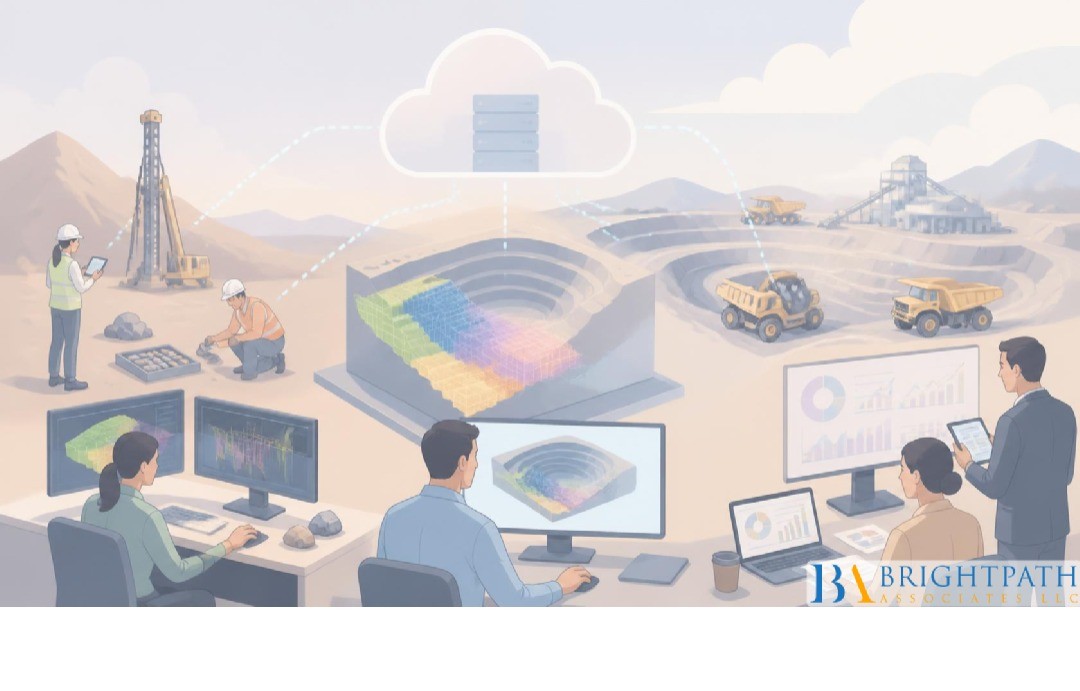
Mining has always depended on the ability to turn geological knowledge into economically viable production. Yet geology and finance often operate from different perspectives. Geologists study orebody characteristics, grade distribution, resource confidence, and geological risk, while finance teams focus on capital allocation, operating costs, production forecasts, cash flow, profitability, and investment returns.
Mine planning must translate geological information into practical extraction schedules while accounting for equipment, infrastructure, processing capacity, labor, environmental obligations, commodity prices, and financial objectives. When these inputs are maintained in disconnected systems, decision-making can become slow and difficult to coordinate.
Cloud-based mine planning is changing this dynamic. By creating a more connected digital environment, mining organizations can bring geological models, mine schedules, operational assumptions, financial scenarios, and performance data closer together. The result is an opportunity to make mine planning more collaborative, responsive, and economically focused.
For companies operating in the modern Mining and Metals Industry, this transformation is becoming increasingly important as technological advancement, sustainability expectations, workforce challenges, and commodity-market uncertainty reshape traditional operating models.
Why Traditional Mine Planning Creates Information Gaps
Conventional mine planning frequently involves multiple software systems, spreadsheets, local databases, technical reports, and manually exchanged files. Different departments may maintain their own assumptions and update schedules independently.
A geological team may update a resource model while engineering continues using an earlier version. Finance may develop a forecast based on production assumptions that have subsequently changed. Operations may discover equipment constraints that were not included in the original schedule. Each department may be working diligently, but the organization as a whole can still lack a single, current view of the mine.
The problem becomes more significant as mining projects grow in complexity. Deep deposits, declining grades, stricter environmental requirements, processing constraints, infrastructure limitations, and volatile commodity prices require more frequent scenario analysis. Cloud-based planning provides an opportunity to reduce these information barriers.
Connecting Geology With Economic Decisions
The geological model is the foundation of a mining operation. It provides information about the location, grade, quantity, and characteristics of mineral resources. However, geological potential does not automatically translate into economic value.
A deposit may contain significant mineralization but require substantial capital investment, complex processing, extensive infrastructure, or expensive extraction methods. Similarly, a high-grade area may not always be the best immediate mining target if accessing it creates operational or environmental challenges.
When geological assumptions are connected with mine design, scheduling, production rates, processing requirements, and economic models, decision-makers can examine how changes in one area affect the entire project. This supports a more commercially informed approach to mine planning.
Scenario Planning Becomes More Practical
Mining companies operate in an environment characterized by uncertainty. Commodity prices can change rapidly. Equipment availability can fluctuate. Ore grades may differ from expectations. Labor costs can rise, while regulatory requirements may evolve.
A mine plan built around a single set of assumptions may therefore become outdated quickly. Cloud-based systems can support more dynamic scenario analysis. Teams can compare alternative production schedules, extraction sequences, equipment strategies, development timelines, and operating assumptions.
Management can then examine questions such as how a slower production ramp might affect cash flow, whether accelerating development could justify additional capital expenditure, or how changing commodity prices might alter the preferred mining sequence. Instead of treating the mine plan as a fixed document, organizations can begin treating it as a continuously evaluated business model.
Bringing Metallurgy Into Mine Planning
Geology and mining are only part of the value chain. Metallurgy plays a critical role in determining how much value can actually be recovered from extracted material.
Ore with attractive grades may still present processing challenges. Recovery rates, mineral composition, impurities, grinding requirements, reagent consumption, and concentrate specifications can influence the financial outcome.
This makes the connection between mine planning and processing increasingly important. A schedule that maximizes tonnes extracted may not necessarily maximize profitability if the resulting material creates processing bottlenecks or produces lower recovery.
Cloud-based planning environments can help organizations incorporate more operational and processing assumptions into scenario analysis. This encourages teams to evaluate the mine as an integrated system rather than as a sequence of isolated functions.
Conclusion: Creating a Common View of the Mine
Cloud-based mine planning offers mining organizations a practical way to bridge the traditional gap between geology and finance. By connecting geological intelligence with engineering, metallurgy, operations, sustainability, and financial analysis, companies can evaluate mine plans from a much broader perspective.
The most successful organizations will not treat cloud technology as an isolated IT project. They will view it as part of a larger transformation in how mining decisions are made. The original BrightPath Associates article, Mine Planning Bridging Gap Between Geology and Finance, highlights the growing importance of connecting technical and financial perspectives in modern mining.
