Choosing the Right Pallet Racking Systems UK for Your Warehouse
Author : Mowbray Workspace Solutions | Published On : 26 Aug 2026
A well-organised warehouse is essential for businesses that need to store products safely, maximise available space and keep daily operations running efficiently. One of the most important decisions when planning warehouse storage is choosing the right pallet racking systems UK businesses can rely on. The right system can improve accessibility, increase storage capacity and make stock management much easier. However, every warehouse has different requirements. Product types, pallet sizes, available floor space, loading methods and future growth should all be considered before selecting a racking solution.
Understand Your Warehouse Requirements
Before investing in pallet racking, start by assessing how your warehouse currently operates. Consider the type and quantity of goods you store, how frequently products are moved and whether pallets need to be accessed individually. You should also measure the available floor area and ceiling height. A warehouse with significant vertical space may benefit from taller racking, allowing more storage capacity without expanding the building footprint. It is equally important to understand the weight and dimensions of your pallets. Racking must be suitable for the loads being stored, with appropriate capacity for both individual levels and complete bays.
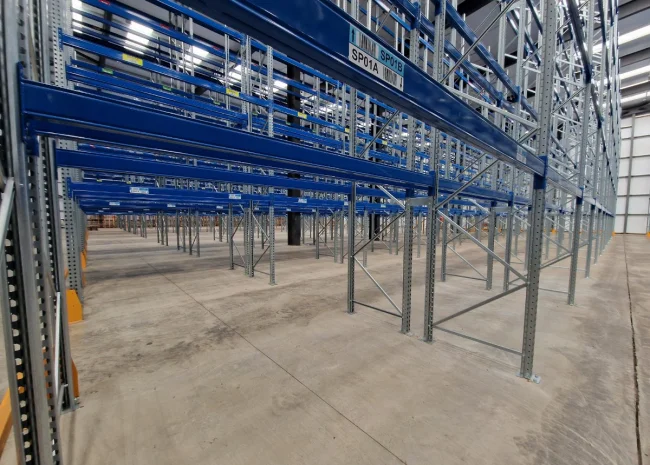
Choose the Right Type of Pallet Racking
There are several pallet racking options available, and each has different advantages.
Selective pallet racking is one of the most commonly used systems because it provides direct access to individual pallets. It is suitable for warehouses handling a wide range of products and is particularly useful where stock rotation and accessibility are priorities.
Drive-in racking can provide high-density storage by allowing forklifts to enter the racking structure. It can be useful for businesses storing large quantities of similar products.
Double-deep racking places two rows of pallets behind one another, increasing storage density while maintaining reasonable accessibility.
Push-back racking uses inclined rails to move pallets towards the front of the rack. This can offer greater storage density while reducing the number of aisles required. The most suitable option depends on your warehouse layout, inventory profile and handling requirements.
Consider Stock Rotation
Stock rotation should play an important role in your decision. Businesses using a first-in, first-out approach may require a system that makes older stock easy to access. Other operations may prioritise storage density over direct pallet accessibility. Understanding how goods enter and leave the warehouse can help you select a racking configuration that supports efficient stock movement rather than creating unnecessary handling.
Make Better Use of Vertical Space
Warehouse floor space can be expensive, so making effective use of vertical space is often a practical way to increase capacity. Pallet racking can be designed around the height of the building, provided the structure, equipment and safety requirements are properly considered. Before increasing racking height, check forklift reach, ceiling clearance, lighting, sprinkler arrangements and other building requirements. A well-planned vertical storage solution can significantly improve capacity without requiring additional floor space.
Think About Safety First
Safety should never be overlooked when choosing warehouse racking. Racking needs to be suitable for the loads it will carry and installed correctly. Clear operating procedures, appropriate forklift use and regular inspections can help reduce risks. Warehouse teams should also understand maximum load limits and avoid overloading storage levels. Damaged beams, frames or other components should be assessed promptly and repaired or replaced where necessary. Working with experienced shelving manufacturers UK businesses can help ensure that your storage requirements are properly assessed and that the selected solution is suitable for the intended application.

Consider Future Business Growth
Your warehouse requirements may change as your business grows. Choosing a system based only on current stock levels could result in another costly redesign later. Think about expected increases in inventory, changes in product ranges and potential alterations to warehouse operations. A flexible racking layout can make it easier to expand storage capacity when required. Modular systems can also provide opportunities to reconfigure bays and levels as operational requirements change.
Evaluate Access and Handling Equipment
The type of material-handling equipment used in your warehouse should be considered before finalising your racking layout. Forklifts and pallet trucks require sufficient aisle width and operating space. If aisles are too narrow, equipment may struggle to operate safely and efficiently. If they are unnecessarily wide, valuable storage space may be lost. The best layout balances storage density with practical access, allowing warehouse staff to retrieve and replenish stock without unnecessary movement.
Plan the Warehouse Layout Carefully
Pallet racking should not be considered in isolation. Its position can affect receiving areas, dispatch zones, walkways, loading points and other warehouse activities. A well-planned layout should create logical product flows from goods-in through storage and ultimately to picking and dispatch. Separating pedestrian areas from forklift routes where appropriate can also contribute to safer warehouse operations. Professional planning can help identify potential space limitations before installation begins.
Work With Experienced Specialists
Selecting the right racking system involves more than choosing a product from a catalogue. A professional supplier can assess your warehouse, understand your storage requirements and recommend a suitable configuration. An experienced specialist can also help with dimensions, load capacities, layout planning and installation considerations. This can make the entire process more straightforward and reduce the risk of investing in a system that does not meet your operational needs. Mowbray Workspace Solutions provides storage and workplace solutions designed around the practical requirements of businesses looking to improve the use of their available space.
Conclusion
Choosing the right pallet racking systems UK solution requires careful consideration of storage capacity, accessibility, stock rotation, warehouse dimensions, safety and future growth. The cheapest or most compact option is not necessarily the best choice; the ideal system should support your daily operations while making efficient use of available space. By assessing your warehouse requirements, selecting the appropriate racking style and working with experienced shelving manufacturers UK, you can create a safer, more organised and productive storage environment. A well-designed pallet racking system is not simply a storage investment-it can contribute to better workflow, improved stock management and long-term warehouse efficiency.
Read More: Pallet Racking Manufacturers UK: A Guide to Safe Warehouse Storage
