Choosing the Right Insert Grade for Steel: A Complete CNC Machining Guide
Author : Surya makeyoueasy | Published On : 23 Jul 2026
Introduction
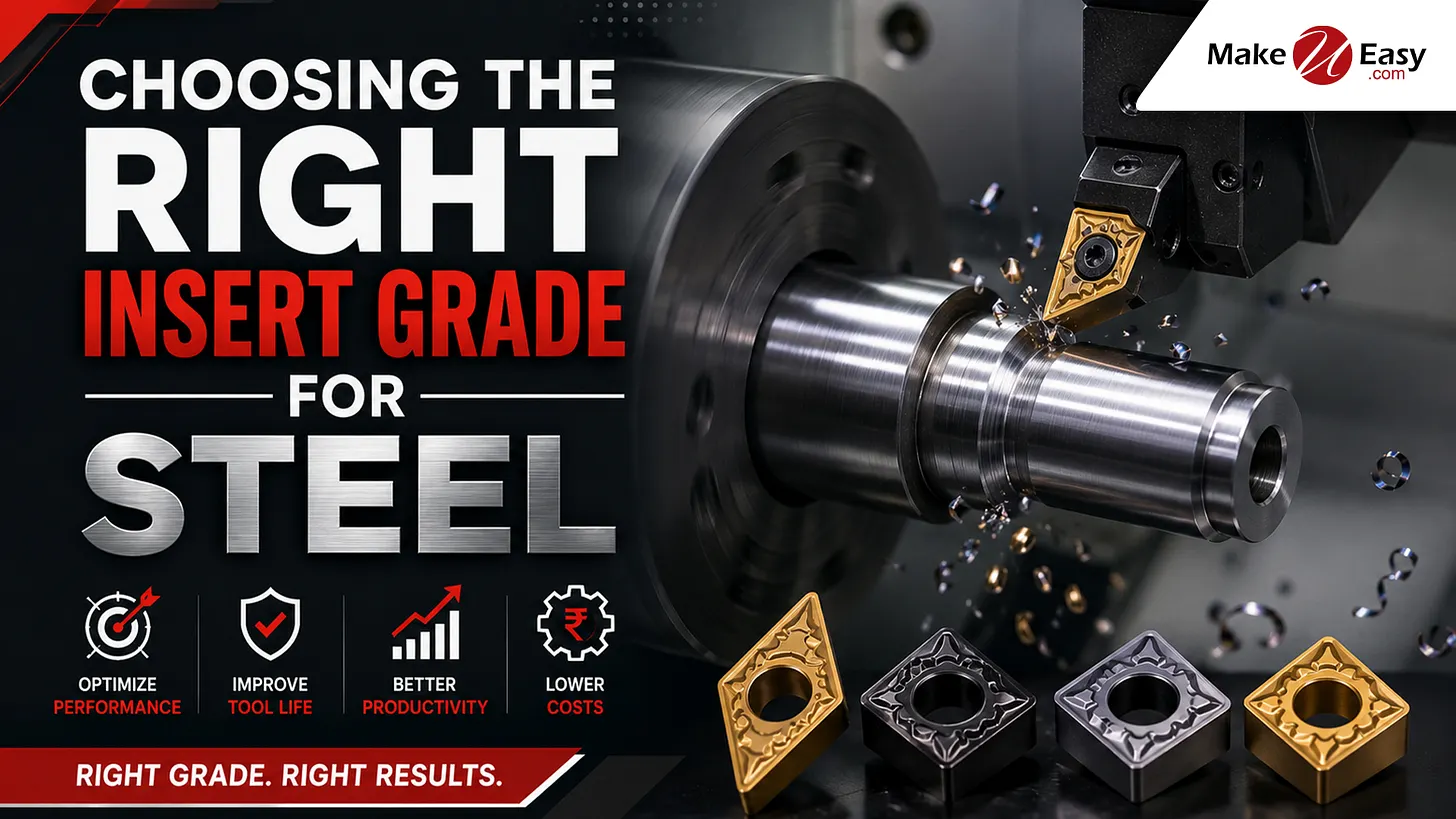
Selecting the correct insert grade is one of the most important decisions in CNC steel machining. Even the best CNC machine and cutting tool cannot deliver optimal performance if the insert grade is not matched to the workpiece material and machining conditions. The right insert grade improves tool life, increases productivity, enhances surface finish, and reduces machining costs.
Steel is one of the most commonly machined materials across industries such as automotive, aerospace, construction, and general engineering. However, different types of steel require different insert grades to achieve the best results. Understanding insert coatings, substrate materials, and cutting conditions will help you make the right choice.
At MakeYouEasy, we offer a wide range of premium carbide inserts and CNC cutting tools designed for reliable performance in steel machining.
🌐 Website:
What Is an Insert Grade?
An insert grade refers to the combination of the carbide substrate and protective coating that determines how an insert performs under different machining conditions.
The insert grade affects:
-
Wear resistance
-
Toughness
-
Heat resistance
-
Cutting speed
-
Surface finish
-
Tool life
Selecting the proper grade ensures consistent machining performance and longer insert life.
Why Is Insert Grade Important for Steel Machining?
Using the wrong insert grade can result in:
-
Rapid tool wear
-
Poor surface finish
-
Chipping
-
Built-up edge
-
Higher cutting temperatures
-
Increased production costs
-
Frequent insert changes
The correct insert grade delivers smoother cutting and better productivity.
Types of Steel Used in CNC Machining
Different steel materials require different machining strategies.
Carbon Steel
Carbon steel is widely used in structural and general engineering applications and is relatively easy to machine with the correct insert grade.
Alloy Steel
Alloy steels contain additional elements such as chromium, nickel, and molybdenum, requiring inserts with better wear resistance.
Stainless Steel
Stainless steel generates more heat and tends to work harden, making tough, heat-resistant insert grades essential.
Hardened Steel
Hardened steels require premium carbide grades capable of maintaining hardness at high cutting temperatures.
Factors to Consider When Choosing an Insert Grade
1. Workpiece Material
Always match the insert grade to the steel type being machined to achieve the best cutting performance.
2. Machining Operation
Different operations require different insert properties.
Common operations include:
-
Rough Turning
-
Finish Turning
-
Face Milling
-
Shoulder Milling
-
Threading
-
Boring
-
Drilling
3. Cutting Speed
Higher cutting speeds generally require insert grades with excellent heat resistance and advanced coatings.
4. Feed Rate
Heavy feed rates require tougher insert grades capable of handling higher cutting forces.
5. Depth of Cut
Large depths of cut generate greater cutting pressure and require durable carbide substrates.
6. Machine Stability
Rigid CNC machines can utilize harder, wear-resistant grades, while less rigid machines benefit from tougher grades that resist chipping.
Common Insert Coatings for Steel
TiN (Titanium Nitride)
-
Good wear resistance
-
General-purpose machining
-
Lower cutting speeds
TiCN (Titanium Carbonitride)
-
Higher hardness
-
Better abrasion resistance
-
Suitable for medium-duty machining
TiAlN (Titanium Aluminum Nitride)
-
Excellent heat resistance
-
High-speed machining
-
Longer tool life
AlTiN (Aluminum Titanium Nitride)
-
Superior oxidation resistance
-
Ideal for dry machining
-
Excellent high-temperature performance
How to Maximize Insert Life
To get the most from your carbide inserts:
-
Use recommended cutting parameters.
-
Ensure proper coolant application.
-
Minimize tool overhang.
-
Secure the workpiece firmly.
-
Replace worn inserts before catastrophic failure.
-
Use high-quality tool holders.
-
Maintain machine alignment and spindle accuracy.
These practices reduce downtime and improve machining consistency.
Common Mistakes When Selecting Insert Grades
Avoid these common errors:
-
Using one insert grade for all steel types.
-
Ignoring machine rigidity.
-
Choosing the cheapest insert instead of the most suitable one.
-
Running at excessive cutting speeds.
-
Using worn tool holders.
-
Selecting the wrong insert geometry.
-
Neglecting coolant requirements.
Proper insert selection improves both productivity and machining quality.
Benefits of Using the Correct Insert Grade
Choosing the right insert grade provides several advantages:
-
Longer tool life
-
Improved surface finish
-
Higher machining accuracy
-
Faster metal removal rates
-
Lower production costs
-
Reduced machine downtime
-
Better chip control
-
Increased productivity
Why Buy CNC Inserts from MakeYouEasy?
At MakeYouEasy, we supply high-performance carbide inserts and CNC tooling solutions for professional machining applications across India.
Our product range includes:
-
Turning Inserts
-
Milling Inserts
-
Face Milling Cutters
-
High Feed Milling Cutters
-
Thread Milling Cutters
-
U Drills
-
Tool Holders
-
Precision Measuring Instruments
-
CNC Accessories
Why choose MakeYouEasy?
-
Premium-quality CNC tooling
-
Competitive pricing
-
Wide product selection
-
Fast Pan-India delivery
-
Trusted machining solutions
-
Dedicated customer support
🌐 Explore our products:
Conclusion
Selecting the right insert grade for steel is essential for achieving maximum tool life, better surface finishes, and efficient machining. By considering the workpiece material, machining operation, cutting parameters, and machine stability, manufacturers can significantly improve productivity while reducing tooling costs. Investing in high-quality carbide inserts and precision tooling ensures reliable performance and consistent machining results.
Frequently Asked Questions (FAQs)
1. Why is insert grade important for steel machining?
The correct insert grade improves tool life, cutting performance, and surface finish.
2. Which coating is best for high-speed steel machining?
TiAlN and AlTiN coatings perform well in high-speed steel machining due to their excellent heat resistance.
3. Can one insert a grade machine into all types of steel?
No, different steel materials require different insert grades for optimal performance.
4. How do I increase carbide insert life?
Use proper cutting parameters, secure workholding, quality tool holders, and replace inserts before excessive wear.
5. Where can I buy premium carbide inserts in India?
You can find a wide range of CNC inserts and cutting tools at
Popular Search
carbide insert grades for steel, CNC turning inserts, steel machining inserts, PVD coated carbide inserts, CVD coated inserts, insert grade selection, high-performance turning inserts, indexable carbide inserts
