CEO’s Role in Environmental Transformation: Leading Through Uncertainty
Author : Ellen Gomes | Published On : 14 Sep 2026
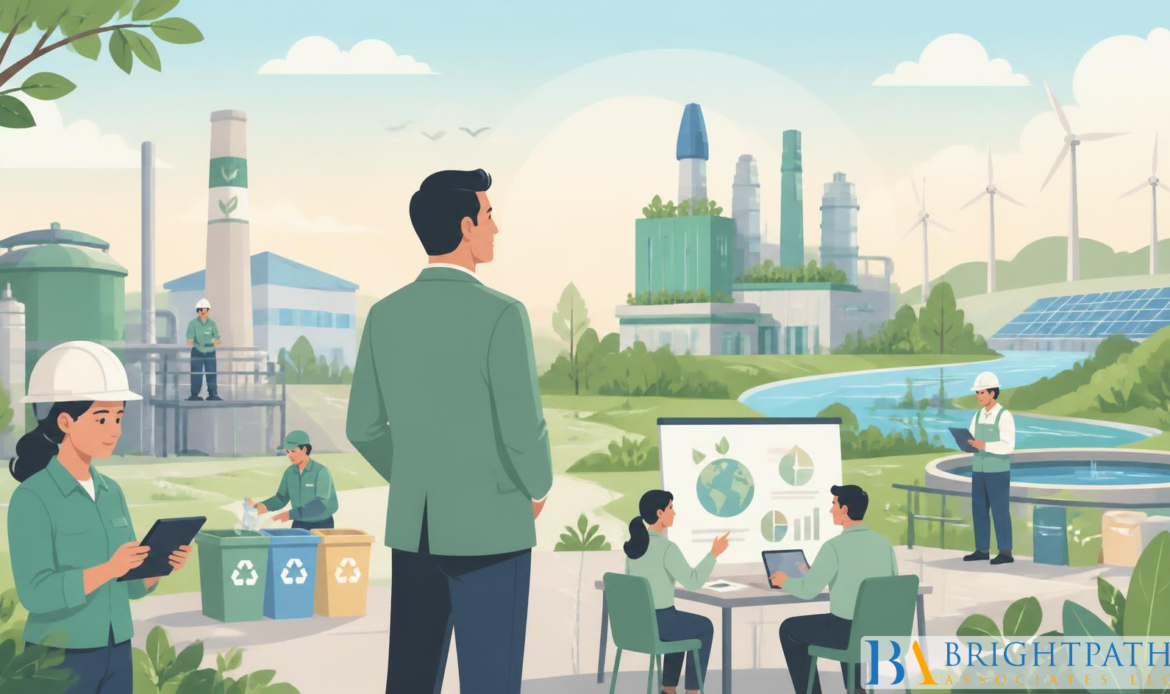
Environmental transformation is no longer an issue that can be delegated entirely to sustainability departments, compliance teams, or environmental specialists. For organizations operating in complex and highly regulated markets, environmental performance is becoming closely connected to operational resilience, financial planning, technology investment, reputation, and long-term competitiveness.
As businesses face changing regulations, resource constraints, climate-related risks, and increasing stakeholder expectations, CEOs are being placed at the center of environmental transformation. Their responsibility is not simply to approve sustainability initiatives but to determine how environmental priorities fit into the broader business strategy.
The modern CEO must therefore answer a fundamental question: How can environmental responsibility become a driver of resilience and growth rather than simply another corporate obligation?
Environmental Strategy Starts at the Top
Successful transformation begins with leadership commitment. When environmental objectives remain isolated within one department, they can struggle to influence broader business decisions. When the CEO makes environmental performance part of the company’s strategic agenda, sustainability becomes connected to operations, investment, risk management, and organizational performance.
This shift can have practical consequences. Reducing energy consumption may lower operating costs. Improving resource efficiency can reduce waste. Modernizing environmental monitoring can strengthen compliance. Investing in cleaner technologies can potentially create new products, services, or market opportunities.
However, setting ambitious environmental goals is only the first step. CEOs must connect those goals with measurable outcomes, appropriate investment, accountability, and qualified leadership. Without these elements, environmental strategies can remain statements of intent rather than operational programs.
For organizations navigating this increasingly complex environment, specialized leadership becomes particularly important. Companies seeking to strengthen their capabilities can explore Environmental Services Industry to identify leaders capable of combining environmental knowledge with commercial and operational expertise.
Turning Regulatory Pressure Into Strategic Advantage
Regulatory uncertainty is one of the most significant challenges facing environmental leadership. Requirements can evolve across jurisdictions, creating additional complexity for organizations operating across multiple locations or markets.
For CEOs, environmental compliance should therefore be viewed as an enterprise risk rather than simply a legal responsibility. Regulatory failures can result in financial penalties, operational disruptions, reputational damage, and unexpected investment requirements.
Forward-looking leadership focuses on anticipation rather than reaction. CEOs can encourage organizations to strengthen environmental data collection, improve reporting systems, monitor regulatory developments, and build internal expertise before new requirements become urgent.
This approach changes the role of compliance. Instead of treating regulations as obstacles that businesses must overcome, leadership teams can use regulatory trends to identify areas where early investment may provide an advantage.
Environmental Innovation Can Support Business Growth
Environmental transformation should not automatically be viewed as a cost center. In many organizations, environmental challenges can become catalysts for innovation. High energy consumption may encourage investment in advanced energy-management systems. Industrial emissions may create opportunities to modernize pollution-control technologies. Water-intensive operations may benefit from improved treatment, reuse, and conservation systems.
The important question for CEOs is not whether a technology appears environmentally progressive. Instead, leaders should determine whether it solves a meaningful operational problem while delivering measurable environmental benefits.
Technology investments should be evaluated according to scalability, financial viability, compatibility with existing infrastructure, workforce capabilities, and long-term strategic value. Pilot projects can provide an effective way to evaluate emerging solutions before committing significant capital across an entire organization.
Environmental Transformation Is Also Resilience Planning
Environmental strategy becomes considerably more powerful when it is connected to business continuity and operational resilience. Water availability, energy volatility, waste management requirements, emissions standards, and extreme weather can all affect production and supply chains. These risks demonstrate why environmental considerations cannot remain separate from enterprise risk management.
For example, an industrial organization dependent on substantial water resources may need to improve consumption efficiency, upgrade treatment infrastructure, or introduce water-reuse systems. Such investments can support environmental objectives while simultaneously protecting production capabilities.
The CEO's role is to recognize these connections and ensure that environmental risks are incorporated into broader business planning. Organizations that prepare before environmental pressures become operational emergencies may have greater flexibility, stronger resilience, and more control over investment decisions.
Conclusion: Environmental Transformation Needs Strategic Leadership
Environmental transformation is ultimately about much more than becoming greener. It is about creating organizations that are resilient, efficient, innovative, and prepared for changing business conditions.
As uncertainty increases, companies that wait for regulations or market pressures to force action may find themselves reacting from a position of weakness. Organizations that prepare early can instead use environmental transformation as a foundation for stronger operations and long-term growth.
For CEOs and business leaders, the bigger question is no longer whether environmental transformation will affect their organization. The question is whether they will lead that transformation proactively or be forced to follow it.
To explore the leadership challenges shaping the sector in greater depth, read CEO’s Role in Environmental Transformation: Leading Through Uncertainty.
