Carbon Steel Pipes: Strong and Dependable Piping for Modern Industrial Systems
Author : BRIGHT STEEL CENTRE | Published On : 04 Sep 2026
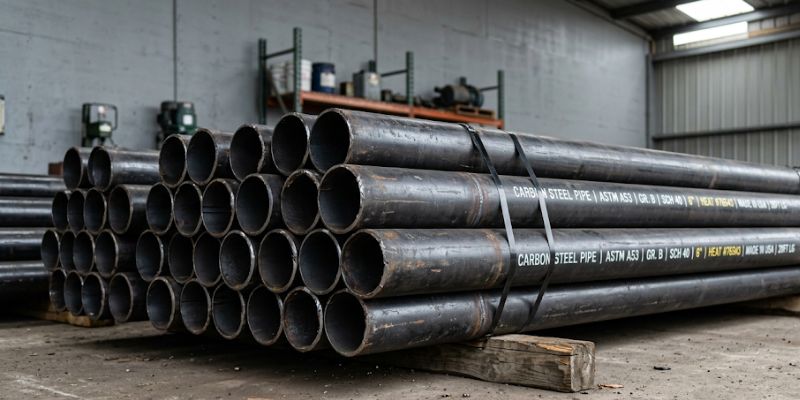
Bright Steel Centre is a trusted Carbon Steel Pipes Manufacturer in India supplying dependable piping products for industrial, commercial, and infrastructure requirements. Carbon steel pipes are widely selected because they provide a practical combination of strength, durability, pressure-handling capability, and cost efficiency. They are used in oil and gas facilities, power plants, construction projects, water systems, process industries, and engineering applications. With different grades, dimensions, and manufacturing options available, carbon steel piping can be selected according to specific operating and project requirements.
Understanding Carbon Steel Pipe Construction
Carbon steel pipes are manufactured primarily from iron and carbon, with their properties influenced by chemical composition, production method, and heat treatment. They are available in different diameters, wall thicknesses, lengths, and specifications to suit varied applications.
These pipes can be used for carrying water, oil, gas, steam, and other fluids. Their combination of mechanical strength and fabrication flexibility also makes them useful for structural and engineering purposes. Proper grade selection is important for achieving reliable performance under specific pressure, temperature, and environmental conditions.
Carbon Steel Pipe Products for Industrial Requirements
A wide selection of carbon steel pipe products is available to address different operating conditions and industry specifications.
Carbon Steel Seamless Pipes: Manufactured without a longitudinal welded seam, seamless pipes provide a continuous pipe structure and are commonly selected for applications involving pressure, temperature, and demanding service conditions.
Carbon Steel IBR Approved Pipes: These pipes are manufactured to meet applicable Indian Boiler Regulations and are used in boilers, steam systems, thermal power facilities, and other applications where certified piping materials are required.
Low Temperature Carbon Steel Pipes: Designed for applications exposed to cold operating conditions, these pipes are selected for their suitable toughness and impact performance in low-temperature environments.
ASTM A53 Gr. B Carbon Steel Pipes: This grade is commonly used in mechanical, structural, and pressure-related applications. It can be found in industrial plants, construction projects, utility systems, and general engineering work.
ASTM A333 Gr 6 Carbon Steel Pipes: Designed for low-temperature applications, this grade is suitable for piping systems where toughness and resistance to brittle behavior are important considerations.
Industrial Applications of Carbon Steel Pipes
Carbon steel piping supports numerous industries because of its versatility and mechanical properties. It is widely used in oil and gas transportation, petrochemical processing, power generation, construction, infrastructure development, water distribution, manufacturing, engineering, and fabrication.
In process industries, these pipes can be used to transport fluids between equipment and processing units. Construction projects may use them in utility networks and structural systems, while energy facilities depend on suitable carbon steel grades for various piping applications.
International Supply and Project Support
Carbon steel piping is required across international industrial and infrastructure markets. Suppliers with suitable manufacturing capabilities can support projects in different regions by providing appropriate grades, sizes, finishes, and documentation.
Demand remains strong in the United Arab Emirates, where carbon steel pipes are used across construction, energy, oil and gas, and industrial projects. Industrial and engineering sectors in Turkey also require dependable piping materials for manufacturing and infrastructure applications.
Large-scale development in Saudi Arabia continues to create demand for robust piping systems for energy, construction, and industrial facilities. Carbon steel products are also supplied throughout Europe, supporting infrastructure, process, and engineering projects. In Italy, these materials are used across manufacturing, industrial processing, construction, and engineering sectors where reliable piping is required.
Manufacturing Quality and Inspection
Quality control is an important part of carbon steel pipe manufacturing. Products can be produced according to applicable ASTM, ASME, API, EN, and other recognized specifications depending on the application and customer requirements.
Inspection procedures may include Chemical Composition Testing to verify the material chemistry, Mechanical Testing to assess strength and related properties, Hydrostatic Testing to evaluate pressure integrity, Dimensional Inspection to confirm diameter and wall thickness, and Surface Examination to identify visible imperfections that could affect product suitability.
Why Carbon Steel Continues to Support Industry
The combination of strength, affordability, fabrication flexibility, and broad availability keeps carbon steel piping relevant to modern industrial development. It can be used for both straightforward utility systems and demanding engineering projects when the appropriate grade and specification are selected. As infrastructure, energy, manufacturing, and process industries continue to develop, dependable piping materials remain essential. Carbon steel provides a practical solution for projects requiring reliable material performance without unnecessarily increasing material costs.
Conclusion
Carbon Steel Pipe Products continue to serve as important materials for industrial piping networks, infrastructure projects, energy facilities, and engineering systems. Their strength, versatility, pressure capability, and economical nature make them suitable for numerous applications. Seamless, IBR-certified, low-temperature, ASTM A53 Grade B, and ASTM A333 Grade 6 options allow industries to select piping according to their specific service requirements. Careful grade selection, dimensional control, testing, and quality manufacturing help ensure dependable performance throughout the service life of a piping system.
