Carbide Shank Thread Milling Cutter: Features, Applications & Selection Guide
Author : Surya makeyoueasy | Published On : 06 Nov 2026
Introduction
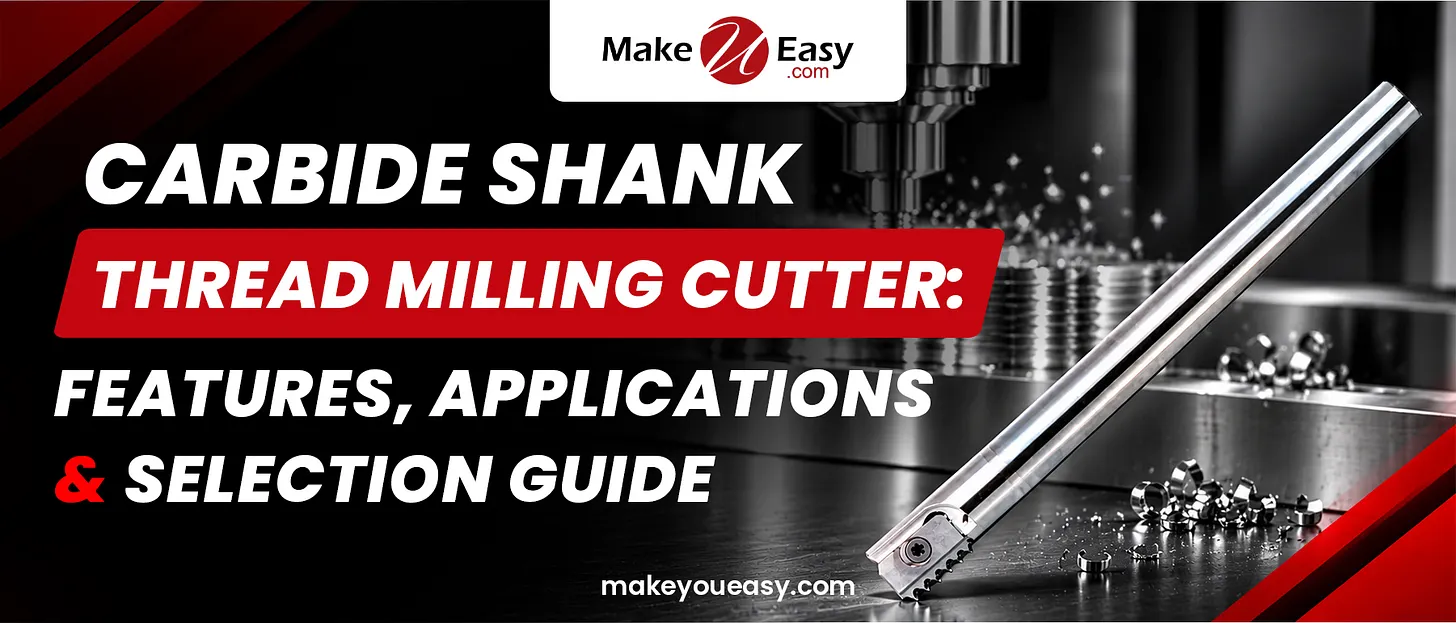
Thread milling is a CNC machining process used to produce internal and external threads with a rotating cutting tool following a programmed toolpath. A carbide shank thread milling cutter combines a cutting section with a carbide shank designed to provide rigidity and support stable machining.
Compared with conventional tapping, thread milling offers greater toolpath control, chip management, and flexibility across thread sizes and materials. Choosing the correct cutter depends on thread specifications, workpiece material, hole depth, machine capability, and required accuracy.
What Is a Carbide Shank Thread Milling Cutter?
A carbide shank thread milling cutter is a thread-cutting tool with a carbide shank and a cutting section designed to generate threads through CNC interpolation. Depending on its design, the cutter may feature a single cutting tooth or multiple flutes.
Solid carbide thread mills are available in different diameters, cutting lengths, flute designs, and grades for machining materials such as steel, stainless steel, cast iron, and selected difficult-to-machine alloys. ISCAR’s threading handbook explains that tool geometry and grade vary according to the material and application.
Key Features of Carbide Shank Thread Milling Cutters
1. High Rigidity
A carbide shank can provide greater stiffness than a comparable steel shank, helping reduce tool deflection and vibration in suitable machining conditions. This can be especially useful when longer tool reach is required. Sandvik Coromant
2. Precision Thread Generation
Thread milling uses a programmed toolpath to control thread diameter and pitch. This allows operators to adjust thread size through toolpath corrections when the cutter and machining strategy permit.
3. Internal and External Threading
Suitable thread milling cutters can produce internal or external threads. Some designs also support both right-hand and left-hand threads, subject to the tool’s cutting direction and CNC program. Ingersoll Rapid-Thread
4. Chip Control
Flutes provide space for chip evacuation. Some cutters also offer internal coolant channels to help deliver coolant near the cutting zone, which can be useful in blind holes or applications where chip removal is difficult. Carmex
5. Multiple Thread Standards
Depending on the cutter profile, thread mills are available for standards such as metric ISO, UN, NPT, and other specified thread forms. Always match the cutter to the required thread profile and pitch.
Applications of Carbide Shank Thread Milling Cutters
Carbide shank thread milling cutters are used in CNC machining applications where thread accuracy, process control, or tool rigidity is important.
-
Internal thread milling: Producing threads in tapped-hole locations, through holes, and blind holes.
-
External thread milling: Generating threads on compatible external features.
-
Stainless steel machining: Threading suitable stainless grades with the correct grade, geometry, and cutting data.
-
Steel and alloy steel machining: Producing threads in components such as housings, fixtures, and machine parts.
-
Aerospace and precision components: Threading applications where controlled tool engagement and repeatability are required.
-
Difficult-to-machine materials: Selected titanium and nickel-based alloys, when the cutter is specifically approved for the material.
Types of Carbide Shank Thread Milling Cutters
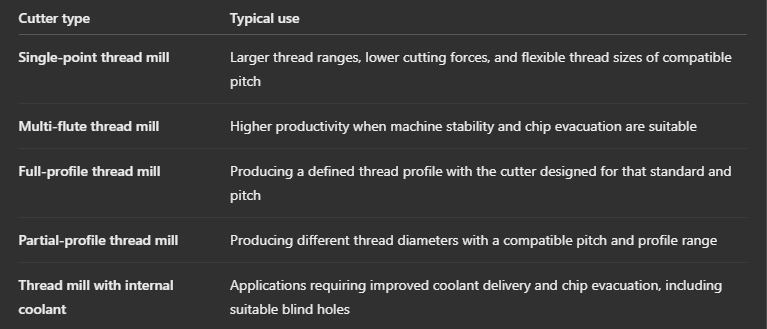
The available types and capabilities depend on the manufacturer’s tool design.
How to Select the Right Carbide Shank Thread Milling Cutter
1. Confirm the Thread Specification
Identify the thread standard, nominal diameter, pitch, tolerance class, and whether the thread is internal or external.
2. Choose the Correct Cutter Diameter
Select a cutter diameter that provides sufficient clearance and allows the required thread profile to be generated. An oversized cutter can cause thread-profile errors, so follow the toolmaker’s diameter and programming guidance.
3. Match the Workpiece Material
Choose a cutter grade and coating approved for the workpiece. Steel, stainless steel, aluminium, and heat-resistant alloys may require different cutting geometries and cutting conditions.
4. Check Thread Depth and Tool Reach
Confirm the cutter’s cutting length and usable reach for the required thread depth. For deep or blind holes, prioritize chip evacuation and avoid allowing chips to accumulate near the cutting edge.
5. Verify Shank and Holder Compatibility
Check the shank diameter, tolerance, holder type, and recommended clamping method. Minimize runout and unnecessary tool overhang to support stable cutting.
6. Use Recommended Cutting Data
Start with the manufacturer’s recommended cutting speed, feed, and toolpath strategy. Adjust based on machine rigidity, workpiece setup, material condition, and thread quality results.
Carbide Shank Thread Milling vs Tapping
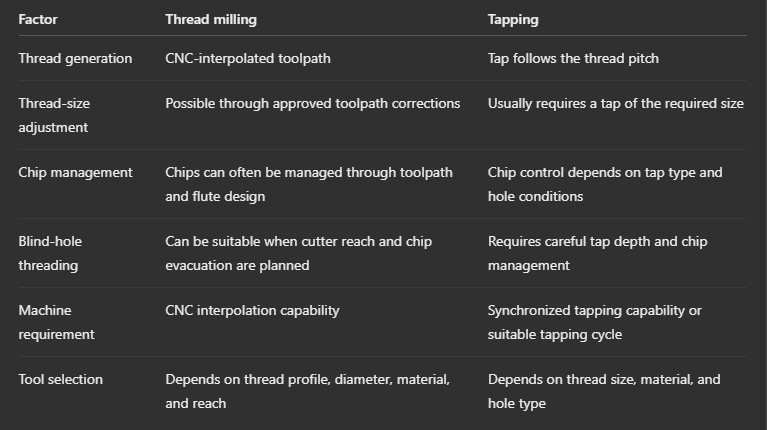
Thread milling is not automatically the best choice for every job. Tapping may remain more economical for high-volume, standard threading where the process is stable and appropriate.
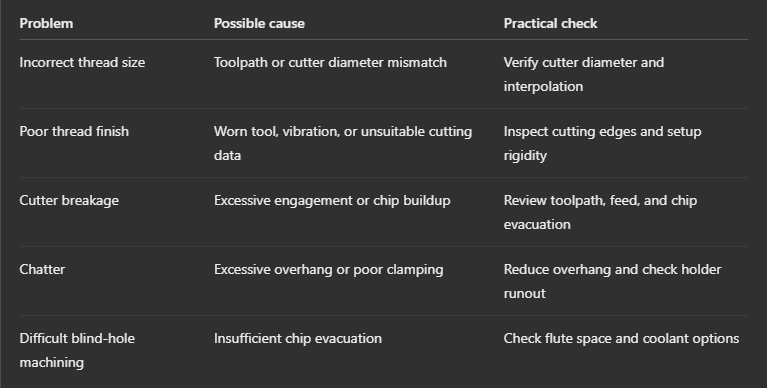
Common Thread Milling Problems and Solutions
Why Choose MakeYouEasy for CNC Threading Tools?
MakeYouEasy helps machining professionals explore CNC cutting tools, tool holders, and machining accessories for different applications. Before selecting a carbide shank thread milling cutter, confirm the thread standard, material compatibility, cutter dimensions, and recommended cutting data.
Conclusion
A carbide shank thread milling cutter can support accurate and controlled CNC threading when selected for the correct thread profile, material, depth, and machine setup. Its rigidity, toolpath flexibility, and chip-management options make it a useful choice for many precision machining applications.
Explore CNC cutting tools and machining accessories at MakeYouEasy.com.
FAQs
1. What is a carbide shank thread milling cutter used for?
It is used to produce internal or external threads through CNC interpolation in compatible materials and applications.
2. What is the benefit of a carbide shank?
A carbide shank can provide higher rigidity and reduced deflection compared with a comparable steel shank in suitable conditions.
3. Can one thread milling cutter produce different thread sizes?
Some partial-profile cutters can produce multiple thread diameters of compatible pitch, while full-profile cutters are designed for specified thread profiles and pitches.
4. Can carbide shank thread mills machine stainless steel?
Yes, when the cutter grade, geometry, coating, and cutting data are approved for the stainless steel being machined.
5. How do I select a thread milling cutter?
Match the thread standard, pitch, diameter, material, depth, cutter reach, shank, and machine capability to the toolmaker’s recommendations.
Popular Search Keywords
carbide shank thread milling cutter, carbide thread mill, solid carbide thread milling cutter, CNC thread milling cutter, external thread milling cutter, thread milling tools, carbide thread mill for stainless steel, thread milling cutter selection, CNC threading tools
