Can You Get Dental Implants with Gum Disease? Here's What You Should Know
Author : Dr. ONKAR JABADE | Published On : 27 Jul 2026
Can You Get Dental Implants with Gum Disease? Here’s What You Should Know
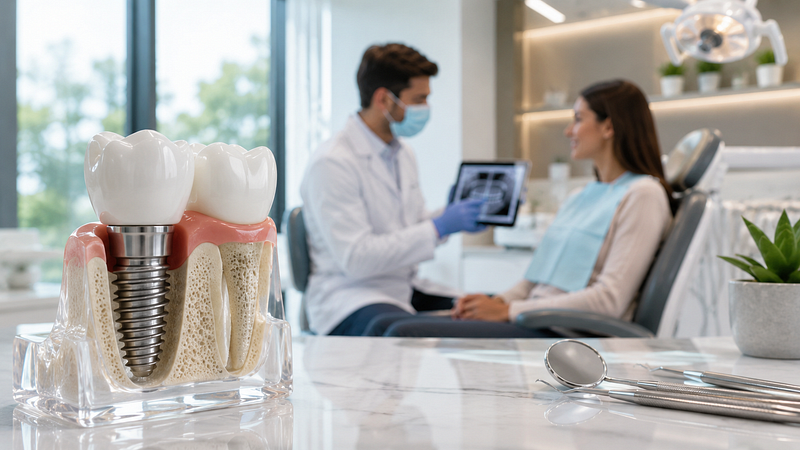
Missing teeth can affect far more than your appearance — they can make chewing difficult, impact speech, and reduce confidence. Dental implants are one of the most reliable and long-lasting solutions for replacing missing teeth. However, many people diagnosed with gum disease wonder whether they are still eligible for implant treatment.
The encouraging news is that gum disease does not automatically prevent you from getting dental implants. With proper diagnosis, timely periodontal treatment, and careful planning, many patients with a history of gum disease can successfully receive implants that function and look like natural teeth.
The key is treating the underlying gum infection before implant placement. Let’s understand why this step is so important.
Why Gum Health Is Essential Before Dental Implant Treatment
Dental implants rely on healthy gums and strong jawbone support. Unlike removable dentures, an implant is surgically placed into the jawbone where it gradually bonds with the bone through a process called osseointegration.
When gum disease is present, bacteria damage the surrounding gums and bone. If an implant is placed before this infection is controlled, the chances of complications increase significantly.
Healthy gums help by:
- Providing stable support around the implant.
- Reducing bacterial infection.
- Promoting successful healing.
- Increasing the long-term lifespan of the implant.
For this reason, experienced implant dentists always evaluate gum health before recommending implant surgery.
Understanding Gum Disease
Gum disease, also known as periodontal disease, begins with plaque accumulation around the teeth. Without proper oral hygiene, bacteria multiply and cause inflammation.
Early-stage gum disease (gingivitis) usually causes:
- Bleeding while brushing
- Swollen gums
- Bad breath
- Gum tenderness
If left untreated, it progresses into periodontitis, where infection begins destroying the bone supporting the teeth. Advanced periodontal disease often leads to loose teeth and tooth loss.
Since dental implants depend on healthy bone, controlling gum disease becomes an essential first step.
Can Patients with Gum Disease Still Receive Dental Implants?
Yes.
Most patients can still receive implants after appropriate periodontal treatment.
Instead of ruling out implants completely, dentists follow a staged treatment approach that prepares the mouth for successful implant placement.
This careful planning greatly improves long-term implant success.
Step 1: Treat Active Gum Disease
The first priority is eliminating infection.
Treatment may include:
- Professional scaling
- Root planing (deep cleaning)
- Antibacterial therapy
- Improved home oral hygiene
- Periodontal treatment where necessary
Only after the gums become healthy and stable should implant treatment be considered.
Step 2: Evaluate Bone Quality
Long-standing gum disease may cause bone loss around missing teeth.
Your dentist may recommend:
- Digital X-rays
- CBCT (3D Scan)
- Bone density evaluation
If insufficient bone is available, bone grafting can rebuild the jawbone before implant placement.
Although this adds another step, it significantly improves implant stability.
Step 3: Confirm Healthy Healing
Before surgery, your dentist confirms that:
- Gum inflammation has resolved.
- Infection is under control.
- Oral hygiene is satisfactory.
- Bone support is adequate.
Taking time during this phase reduces future implant complications.
Step 4: Dental Implant Placement
Once the mouth is healthy, the implant is surgically placed into the jawbone.
During healing, the implant naturally integrates with the surrounding bone, creating a strong and stable foundation for the replacement tooth.
Modern implant procedures are precise, comfortable, and highly predictable when proper planning is followed.
Step 5: Long-Term Maintenance
Receiving an implant is only the beginning.
Patients with a previous history of gum disease should continue:
- Routine dental check-ups
- Professional cleanings
- Daily brushing
- Daily flossing
- Regular periodontal maintenance
These habits help protect both natural teeth and implants for years to come.
What Happens If Gum Disease Is Ignored?
Skipping gum disease treatment before implants can lead to serious complications, including:
- Implant failure
- Bone loss
- Peri-implantitis
- Gum recession
- Implant loosening
- Additional corrective procedures
This is why experienced implantologists never rush treatment.
A carefully planned sequence delivers the best long-term outcomes.
Modern Dentistry Makes Implant Treatment Possible
Advances in periodontal care, digital diagnostics, and implant technology now allow many patients with previous gum disease to enjoy successful implant treatment.
Even patients with moderate bone loss may become suitable candidates after appropriate periodontal therapy and bone grafting.
Every case is unique, which is why a comprehensive clinical evaluation is essential before treatment begins.
Why Choose Dr. Onkar Jabade?
Complex implant cases require experience, precision, and careful planning.
Dr. Onkar Jabade has successfully placed thousands of dental implants, helping patients restore both function and confidence.
At Jabade Dental, every implant journey begins with a comprehensive examination of:
- Gum health
- Bone quality
- Bite analysis
- Digital imaging
- Personalised treatment planning
Patients receive individual attention throughout every stage — from periodontal treatment to final implant restoration.
Why Patients Trust Jabade Dental
✔ Thousands of successful implant procedures
✔ Advanced digital diagnostics
✔ Expertise in treating gum disease before implants
✔ Personalised treatment planning
✔ Comfortable patient-focused care
✔ Long-term implant maintenance support
Key Takeaways
- Gum disease does not automatically prevent dental implants.
- Treating gum disease first greatly improves implant success.
- Healthy bone and gums are essential for long-lasting results.
- Bone grafting may be recommended in some cases.
- Choosing an experienced implantologist plays a major role in treatment success.
Final Thoughts
A diagnosis of gum disease doesn’t mean you have to give up on dental implants. With the right treatment plan, careful monitoring, and experienced clinical care, many patients go on to enjoy healthy, long-lasting implant restorations.
If you’re considering dental implants but have concerns about your gum health, the first step is a comprehensive evaluation. At Jabade Dental, Dr. Onkar Jabade provides personalised treatment plans designed to restore both oral health and confidence.
Schedule a consultation today and discover whether dental implants are the right solution for your smile.
Jabade Dental — Dr.Onkar Jabade, Law Collage Rd |Dental Implants Pune | All on 4 dental implants | Full Mouth Dental Implants
🌐 Website: https://jabadedentalpune.in/
📞 Phone: 9226525757
📍 Google Business Profile:
https://share.google/lnmEkfNkvyqknDYAu
https://share.google/xDmKgfyqK7ypnseRq
#DentalImplant #DentalImplants #DentalImplantSurgery #DentalImplantCost #DentalImplantNearMe #DentalImplantPune #DentalImplantSpecialist #FullMouthDentalImplants #AllOn4 #SameDayDentalImplants #ToothReplacement #Pune
- Gum Disease Treatment Pune
- Dental Implant Specialist Pune
- Periodontal Disease
- Implant Dentist Pune
- Bone Grafting for Dental Implants
- Peri-implantitis
- Dr. Onkar Jabade
- Jabade Dental Pune
