Can Liposuction Remove Belly Fat That Does Not Respond to Exercise?
Author : glamorous Clinic | Published On : 01 Sep 2026
A stubborn abdominal area can be frustrating when diet and exercise have already become part of a person's routine.
For those considering Liposuction in Islamabad, one common question is whether surgery can address localized belly fat that remains despite lifestyle efforts. Liposuction may be suitable for selected fat deposits beneath the skin, but it is not a treatment for every type of abdominal fullness. Understanding the difference between subcutaneous fat, loose skin, and deeper abdominal fat is essential before making a decision.
What Kind of Belly Fat Can Liposuction Address?
Liposuction primarily targets subcutaneous fat, which lies underneath the skin.
This is different from visceral fat, which is located deeper inside the abdomen around internal organs.
Liposuction is not designed to remove visceral fat. Therefore, someone whose abdominal size is mainly related to deeper internal fat may not achieve the expected result from the procedure.
Why Does the Abdomen Sometimes Remain Prominent?
Abdominal appearance can be influenced by several factors.
These may include:
- Subcutaneous fat
- Visceral fat
- Loose skin
- Muscle separation
- Body posture
- Genetics
- Previous pregnancy
- Changes in body weight
This is why two people with a similar waist measurement may require completely different approaches.
When Might Liposuction Be Considered?
Liposuction may be considered when the main concern is a localized layer of excess fat beneath otherwise reasonably healthy skin.
A surgeon can assess the thickness and distribution of fat and determine whether removing selected deposits could improve the contour.
The goal is usually proportion rather than simply making the abdomen smaller.
What If Loose Skin Is the Main Problem?
Removing fat does not automatically remove excess skin.
If the abdominal skin has lost significant elasticity, liposuction alone may leave loose skin behind.
In some situations, another surgical procedure may be more appropriate. The correct choice depends on the patient's anatomy and goals.
How Is Abdominal Liposuction Performed?
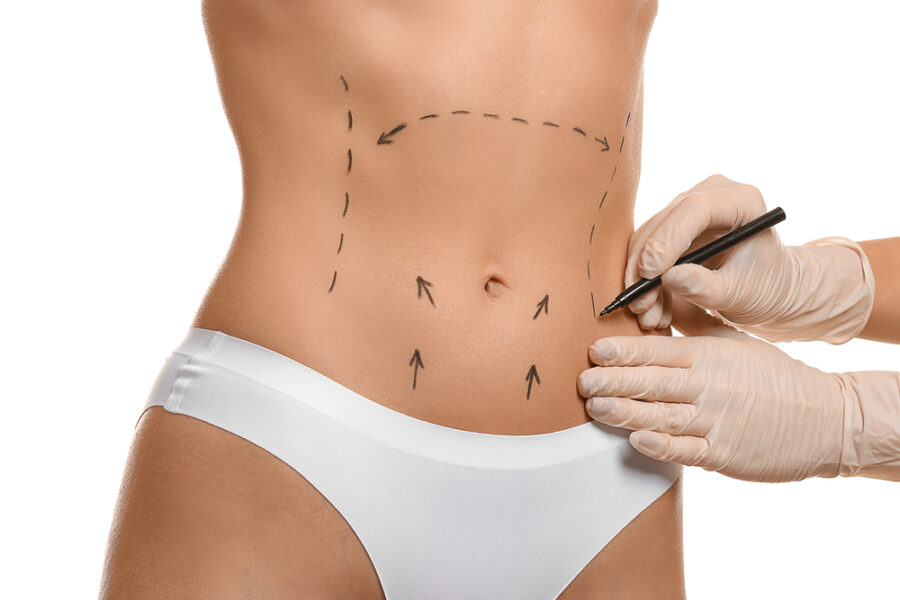
The procedure begins with surgical planning and marking.
After appropriate anesthesia, small access points are made. A cannula is introduced beneath the skin to remove selected fat deposits.
The surgeon carefully works across the area to create a smoother transition between treated and untreated regions.
The amount removed is based on safety and contouring needs rather than an attempt to remove every possible fat cell.
What Happens After Surgery?
Swelling and bruising are common parts of recovery.
Patients may need to limit certain activities temporarily and follow specific wound-care instructions.
Compression garments may also be recommended.
The recovery plan should be individualized according to the extent of treatment and the surgeon's advice.
Can Belly Fat Return?
The treated fat cells are removed, but the body can still gain weight.
Remaining fat cells can enlarge, and fat distribution can change over time.
Maintaining a stable weight can therefore help preserve the contour achieved through surgery.
What Should You Ask During Consultation?
Useful questions include:
- Is my abdominal fullness mainly subcutaneous fat?
- Do I have loose skin?
- Is liposuction alone suitable?
- What contour can realistically be achieved?
- What will recovery involve?
These questions help move the discussion away from unrealistic promises and toward an individualized treatment plan.
Final Thoughts
Liposuction can be useful for selected abdominal fat deposits, but it is not a universal solution for every type of belly enlargement.
A proper assessment should determine whether the concern comes primarily from subcutaneous fat, loose skin, deeper abdominal fat, or a combination of factors. That distinction is central to choosing the right treatment.
