Bumble Bee Bali Gold Kratom: Understanding Its Origins, Processing, and Product Formats
Author : Jonny Bristo | Published On : 16 Sep 2026
What Is Bali Gold Kratom?
Bali Gold Kratom is made from the leaves of Mitragyna speciosa, an evergreen tree belonging to the Rubiaceae, or coffee, family. The species is native to tropical areas of Southeast Asia, including Indonesia, Malaysia, and Thailand.
The word “Gold” does not describe a naturally occurring fourth vein color. In commercial kratom terminology, red, green, and white are commonly used classifications associated with leaf maturity and processing. Gold is generally a marketplace designation connected with how the harvested leaves are processed after collection.
Depending on the producer, Gold products may involve extended drying, fermentation, or a combination of processing techniques. Some products may also represent blends of different kratom varieties. Because there is no single universal Gold processing standard, methods can vary between suppliers and batches.
Understanding the “Bali” in Bali Gold Kratom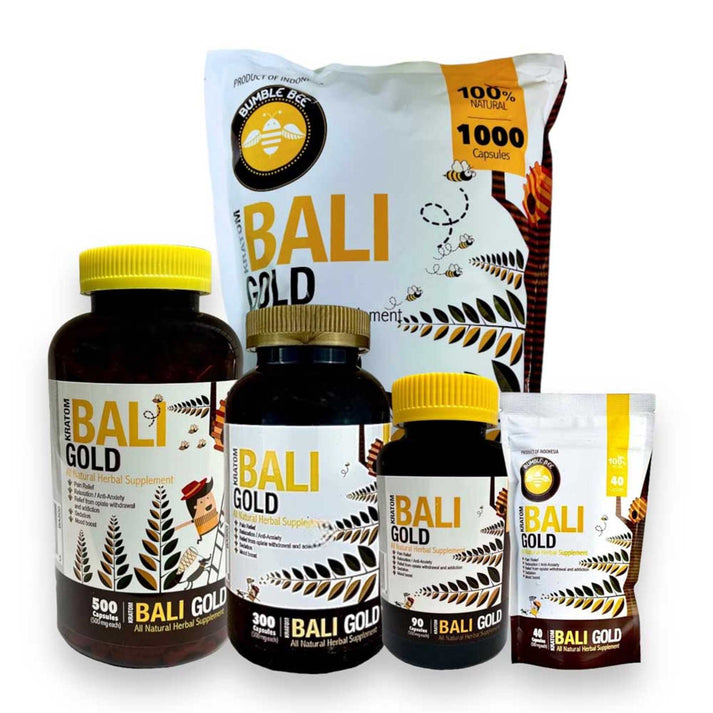
The term Bali has an important place in kratom terminology. Although Bali is an Indonesian island, the name “Bali” in commercial kratom does not necessarily establish that the leaves were cultivated on the island itself.
Indonesia has several areas associated with kratom production, including regions of Kalimantan and Sumatra. Historically, kratom entering international markets was also connected with Indonesian trade routes and shipping practices. Over time, “Bali” became an established commercial designation within the kratom industry.
For this reason, consumers researching Bumble Bee Bali Gold Kratom should consider the complete product information rather than interpreting the name alone as proof of cultivation location.
How Is Gold Kratom Processed?
Post-harvest processing is an important part of understanding Gold Kratom. Once kratom leaves are collected, moisture must be reduced before the material can be prepared for commercial use.
Processing may involve:
- Extended drying
- Sun-drying
- Fermentation
- Controlled moisture and heat
- Combinations of different processing techniques
- Blending with other kratom materials
These processes can influence the final appearance and characteristics of the resulting powder. Gold products often have a golden, tan, or yellow-brown appearance, which contributes to their commercial name.
Importantly, there is no single processing method that applies to every Gold product. Production practices can differ by supplier, region, and individual batch.
Kratom Powder and Capsule Formats
Kratom products are commonly sold as loose powder or in capsules. Loose powder provides the traditional ground-leaf format, while capsules offer a convenient alternative for consumers who prefer a pre-packaged format.
The product format itself does not determine where the kratom was grown or how it was processed. A Bali Gold product can therefore be available as either powder or capsules while retaining the same general commercial classification.
When evaluating a product, it is useful to look beyond the format and review information about botanical identity, sourcing, processing, labeling, and available quality documentation.
What to Consider When Researching Bumble Bee Bali Gold Kratom
Bumble Bee Kratom provides a marketplace for kratom products in different varieties and formats. When researching a particular Bali Gold product, consumers can consider several pieces of information.
Botanical Identity
The botanical name Mitragyna speciosa identifies the plant from which kratom originates. Understanding the botanical source provides useful context when comparing products.
Geographic Terminology
Terms such as Bali, Indonesian, or other regional names can describe commercial sourcing traditions. They should not automatically be interpreted as precise proof of where a particular batch was cultivated.
Processing Information
Gold is primarily a commercial classification associated with post-harvest processing. Consumers interested in a specific product can review whatever processing information the supplier makes available.
Product Format
Powder and capsules are two common presentation formats. Choosing between them is primarily a matter of product preference and convenience rather than botanical origin.
Quality Information
Independent laboratory testing, when available, can provide additional information about product composition and quality-related characteristics. Clear labeling and accessible product information are also useful considerations when comparing kratom products.
Why Product Terminology Matters
Kratom names can combine several different concepts into a single phrase. Bumble Bee Bali Gold Kratom, for example, can be understood by separating the terminology:
- Bumble Bee — the brand associated with the product.
- Bali — a commercial geographic designation associated with Indonesian kratom.
- Gold — a classification generally connected with post-harvest processing.
- Kratom — botanical material derived from Mitragyna speciosa.
Breaking down product terminology in this way makes it easier to understand what a product name communicates—and what it does not necessarily establish.
Responsible Kratom Research
Kratom remains an area of ongoing research, and product composition can vary. It is therefore important to approach kratom information carefully and avoid assuming that a commercial strain name establishes particular effects or outcomes.
Consumers should also consider applicable laws and regulations because kratom rules can vary between countries, states, and municipalities. Anyone with questions about potential interactions, individual circumstances, or health considerations should consult an appropriately qualified healthcare professional.
Frequently Asked Questions
What is Bumble Bee Bali Gold Kratom?
It is a commercial kratom product designation combining the Bumble Bee brand name with the Bali Gold classification. The product is associated with Mitragyna speciosa, Indonesian sourcing terminology, and Gold-style post-harvest processing.
Is Gold Kratom a natural fourth vein color?
No. Gold is generally a commercial classification rather than a naturally occurring fourth vein color. It is commonly associated with post-harvest processing techniques.
Does Bali Gold Kratom come specifically from Bali?
Not necessarily. “Bali” is widely used as a commercial designation in the kratom marketplace and does not by itself prove that the leaves were cultivated on Bali.
How is Gold Kratom processed?
Processing can vary. Methods may include extended drying, sun-drying, fermentation, or combinations of processing techniques and blends.
Is Bali Gold available in capsules?
Yes, kratom products can be offered in capsule format as well as loose powder. The format does not determine the botanical origin or processing method.
