Building a Culture of Continuous Innovation in Traditional Machine Shops
Author : Ayesha Diaz | Published On : 31 Aug 2026
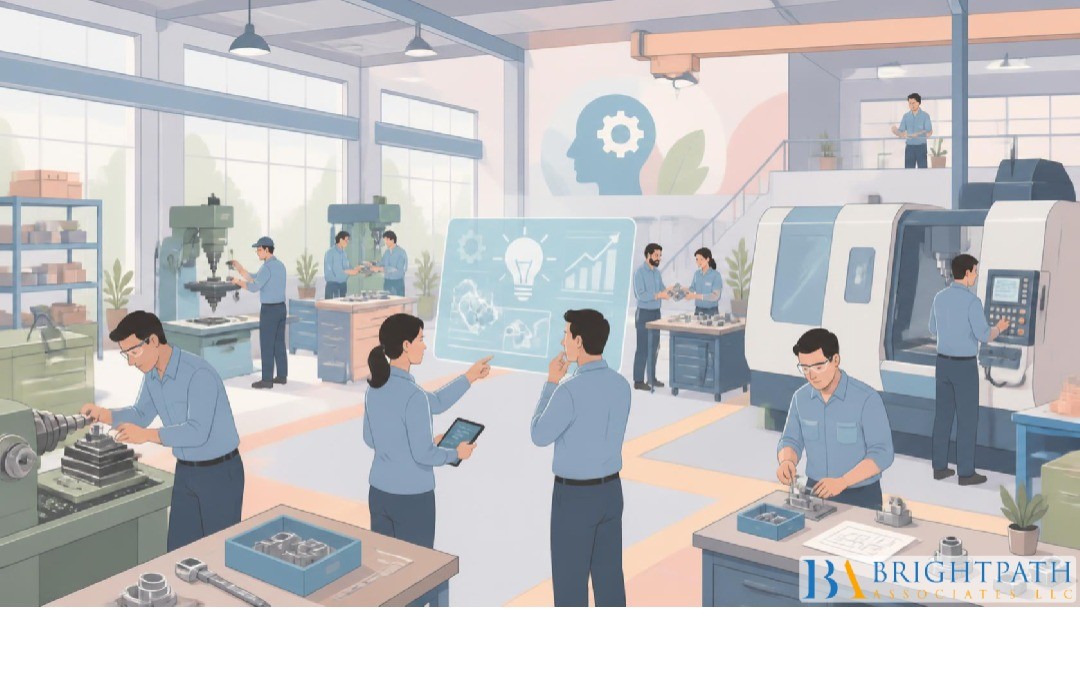
Traditional machine shops have built their reputations on craftsmanship, precision, technical expertise, and years of hands-on experience. Skilled machinists understand how materials behave, how equipment responds under pressure, and how seemingly minor adjustments can influence quality and productivity. These capabilities remain valuable, but the competitive environment surrounding manufacturing is changing.
Customers increasingly expect shorter lead times, consistent quality, greater flexibility, and competitive pricing. At the same time, machine shops are navigating labor shortages, rising operating costs, automation, digital manufacturing, and increasingly sophisticated production technologies.
Continuous innovation can help manufacturers improve efficiency, reduce waste, strengthen equipment reliability, develop workforce capabilities, and respond more effectively to changing customer requirements.
Why Continuous Innovation Matters to Traditional Machine Shops
A machine shop can operate successfully for decades using familiar equipment and established processes. However, past success can sometimes make organizations hesitant to change. When a particular machining method has consistently produced acceptable results, employees may understandably question the need to introduce new processes or technologies.
Manufacturers increasingly compete on speed, customization, quality, digital visibility, and cost. Competitors investing in automation and advanced manufacturing technologies may be able to produce more efficiently while responding faster to market changes.
Continuous innovation provides a way for traditional shops to remain competitive without attempting to transform everything simultaneously. Small improvements in setup time, tooling, inspection, material handling, maintenance, and production scheduling can accumulate into substantial operational gains.
Making Employees Part of the Innovation Process
The foundation of continuous innovation is culture. Technology alone cannot create an innovative manufacturing organization if employees are discouraged from questioning existing processes or suggesting improvements.
Machinists and production employees often have the clearest understanding of operational problems because they encounter them every day. They know which machines experience recurring issues, which setups take too long, where material is being wasted, and which processes create quality challenges.
Management should create an environment where employees can communicate these observations and propose solutions. Not every idea will work, and that is perfectly acceptable. The objective is to establish a structured approach where ideas can be evaluated, tested, measured, and improved.
Modernizing Industrial Machinery Strategically
Modernizing Industrial machinery can provide significant advantages, but equipment investment should always be connected to a specific business objective. Purchasing the newest CNC machine, robotic system, inspection platform, or production technology simply because it is technologically advanced does not guarantee better performance.
Manufacturers should ask whether the investment will improve throughput, precision, flexibility, safety, repeatability, energy efficiency, or equipment utilization. Modern machinery should also complement existing expertise. An experienced machinist working with advanced equipment can often deliver considerably more value than technology operating without sufficient human knowledge.
This approach allows traditional machine shops to preserve their greatest asset—technical experience—while giving employees better tools to apply that expertise.
Making Precision Machining More Data-Driven
Precision machining has always depended on accuracy and consistency. Today, data is becoming an increasingly important part of achieving both. Modern machines can collect information about cycle times, tool wear, vibration, temperature, machine conditions, and production quality. When properly analyzed, this information can help manufacturers identify patterns that may otherwise remain invisible.
For example, recurring tool-related quality issues can indicate when replacement or adjustment should occur. Changes in machine vibration may provide an early warning of developing mechanical problems. Production data can also identify bottlenecks that are limiting overall throughput.
Data does not replace the experience of a machinist. Instead, it gives experienced professionals another source of information for making better decisions.
Leadership Determines Whether Innovation Lasts
Technology investments can be expensive, but leadership mistakes can be even more costly. A machine shop can purchase advanced equipment and still fail to achieve meaningful results if employees are not prepared, processes are not redesigned, or management does not measure outcomes.
Strong leadership connects innovation with business strategy. Leaders need to understand where the company wants to compete, what customers value, which processes restrict growth, and what capabilities will be required in the future.
As machine shops evolve, access to specialized leadership and technical talent becomes increasingly important. Companies operating in the broader Machinery Industry increasingly need professionals who understand manufacturing operations while also navigating automation, engineering, supply chains, technology, and workforce development.
Conclusion: Innovation Is a Culture, Not a Project
Traditional machine shops possess an advantage that newer manufacturing organizations cannot easily replicate: decades of practical knowledge, craftsmanship, technical expertise, and customer relationships.
Industrial machinery can expand production capabilities. Precision machining can become more data-driven. Automation can reduce repetitive work. Predictive maintenance can improve equipment reliability. Used machinery can support incremental modernization. Workforce development can prepare employees for changing manufacturing jobs.
The machine shops most likely to succeed in the future will not necessarily be those with the newest equipment. They will be organizations capable of learning faster, adapting faster, and improving continuously.
For manufacturers interested in exploring this topic further, our original analysis, Building Culture of Continuous Innovation in Traditional Machine Shops, examines how technology, workforce development, maintenance, automation, and leadership can work together to create a stronger innovation culture.
