Bridging Nanotech Skills Gap: 2026 Talent Strategy for SMEs
Author : Jason Robinson | Published On : 01 Jul 2026
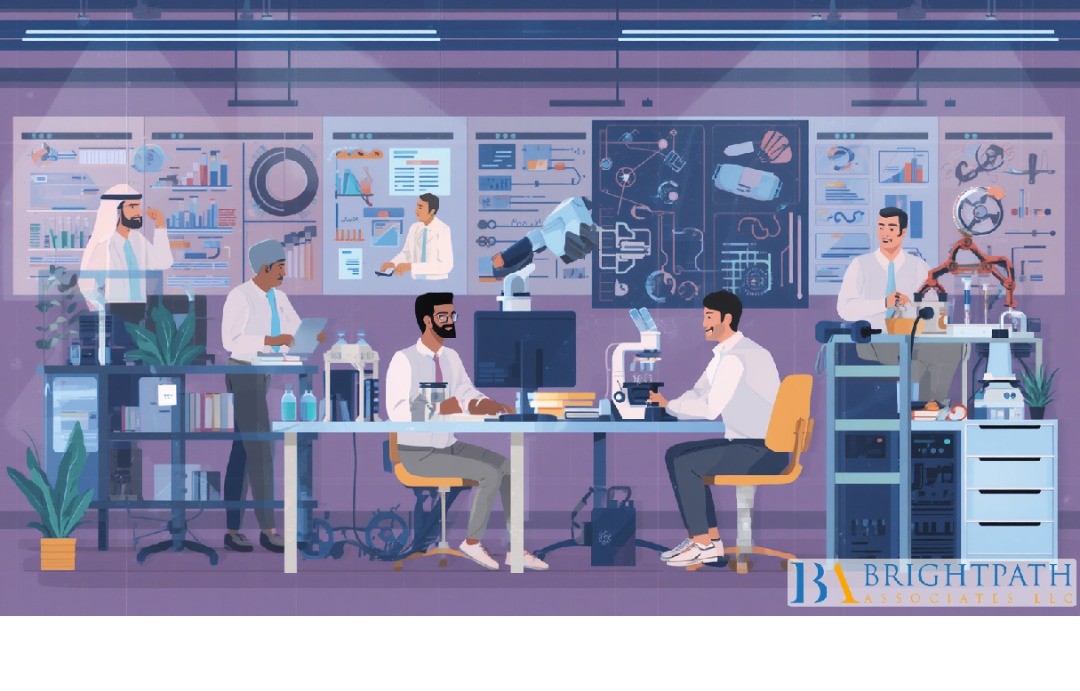
Nanotechnology is rapidly transforming industries ranging from healthcare and electronics to energy storage, aerospace, advanced manufacturing, and environmental science. As innovation accelerates, small and mid-sized enterprises (SMEs) are finding themselves at the forefront of groundbreaking discoveries and commercial applications. Yet, despite growing investment in nanotechnology, one challenge continues to limit growth more than funding or technology itself—the widening skills gap. In 2026, access to specialized talent has become one of the most significant competitive differentiators for nanotechnology companies. For business leaders, closing this gap is no longer simply an HR initiative; it is a strategic business imperative that directly influences innovation, commercialization, and long-term market leadership.
The nanotechnology industry demands an exceptionally diverse workforce that combines expertise in materials science, chemistry, physics, biotechnology, engineering, artificial intelligence, automation, and advanced manufacturing. However, universities and technical institutions are often unable to produce graduates with the multidisciplinary experience required for today's rapidly evolving nanotechnology applications. At the same time, experienced professionals remain in high demand, creating intense competition among employers for highly specialized talent. Many SMEs struggle to compete with larger organizations offering greater financial resources, broader research opportunities, and established employer brands. As technological change continues to outpace workforce development, companies that proactively address talent shortages will gain a lasting competitive advantage. Recent workforce studies highlight that skills shortages are becoming one of the defining business challenges for technology-driven SMEs in 2026, making strategic workforce planning essential for sustainable growth.
Rather than relying exclusively on external hiring, leading nanotechnology companies are adopting comprehensive talent strategies that balance recruitment with continuous learning and internal capability development. Upskilling existing employees enables organizations to preserve institutional knowledge while preparing teams for emerging technologies such as AI-assisted materials discovery, nanoscale manufacturing automation, quantum-enabled research, and predictive simulation. Cross-functional learning programs encourage collaboration between research scientists, engineers, manufacturing professionals, and commercial teams, creating a more agile workforce capable of adapting to changing market demands. Organizations that cultivate a culture of continuous learning are often better positioned to innovate while reducing their dependence on an increasingly competitive external talent market.
Equally important is strengthening collaboration between industry and academia. Universities remain vital sources of scientific knowledge, but closer partnerships can help align educational programs with evolving commercial needs. Internship programs, cooperative education initiatives, sponsored research projects, guest lectures, and shared laboratory experiences provide students with valuable practical exposure while allowing employers to identify promising talent early in their careers. Industry-academia collaboration also accelerates technology transfer, encourages applied research, and creates a stronger pipeline of future scientists and engineers prepared for commercial nanotechnology environments.
Organizations operating within the Nanotechnology Industry are increasingly recognizing that technical expertise alone is no longer sufficient. As research transitions into commercialization, professionals must also possess project management, regulatory compliance, quality assurance, intellectual property awareness, data analytics, communication, and leadership capabilities. Today's nanotechnology leaders require multidisciplinary teams capable of translating scientific discoveries into scalable products while navigating complex regulatory, manufacturing, and business environments. Developing these complementary skills enables organizations to accelerate commercialization while improving operational efficiency and customer confidence.
Artificial intelligence is further reshaping workforce requirements across the nanotechnology sector. AI-powered simulation, predictive modeling, automated experimentation, digital twins, and advanced analytics are transforming how nanomaterials are designed, tested, and manufactured. Consequently, demand is rising for professionals who can integrate computational tools with traditional scientific expertise. Organizations investing in AI literacy and digital capabilities across their technical workforce are better equipped to accelerate innovation while improving research productivity and reducing development timelines. This convergence of AI and nanotechnology is fundamentally changing the capabilities required for future leadership teams.
Building an attractive employer brand has also become essential for attracting highly specialized professionals. While large corporations often compete through compensation alone, SMEs can differentiate themselves by offering meaningful work, entrepreneurial environments, accelerated career progression, flexible organizational structures, and opportunities to contribute directly to breakthrough innovations. Many researchers and engineers value the ability to influence strategic decisions, collaborate across disciplines, and see their ideas move rapidly from concept to commercialization. Organizations that effectively communicate their mission, innovation culture, and growth opportunities often achieve stronger recruitment outcomes despite operating with leaner budgets.
Leadership development deserves equal attention. As nanotechnology companies expand, technical experts frequently transition into management positions where success requires new competencies beyond scientific excellence. Effective leaders must understand strategic planning, financial management, cross-functional collaboration, talent development, regulatory strategy, and organizational change management. Investing in leadership training ensures that scientific innovation is supported by strong business execution, enabling organizations to scale sustainably while maintaining research excellence.
Diversity and inclusion also play a significant role in addressing the industry's talent shortage. Expanding recruitment efforts across diverse academic institutions, encouraging interdisciplinary career pathways, and creating inclusive workplace cultures broadens access to underrepresented talent pools. Diverse teams consistently contribute broader perspectives, stronger creativity, and improved problem-solving capabilities—all essential characteristics for organizations operating at the cutting edge of scientific innovation. As competition for specialized professionals intensifies, inclusive hiring strategies provide both social and competitive advantages.
Technology can also enhance talent acquisition itself. AI-driven recruitment platforms, skills-based assessments, workforce analytics, and predictive hiring tools enable organizations to identify candidates based on demonstrated capabilities rather than traditional credentials alone. Skills-first hiring expands the available talent pool while improving workforce agility, particularly in emerging scientific fields where conventional job descriptions may no longer reflect evolving business needs. Global workforce research increasingly supports skills-based recruitment as an effective strategy for overcoming persistent talent shortages in highly specialized industries.
Business leaders seeking additional perspectives on workforce development can explore the original article on Bridging Nanotech Skills Gap, which examines practical approaches for developing resilient talent pipelines, strengthening workforce capabilities, and preparing organizations for the next phase of nanotechnology innovation.
The future of nanotechnology will be shaped not only by scientific breakthroughs but also by the organizations capable of attracting, developing, and retaining exceptional talent. Companies that invest strategically in workforce development, embrace continuous learning, strengthen academic partnerships, cultivate strong leadership, and adopt skills-first recruitment strategies will be better positioned to commercialize innovation and achieve sustainable growth. In an industry where knowledge evolves at extraordinary speed, talent has become the most valuable competitive asset.
