BMW Repair in UAE: Checks Before Driving After Storage
Author : erika john | Published On : 20 Nov 2026
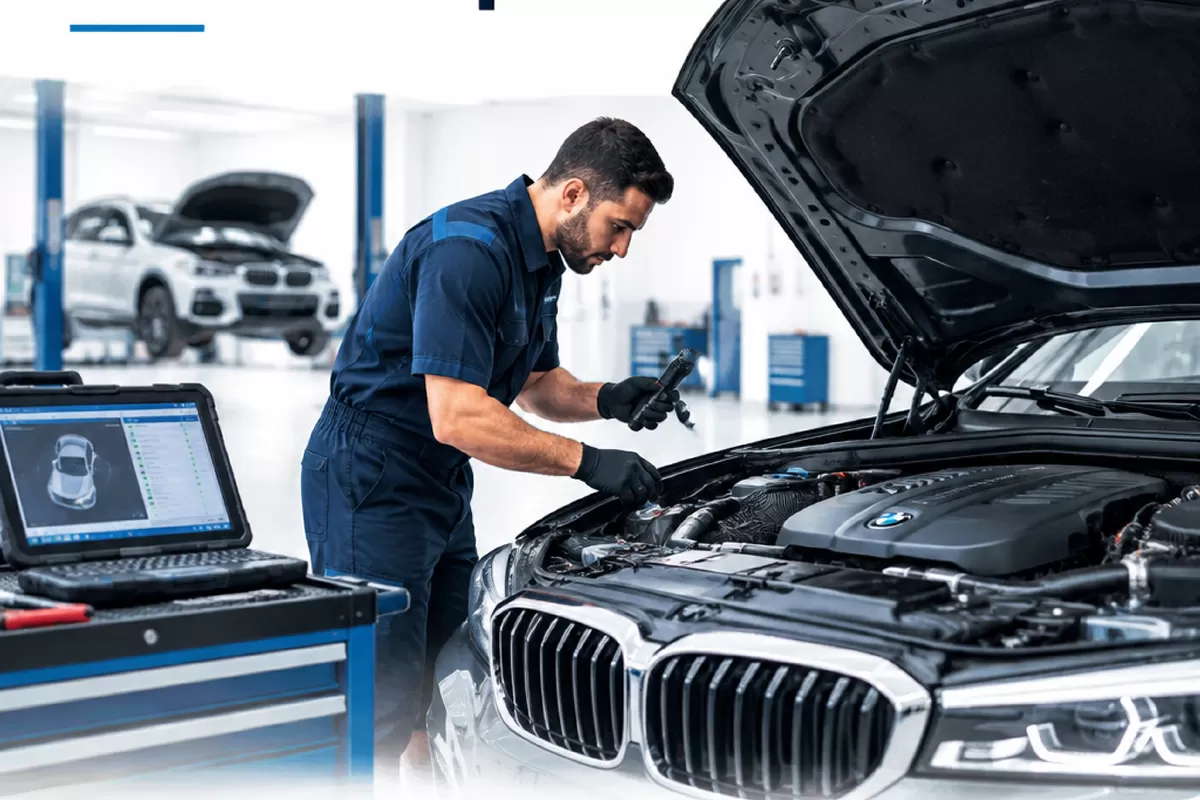
A BMW that has been parked for months can look perfectly sound, but appearance alone cannot show whether it is ready for the road. In the United Arab Emirates, a car stored in a Sharjah or Dubai car park may also have spent long periods in heat and dust. Before driving, check the battery, tyres, brakes, fluid levels and the area beneath the car. These observations can help you decide what to do next, but they cannot confirm a fault or prove the vehicle is safe. This guide explains what an owner can check and when to arrange professional BMW repair.
BMW repair checks to make before driving after storage
Start with a careful walk-round while the BMW is parked on level ground. Look for anything that has changed since you last used it, such as a tyre that appears low, fresh marks beneath the vehicle, damaged rubber or signs of animals near the engine bay. Do not reach into areas you cannot see clearly. If something looks unsafe or you are unsure what you are looking at, leave it for a technician to assess.
Pay attention to these areas:
- Battery: A car that has stood unused may have a weak or discharged battery. Slow cranking, dim lights or warning messages can be clues, but they do not identify the cause on their own. Avoid repeated attempts to start the car if it struggles.
- Tyres: Check that each tyre looks properly inflated and has no visible cracks, bulges or damage. A tyre can lose pressure while parked. Visual checks do not reveal every issue, so seek an assessment if its condition is uncertain.
- Brakes: Look through the wheels for obvious damage or heavy corrosion, and note any unusual noises or a change in pedal feel once the car is moved only if it is safe to do so. A vehicle that has been stationary may need its brakes checked before normal use.
- Fluids and leaks: Look for fresh puddles or damp patches under the car and check accessible fluid levels as described in the owner’s manual. Colour or location alone cannot reliably identify a leaking fluid.
- Lights and visible components: Check that the exterior lights work and look for cracked hoses, loose covers or other visible damage. Do not assume that the absence of a dashboard warning means every system is functioning correctly.
In the UAE, where a stored vehicle may have been parked outdoors, dust and heat exposure are worth mentioning to the workshop. They are context, not a diagnosis. A flat battery, for example, does not by itself prove that the battery is the only concern. Likewise, a warning light or a noise may have several possible causes.
A visual check is a useful first step, not a roadworthiness assessment. If the tyres look damaged, the brakes feel abnormal, a significant leak is visible or the car will not start normally, do not use a road test to find out what is wrong.
When to arrange BMW repair, and what to tell the workshop
Arrange a professional assessment before regular driving if the BMW has been stored for an extended period and you are unsure about its condition. Make it a priority if you notice a warning message, fluid beneath the car, a tyre that will not hold pressure, unusual starting behaviour or a change in braking. These signs do not confirm a particular fault. They give a technician useful reasons to inspect the vehicle and, where appropriate, carry out diagnostics.
When you contact a workshop, share practical details rather than guessing at the cause. Explain how long the car has been parked, whether it was kept indoors or outside, and when it last ran normally. Mention whether the battery has been charged or replaced, any warning messages you saw, and whether there are noises, smells, leaks or changes in how the brakes feel. If possible, take a clear photo of a dashboard message or a mark beneath the car. Do not try to recreate a concerning symptom just to record it.
Ask what the inspection will cover and how the workshop will report its findings. A clear process should distinguish between observed symptoms, diagnostic results and confirmed faults. Request a written quote before authorising repair work, and ask whether any proposed parts are OEM parts, meaning parts made to the vehicle manufacturer’s specification. These questions help you understand what needs attention now and what can be discussed separately.
For owners in Sharjah and Dubai, Smart Garage Workshop is a Sharjah-based premium technical workshop offering diagnostics, repairs, maintenance and transparent service for luxury and family vehicles. If the BMW has been stored and you want its condition assessed before returning to regular use, you can review the expert bmw repair maintenance dubai sharjah page and contact the workshop to explain the storage period and symptoms. Ask for the findings and a written quote before approving any work.
How to return a stored BMW to the road carefully
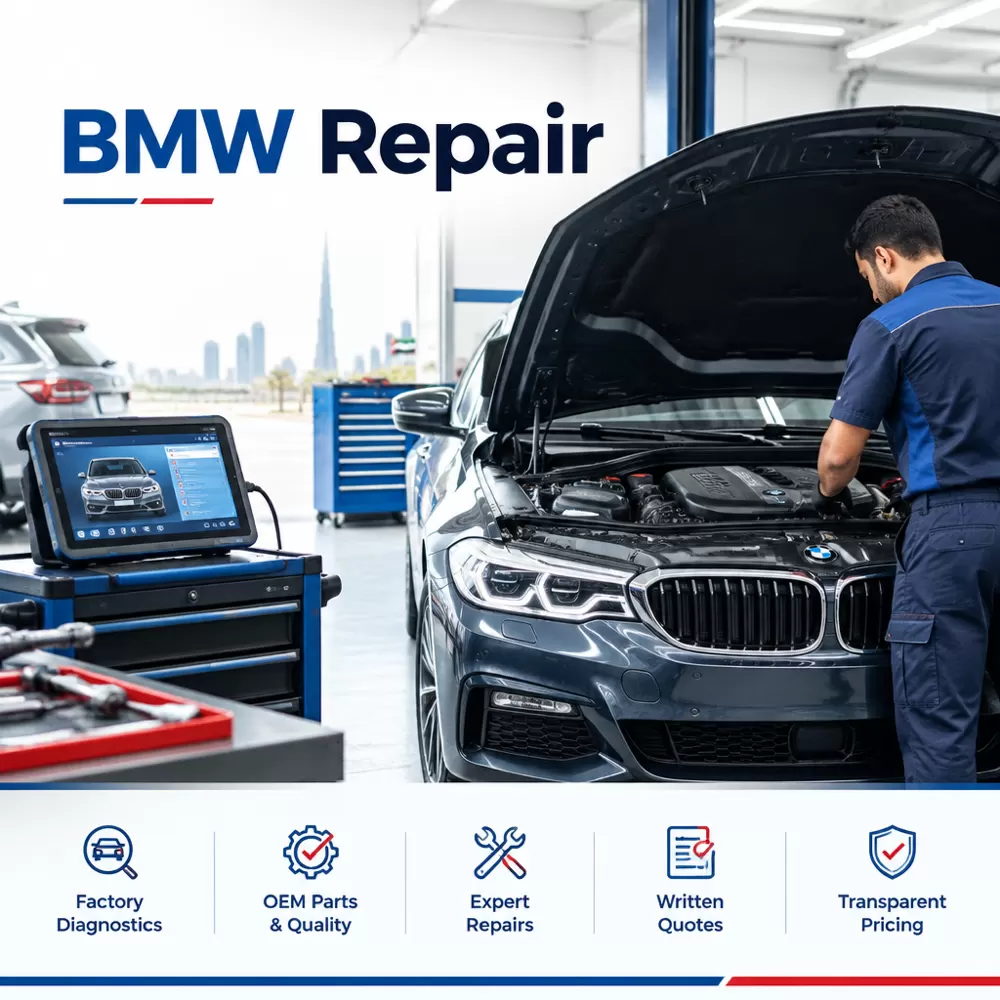
Once the vehicle has been checked and any necessary work discussed, avoid treating the first journey as proof that everything is fine. Follow the workshop’s advice on whether the BMW is ready to drive and whether any further checks are needed. If it is cleared for use, begin with a short, familiar trip rather than a long journey through busy UAE traffic. Pay attention to warning messages, braking feel, steering response and any new noise. Stop somewhere safe if a serious warning appears or the car behaves unexpectedly.
Keep a simple record of what you observed and what the workshop checked. Note the date, any warning messages, work authorised and advice given for follow-up. This makes it easier to spot a change later and gives the technician a clearer history if a concern returns. Do not ignore a new leak or assume that a symptom has resolved just because it was absent on one short drive.
Common mistakes are starting the car repeatedly when the battery is weak, relying only on tyre appearance, topping up a fluid without identifying what it is, or driving a long distance to see whether a noise disappears. These actions can obscure the original symptoms or add risk. If you cannot confirm that the BMW is safe to move, ask the workshop how it should be brought in rather than driving it.
The practical next step is straightforward: make a visual check, record anything unusual, then arrange an assessment if you have doubts or see a concerning sign. A technician can use the vehicle’s symptoms and appropriate diagnostic checks to advise what is required. The owner’s checks help prepare for that conversation, but they are not a substitute for professional assessment.
