Beyond Pallets: Monetizing Wood Waste Streams for SMBs
Author : Kabir Pathan | Published On : 22 Jul 2026
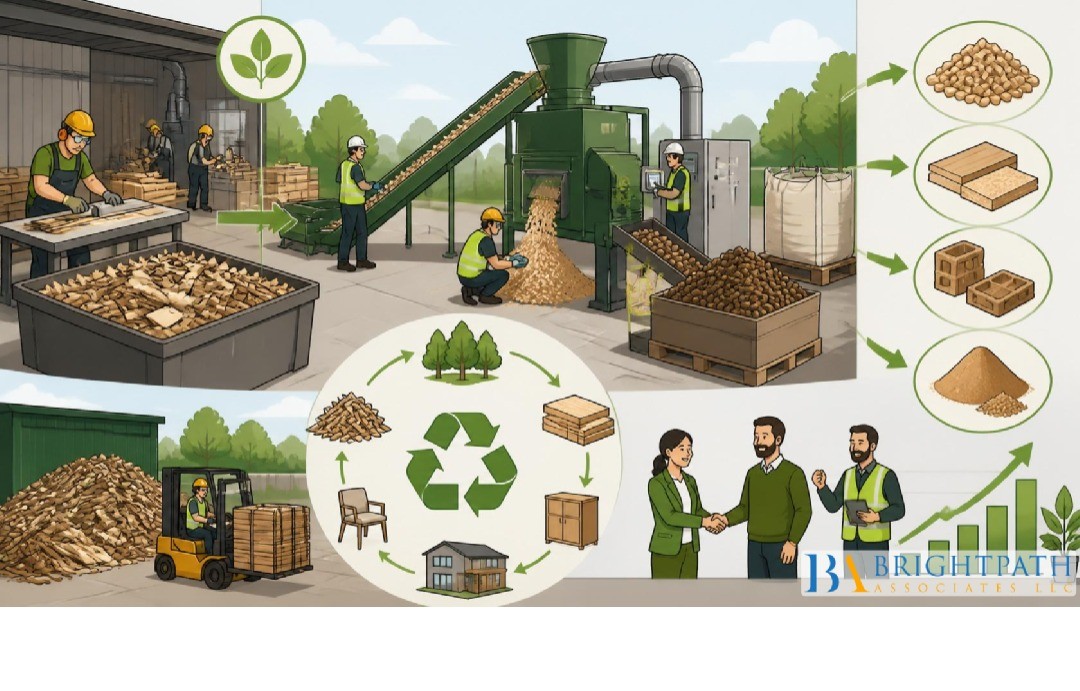
For many small and mid-sized companies in the Paper & Forest Products industry, wood waste has traditionally been viewed as an unavoidable cost of doing business. Offcuts, sawdust, bark, damaged pallets, and other by-products often end up in landfills or low-value disposal channels, increasing operational expenses while contributing little to the bottom line.
Driven by sustainability goals, circular economy initiatives, and advances in recycling technology, manufacturers are discovering that wood waste is not merely a by-product—it's a valuable business asset. Companies that rethink their waste management strategies are uncovering new revenue opportunities, reducing disposal costs, and strengthening their environmental credentials simultaneously. Industry trends increasingly show that optimized pallet recovery, recycling, and wood by-product utilization can transform waste streams into profitable business operations.
Business Case for Monetizing Wood Waste
Every manufacturing operation generates some form of residual wood material. Whether produced through lumber processing, furniture manufacturing, packaging operations, paper production, or forestry activities, these materials represent untapped economic potential.
Each alternative creates opportunities to diversify revenue while improving resource efficiency. For small businesses competing in increasingly competitive markets, developing additional income streams can improve financial resilience without requiring entirely new product lines.
Circular Economy Is Becoming a Competitive Advantage
Customers, investors, and regulators increasingly expect manufacturers to demonstrate measurable sustainability efforts. A circular economy focuses on extending the useful life of materials by reducing waste, reusing resources, and recovering value from by-products. Within the Paper & Forest Products sector, wood waste represents one of the most accessible opportunities to implement circular business practices.
Instead of sending reusable materials to landfills, manufacturers can recover value through internal reuse, external partnerships, or secondary product development. Organizations embracing circular production models often find that sustainability initiatives generate measurable financial returns alongside environmental benefits.
Innovation Is Expanding Commercial Opportunities
Modern recycling technologies have significantly increased the range of products that can be manufactured from wood waste. Advanced processing systems now enable businesses to transform low-value residues into commercially viable products for multiple industries.
As demand for sustainable raw materials grows, manufacturers capable of supplying recycled wood products are entering markets that previously did not exist. For SMEs, this creates opportunities to expand revenues without dramatically increasing production capacity.
Workforce Expertise Drives Sustainable Innovation
While equipment and technology play important roles, successful resource recovery ultimately depends on people. Organizations pursuing circular manufacturing strategies require experienced professionals who understand production optimization, sustainability, supply chain management, engineering, environmental compliance, and continuous improvement.
Leadership teams capable of identifying operational efficiencies often uncover opportunities that significantly improve profitability while advancing corporate sustainability objectives. As companies continue modernizing their operations, attracting professionals with expertise in manufacturing innovation and environmental stewardship becomes increasingly important.
Businesses seeking experienced talent and workforce insights can explore BrightPath Associates' expertise in the Paper & Forest Products Industry.
Building a More Resilient Future
Economic uncertainty, fluctuating raw material prices, and evolving environmental regulations continue reshaping the manufacturing landscape. Companies that diversify revenue sources while improving operational efficiency will be better positioned for long-term success.
What was once considered manufacturing waste is increasingly becoming an engine for growth. For additional strategies and practical insights on transforming wood by-products into business value, explore BrightPath Associates' detailed article: Monetizing Wood Waste Streams for SMBs.
Final Thoughts
The Paper & Forest Products industry is entering an era where profitability and sustainability are no longer separate objectives. Organizations that embrace circular thinking are discovering innovative ways to generate value from materials that were once discarded.
For small and mid-sized manufacturers, the opportunity extends well beyond pallets. Every wood waste stream has the potential to become a new source of revenue, operational efficiency, or competitive advantage.
