Beyond Flush Season: Strategies for Managing Milk Volatility in Small-Scale
Author : Alyssa Miller | Published On : 13 Jul 2026
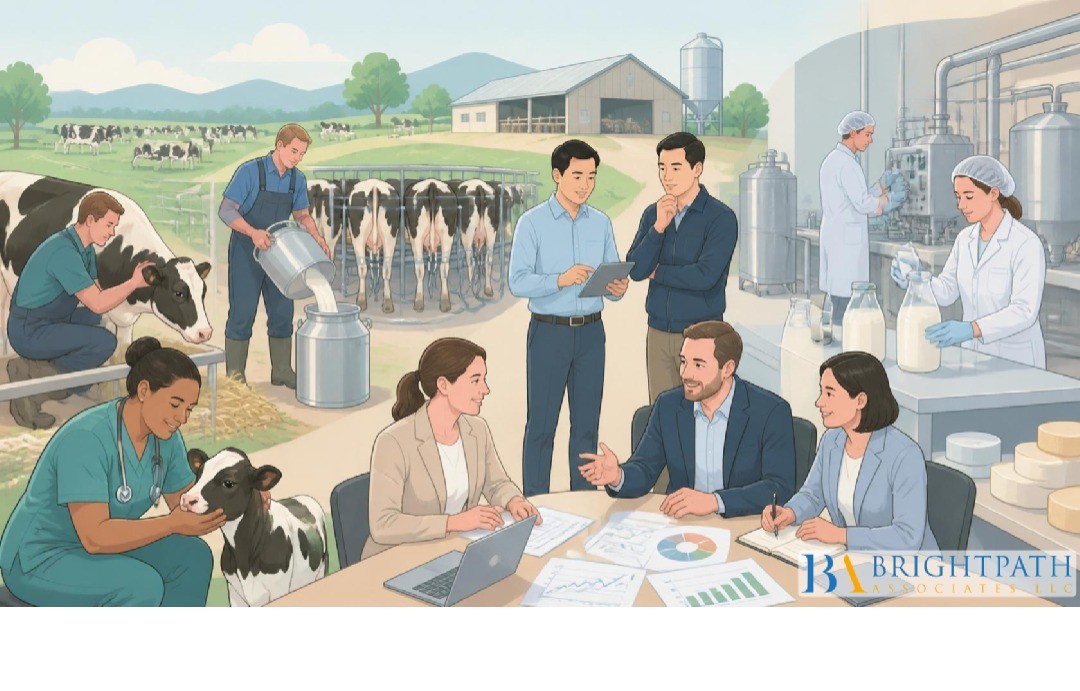
For small and mid-sized dairy businesses, seasonal milk fluctuations remain one of the most persistent operational and financial challenges. During the flush season, favorable weather conditions, abundant forage, and improved animal health often lead to increased milk production. While higher production creates opportunities for greater revenue, it can also result in oversupply, pricing pressure, storage challenges, and increased processing demands. Conversely, the lean season frequently brings reduced milk output, higher feed costs, and tighter profit margins. Successfully navigating these seasonal cycles requires more than reacting to changing conditions—it demands strategic planning, operational efficiency, and strong leadership. As highlighted in BrightPath Associates LLC's article, Strategies for Managing Milk Volatility in Small-Scale, dairy businesses that adopt proactive management strategies are better positioned to maintain profitability and build long-term resilience.
Milk volatility is influenced by several interconnected factors, including seasonal weather patterns, feed availability, animal nutrition, herd health, market demand, transportation costs, and commodity pricing. Small-scale dairy operations often experience greater exposure to these fluctuations because they typically operate with limited financial reserves and fewer opportunities to absorb unexpected changes in production or pricing. Industry research has long shown that milk production naturally rises during the flush season and declines during the lean season, creating cyclical supply and pricing challenges that require careful planning rather than short-term reactions.
One of the most effective strategies for reducing the impact of milk volatility is product diversification. Rather than relying solely on fluid milk sales, many successful dairy businesses expand into value-added products such as cheese, yogurt, butter, cream, flavored milk, and specialty dairy offerings. Diversification enables producers to utilize surplus milk during periods of high production while creating additional revenue streams that are less dependent on fluctuating raw milk prices. Value-added processing also allows businesses to reach new customer segments and strengthen brand differentiation in increasingly competitive markets.
Technology has become another critical tool for managing seasonal production variability. Modern dairy farms are increasingly adopting automated milking systems, herd management software, precision feeding technologies, wearable animal health monitors, and data analytics platforms that provide real-time insights into production performance. These technologies help producers optimize feeding programs, monitor cow health, improve breeding decisions, and maintain more consistent milk production throughout the year. Better operational visibility enables farm managers to identify inefficiencies early and make informed decisions that improve productivity while reducing unnecessary costs. Automation also reduces manual labor requirements, allowing employees to focus on animal welfare, quality assurance, and operational improvement.
Feed management remains one of the most significant factors affecting milk consistency and profitability. During periods of abundant forage, producers have an opportunity to build feed reserves that can support herd nutrition during lean seasons when feed availability declines or prices increase. Strategic forage planning, silage production, nutritional balancing, and feed inventory management help stabilize production while reducing exposure to market volatility. Dairy businesses that consistently monitor feed quality and adjust nutritional programs based on herd requirements are often able to maintain healthier animals and achieve more predictable milk yields despite seasonal changes.
Supply chain planning is equally important for managing production fluctuations. Establishing long-term relationships with processors, distributors, retailers, and cooperative partners creates greater stability during periods of changing supply and demand. Forward contracts, diversified customer bases, and improved production forecasting allow dairy businesses to better align milk production with market requirements. Companies that maintain transparent communication throughout their supply chain are generally more successful in managing inventory levels, minimizing waste, and responding quickly to market shifts.
Sustainability initiatives are also becoming an increasingly valuable component of dairy business resilience. Consumers, retailers, and regulators are placing greater emphasis on environmentally responsible production practices, encouraging dairy operations to adopt water conservation, manure management, renewable energy, methane reduction, and efficient resource utilization strategies. Sustainable farming practices not only reduce environmental impact but can also improve operational efficiency, strengthen brand reputation, and create new opportunities with environmentally conscious customers. As sustainability becomes a competitive differentiator, proactive investments in responsible farming practices can contribute to long-term profitability alongside environmental stewardship.
Financial planning plays a vital role in helping dairy operations navigate seasonal uncertainty. Developing realistic production forecasts, maintaining adequate cash reserves, monitoring production costs, and evaluating capital investments enable businesses to withstand temporary market disruptions without compromising long-term objectives. Rather than making reactive decisions during periods of price volatility, financially disciplined organizations create contingency plans that support operational continuity throughout changing market conditions. Diversified revenue streams and disciplined cost management further strengthen resilience against seasonal fluctuations.
Even with advanced technology and sound financial planning, long-term success ultimately depends on effective leadership. Dairy businesses require experienced executives who understand production management, food safety, regulatory compliance, supply chain operations, workforce development, automation, and strategic growth. As dairy operations become increasingly data-driven and technologically advanced, demand continues to grow for leaders who can successfully integrate innovation with practical operational management. Recruiting professionals who possess both technical expertise and strategic leadership capabilities has become one of the industry's most important competitive advantages.
BrightPath Associates LLC partners with organizations across the Dairy Industry, helping small and mid-sized businesses identify executive leaders and specialized professionals capable of improving operational performance, strengthening supply chain resilience, leading digital transformation initiatives, and driving sustainable business growth. Whether organizations are expanding production capacity, investing in automation, modernizing processing facilities, or preparing for leadership succession, securing the right talent remains essential for achieving long-term success.
Looking ahead, the dairy industry will continue evolving through advancements in precision agriculture, artificial intelligence, predictive analytics, automation, and climate-smart farming practices. Businesses that invest today in technology, workforce development, sustainability, and strategic planning will be better prepared to manage seasonal milk volatility while responding to changing consumer expectations and market conditions. Rather than viewing the flush season as an isolated production event, successful dairy organizations recognize it as one component of a comprehensive, year-round operational strategy focused on resilience, efficiency, and sustainable growth.
