Best Voice Amplifier: What Should You Look For?
Author : Voice Booster | Published On : 05 Oct 2026
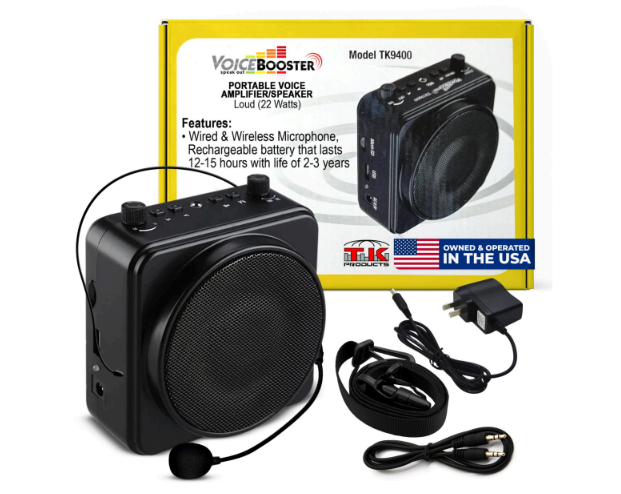
Choosing a voice amplifier is not only about finding the loudest speaker. The right model should make speech clear, stay comfortable during long use, offer enough battery life for the task, and allow easy movement. Weight, microphone style, power output, controls, charging time, and connection options all matter. The ideal choice also depends on where it will be used. A teacher may need reliable coverage across a classroom, while a tour guide may need a compact unit for outdoor groups. For public speakers and coaches, hands-free use can be just as important as sound output.
What Makes the Best Voice Amplifier a Good Choice?
A good personal amplifier should make the speaker easier to hear without requiring constant shouting. VoiceBooster focuses on compact and portable systems designed for teachers, coaches, tour guides, presenters, fitness instructors, and other users who depend on clear communication.
The right model should match the environment rather than simply having the highest wattage. A small classroom does not always require the same power as an outdoor event. It is also important to consider how long the amplifier will be worn and how easily the user can move while speaking.
1. Consider the Amplifier's Size and Weight
Portability matters when an amplifier will be worn for hours. A bulky unit can become uncomfortable during teaching, touring, coaching, or presentations.
VoiceBooster models are designed to be compact and wearable. Depending on the model, an amplifier can be clipped to a belt, worn with a waistband, or carried with a strap. This gives users more freedom than a stationary PA system.
For example, the MR1505 weighs about 0.92 pounds and measures 4.13 by 3.31 by 1.38 inches. It includes a removable belt clip, adjustable waistband, and carry bag.
2. Check Battery Life Before Choosing a Model
Battery life can make a major difference during a full workday. Teachers may need amplification for several classes, while tour guides or coaches may spend hours outdoors.
A useful amplifier should provide enough operating time for the planned activity. The MR1505, for example, uses a rechargeable lithium battery and provides around 10–15 hours of typical use. The listed recharge time is about six hours.
A longer battery life can reduce the need to stop and recharge during important sessions.
3. Match Power Output to the Space
Wattage is useful, but it should not be the only factor. Sound clarity and the size of the area also affect how well an audience hears speech.
VoiceBooster offers models with different power levels, including 10W, 12W, 16W, 20W, 22W, and 25W options. This range allows users to consider the size and type of space before selecting a unit.
The MR1505 is a 12W model listed with sound coverage of more than 4,500 square feet. That makes its specifications useful for people comparing compact amplification for classrooms, tours, presentations, and similar settings.
4. Look at the Microphone and Wearing Options
The microphone is just as important as the speaker. A clear microphone helps capture the speaker's voice and keeps the hands free.
Headset microphones can be useful for teachers, trainers, tour guides, and presenters who need to move while talking. VoiceBooster also offers microphone accessories, including lightweight single-ear-hook microphones.
The microphone should feel secure without distracting the user. For active settings, hands-free operation can make it much easier to teach, demonstrate, guide, or lead a group.
5. Check Extra Audio and Connection Features
Some users need more than simple voice projection. Additional inputs can be helpful for presentations, music, sound effects, or other audio.
For example, the MR1505 has separate microphone and MP3 inputs and can accept signals from both at the same time. It also includes an MP3 cable.
Other VoiceBooster models offer features such as MP3 playback, while the collection includes different options for varied communication needs.
What Should Be Considered Before Buying?
Anyone planning to buy the best voice amplifier equipment should compare the product with the actual speaking environment. The following factors are worth checking:
-
Where it will be used: Indoor classrooms, outdoor tours, fitness areas, and events can require different levels of projection.
-
How long it will be worn: Lightweight construction and comfortable straps matter when speaking for several hours.
-
How much movement is needed: A headset and wearable amplifier can be useful for active presenters and instructors.
-
Whether audio playback is needed: MP3 inputs or other connection options may be valuable for presentations, music, or effects.
-
What support is available: Manuals, troubleshooting resources, replacement parts, and warranty coverage can matter after purchase.
VoiceBooster provides product manuals, troubleshooting guides, battery replacement information, and feedback-reduction guidance through its support section.
Why Does Voice Clarity Matter More Than Maximum Volume?
A louder amplifier is not automatically a better amplifier. If speech becomes distorted or difficult to understand, extra volume may not solve the problem.
Clear projection helps listeners follow instructions and conversations without forcing the speaker to raise their voice repeatedly. This can be especially useful for teachers, tour guides, coaches, and presenters who speak for long periods.
VoiceBooster's product range is built around clear sound, portability, comfort, and practical daily use rather than relying on one feature alone.
How Can the Right Amplifier Improve Everyday Speaking?
A suitable personal amplifier can make communication easier in places where natural voice projection is not enough. A teacher can address a classroom without constantly raising their voice. A tour guide can speak while walking with a group. A fitness instructor can give directions while moving around a class.
The goal is simple: help the speaker stay heard while keeping the equipment practical to carry and use.
Final Thoughts
Selecting a voice amplifier should start with the user's environment, not just the product's wattage. Weight, battery life, microphone design, sound coverage, connection options, and available support all deserve attention.
VoiceBooster offers several portable models for different settings, along with accessories, manuals, troubleshooting resources, and warranty support. Its product range includes compact options for teachers and tour guides as well as higher-powered models for larger communication needs. For anyone comparing personal voice amplification, focusing on real-world comfort, clarity, battery performance, and intended use can make the decision much easier.
