Best Payment Gateways for Small Businesses in USA (2026 Comparison)
Author : Jack Spa | Published On : 07 Apr 2026
Why Small Businesses Need a Modern Payment Gateway

Small businesses operate on tight margins. Every failed transaction, chargeback, or delayed payout affects revenue.
Here’s why the right gateway matters:
1. Increased Conversions
Faster checkout = fewer abandoned carts.
2. Customer Trust
PCI-compliant infrastructure builds confidence.
3. Faster Settlements
Next-day or same-day funding improves cash flow.
4. Omnichannel Capability
Sell online, in-store, mobile, and via invoices — from one system.
5. Scalability
Grow without switching providers every year.
Top Features to Look for in 2026
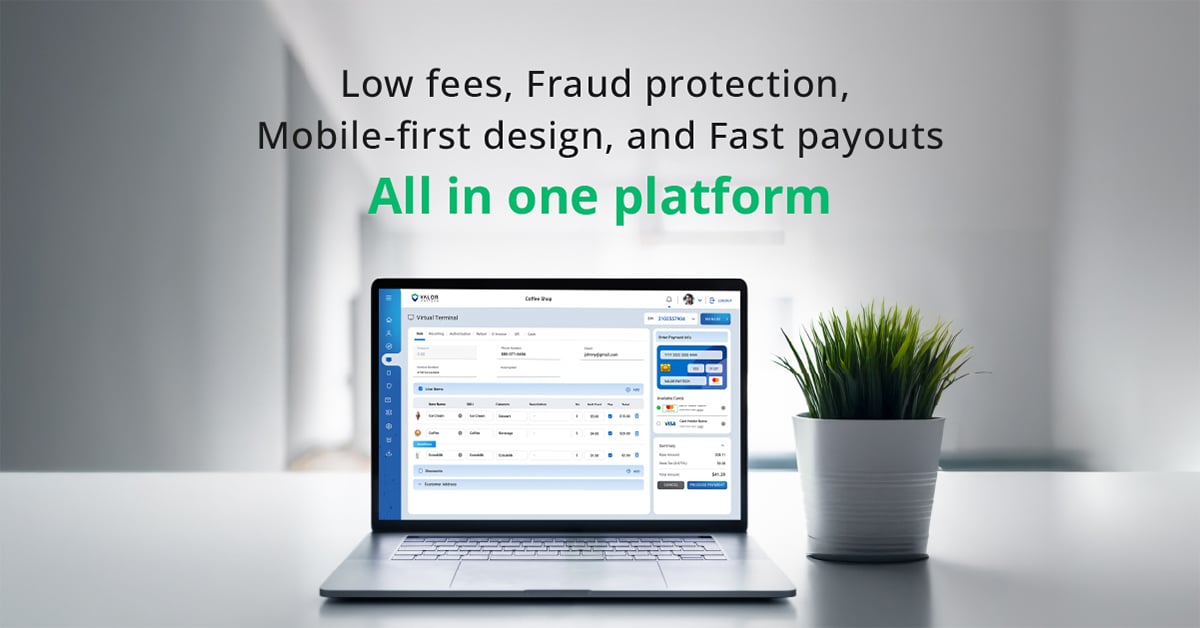
When evaluating payment gateways, prioritize:
✔ Transparent Pricing
Look for:
- Flat rate vs interchange-plus
- Chargeback fees
- Monthly platform fees
- Hidden add-ons
✔ AI Fraud Prevention
Fraud in card-not-present transactions continues to rise.
Modern gateways use machine learning to reduce false declines.
✔ Multi-Payment Support
Your customers expect options:
- Credit & debit cards
- ACH
- Digital wallets
- BNPL
- Contactless payments
- International currencies
✔ Mobile-First Checkout
Over 60% of small business online purchases now originate from mobile.
✔ Real-Time Reporting
Business intelligence tools are no longer optional.
✔ Fast Funding
Cash flow is critical for SMB survival.
Best Payment Gateways for Small Businesses in USA (2026 Comparison)
Below is a structured comparison based on features, usability, and scalability.

| Provider | Best For | Online Payments | In-Store POS | International | Developer Friendly | Settlement Speed |
|---|---|---|---|---|---|---|
| Valor PayTech | Omnichannel SMB | ✅ | ✅ | Limited | Moderate | Fast |
| Stripe | Ecommerce & SaaS | ✅ | ❌ | ✅ | High | Standard |
| Square | Retail & Hybrid | ✅ | ✅ | Limited | Moderate | Fast |
| Authorize.Net | Traditional SMB | ✅ | Limited | Limited | Moderate | Standard |
| Shopify Payments | Shopify Stores | ✅ | Limited | Limited | Low | Standard |
| Adyen | Global Expansion | ✅ | ✅ | ✅ | High | Fast |
1. Valor PayTech
Best for: Unified commerce & scalable SMB growth
Strengths:
- Online + in-store integration.
- Real-time reporting
- Secure PCI-compliant ecosystem.
- Hardware + software integration.
- Strong partner support.
Consideration:
- Typically available through partners.
Best suited for merchants wanting one ecosystem for everything.
2. Stripe
Best for: Developer-heavy ecommerce
Strengths:
- Powerful APIs
- Global payments
- Subscription tools
Consideration:
- Technical complexity for non-developers
3. Square
Best for: Small retailers & restaurants
Strengths:
- Integrated POS
- Easy onboarding
- Recognized brand
Consideration:
- Less flexible for complex customizations
4. Authorize.Net
Best for: Traditional businesses
Strengths:
- Strong fraud filters
- Stable infrastructure
Consideration:
- Monthly gateway fees
5. Shopify (Shopify Payments)
Best for: Shopify merchants
Strengths:
- Seamless integration
- No extra transaction fees within platform
Consideration:
- Limited outside Shopify ecosystem
6. Adyen
Best for: International scaling
Strengths:
- Multi-currency support
- Enterprise-grade analytics
Consideration:
- May require higher processing volume
How to Choose the Right Payment Gateway
Ask yourself:
- Am I online-only or hybrid?
- Do I plan to expand internationally?
- What is my monthly transaction volume?
- Do I need recurring billing?
- Do I need POS hardware integration?
- How important is advanced reporting?
Test before committing:
- Use sandbox environments
- Request demos
- Review contract terms carefully
Integrating a best payment gateway for small business into your website or app
The good news? It’s easier than ever to add a payment gateway to your site or mobile app. Most providers offer:
- Plugins for platforms like Shopify, Valor Pay, WooCommerce, Magento, and Wix.
- APIs for custom development.
- Hosted payment pages if you don’t want to handle sensitive data directly.
You don’t need to be a developer to get started – but having someone on your team who understands the basics can help speed things up.
Read more
