Bathroom Waterproofing Melbourne: AS 3740 Standards, Costs & Common Problems
Author : jersain haider | Published On : 24 Aug 2026
Bathroom waterproofing is the most important and least visible part of any Melbourne bathroom renovation. The tiles are what homeowners spend weeks selecting. The waterproofing membrane underneath them is what determines whether those tiles and the wall structure behind them remain sound for the next fifteen to twenty years.
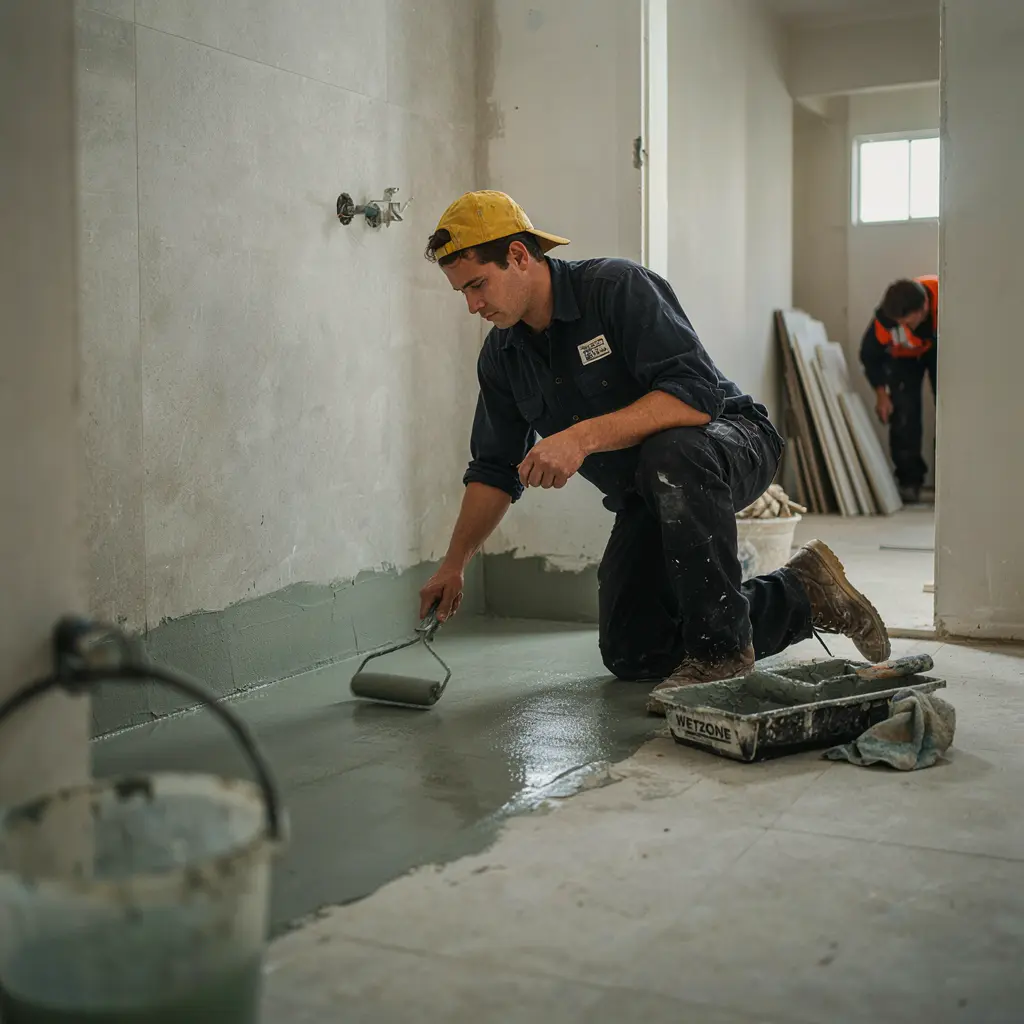
When bathroom waterproofing is done correctly, it is completely invisible, sealed under the tile adhesive and tiles, doing its job silently for decades. When it is done incorrectly — inadequate coverage, missed corners, wrong product, or skipped entirely to save a few hundred dollars — the consequences emerge slowly and expensively. Water that finds its way through failed grout joints or silicone reaches the substrate, migrates through the cement sheet, and eventually reaches the framing behind. By the time the problem is visible from inside the bathroom, significant remediation is already required.
This guide gives Melbourne homeowners the complete picture on bathroom waterproofing: what AS 3740 actually requires, which areas must be waterproofed and to what height, how the three main membrane types compare, what failed waterproofing looks like and costs to fix, and how to confirm your tiler is installing it correctly.
The Legal Framework: AS 3740 and the National Construction Code
Bathroom waterproofing in Melbourne is not optional — it is a mandatory requirement under two overlapping regulatory frameworks. Australian Standard AS 3740:2021 (Waterproofing of Domestic Wet Areas) is the primary technical standard for wet area waterproofing in Australian residential buildings. It specifies which areas must be waterproofed, the minimum coverage area for each wet zone, the membrane types and application methods that constitute compliance, and the testing requirements. This standard is referenced by every relevant regulatory body in Victoria.
The National Construction Code (NCC) Volume Two requires wet areas in Class 1 buildings (houses and townhouses) to be waterproofed to AS 3740. Building permit requirements for bathroom renovations in Melbourne specify AS 3740 compliance for any wet area work.
In Victoria, bathroom renovation work above $10,000 in contract value requires a building permit, and waterproofing installed under a building permit must be inspected before tiling proceeds. A licensed building inspector assesses the membrane installation and issues a certificate of compliance before any tile goes down. This inspection step is the homeowner's best protection against inadequate waterproofing — but only if the permit is obtained and the inspection requested.
Many Melbourne tilers and builders avoid obtaining building permits for bathroom renovations to save time and cost. A bathroom renovation done without a permit and without waterproofing inspection has no documented compliance, may affect home insurance claims for water damage, and creates disclosure obligations when the property is sold. Always confirm permit status with your tiler for bathroom work above $10,000. Read our waterproofing before tiling Melbourne guide for the full compliance process from surface prep to certificate.
What AS 3740 Actually Requires: Zone by Zone
AS 3740 divides a bathroom into waterproofing zones based on their exposure to water. The requirements differ by zone — not all surfaces need the same treatment.
| Zone | Location | AS 3740 Minimum Requirement | Common Shortcut to Watch For |
|---|---|---|---|
| Zone 1 (shower zone) | Floor and walls within the shower enclosure | Floor: full coverage. Walls: full height to the shower head or minimum 1,800mm from floor, whichever is higher. | Stopping wall membrane at 1,200mm and leaving the upper shower wall unprotected — common with budget operators. |
| Zone 2 (immediate splash zone) | Floor outside shower enclosure within 1,500mm of the shower opening; bath surrounds | Full floor coverage of the bathroom floor where water may contact; bath surround to 150mm above the bath rim. | Waterproofing only the shower floor and ignoring the bathroom floor outside it is non-compliant. |
| Zone 3 (adjacent areas) | Walls adjacent to wet areas within 150mm of the floor on non-shower walls | Minimum 150mm membrane height from floor level on all adjacent walls. | Skipping the wall membrane entirely on a non-shower wall is a very common shortcut. |
| Floor to wall junction (all zones) | The junction between the floor membrane and the wall membrane | Fabric reinforcement tape embedded in the membrane at all internal corners and junctions before the coat over the top. | Applying membrane to walls and floor separately without fabric reinforcement at the corner — the junction is where membranes most commonly fail. |
| Penetrations (all zones) | Floor waste, wall penetrations for pipes | The membrane must return into the penetration opening and be sealed to the fitting. | Applying membrane up to the floor waste flange without sealing the junction — water follows the pipe behind the membrane. |
The Three Main Waterproofing Membrane Types Used in Melbourne Bathrooms
| Membrane Type | Application | Cure Time | Best For | Notes |
|---|---|---|---|---|
| Liquid-applied polymer membrane (most common) | Rolled, brushed, or trowelled directly onto the substrate in 2-3 coats | 24-48 hours between coats; 48-72 hours total before tiling | Standard Melbourne residential bathroom waterproofing. The most widely used system across Ali Star Tiling projects. | Must be applied in multiple coats to specified thickness. Single-coat application is a common shortcut that produces inadequate membrane thickness. |
| Sheet membrane (self-adhesive or torch-on) | Pre-formed membrane sheet bonded to the substrate | Faster than liquid — adhesive or heat bonded immediately | Complex substrate conditions, commercial bathrooms, where a single-application system is preferred | Less common in Melbourne residential bathrooms but used where substrate conditions suit. Torch-on requires a licensed applicator. |
| Cementitious membrane | Cement-polymer slurry mixed and applied in multiple coats | 24-48 hours between coats | Concrete substrate bathrooms, pools, water features | Requires a very stable substrate. Not ideal for timber-framed Melbourne homes where seasonal movement occurs. |
Why Product and Application Quality Matter
Not all liquid-applied membranes are equal. The Australian market contains products ranging from high-quality polymer membranes that cure to a flexible, durable film tested and certified to AS 4858 (which AS 3740 references for membrane products) to cheaper products that meet the minimum specification at the time of testing but degrade faster in service.
Application quality matters as much as product quality. A premium membrane applied too thinly (single coat where two or three are specified), without the correct curing time between coats, or without fabric reinforcement at junctions, will not perform to the product's rated specification regardless of how good the membrane itself is.
Ali Star Tiling uses polymer-modified liquid-applied membranes that meet AS 4858, applied in multiple coats with full cure time between coats, fabric reinforcement tape at all junctions, and penetration sealing at all floor wastes and pipe entries. The waterproofing is installed correctly or not at all; there is no acceptable shortcut at this stage of a bathroom renovation.
What Failed Waterproofing Actually Looks Like in Melbourne Bathrooms
Waterproofing failure is not visible until it is serious. The sequence of events in a Melbourne bathroom with inadequate or failed waterproofing is consistent and predictable.
Water infiltration begins first: water from shower use finds a pathway through a failed grout joint, a missing silicone bead, or a junction in the waterproofing membrane that was not correctly sealed. This may happen immediately after installation (where the membrane was inadequate from day one) or after 5-10 years (where the membrane was initially adequate but has degraded or been breached by movement). Substrate moisture then accumulates invisibly, migrating through the cement sheet, compressed fibre cement, or directly onto timber framing in older Melbourne homes — no external sign is visible at this stage.
Early warning signs appear next: grout cracking or falling out of joints, tiles developing a hollow sound when tapped, or a musty smell from the bathroom that does not resolve with ventilation or cleaning. Mould and staining become visible as the water ingress continues — black mould appearing at the base of shower walls, staining emerging through grout joints, or discoloration of the wall surface below tiles.
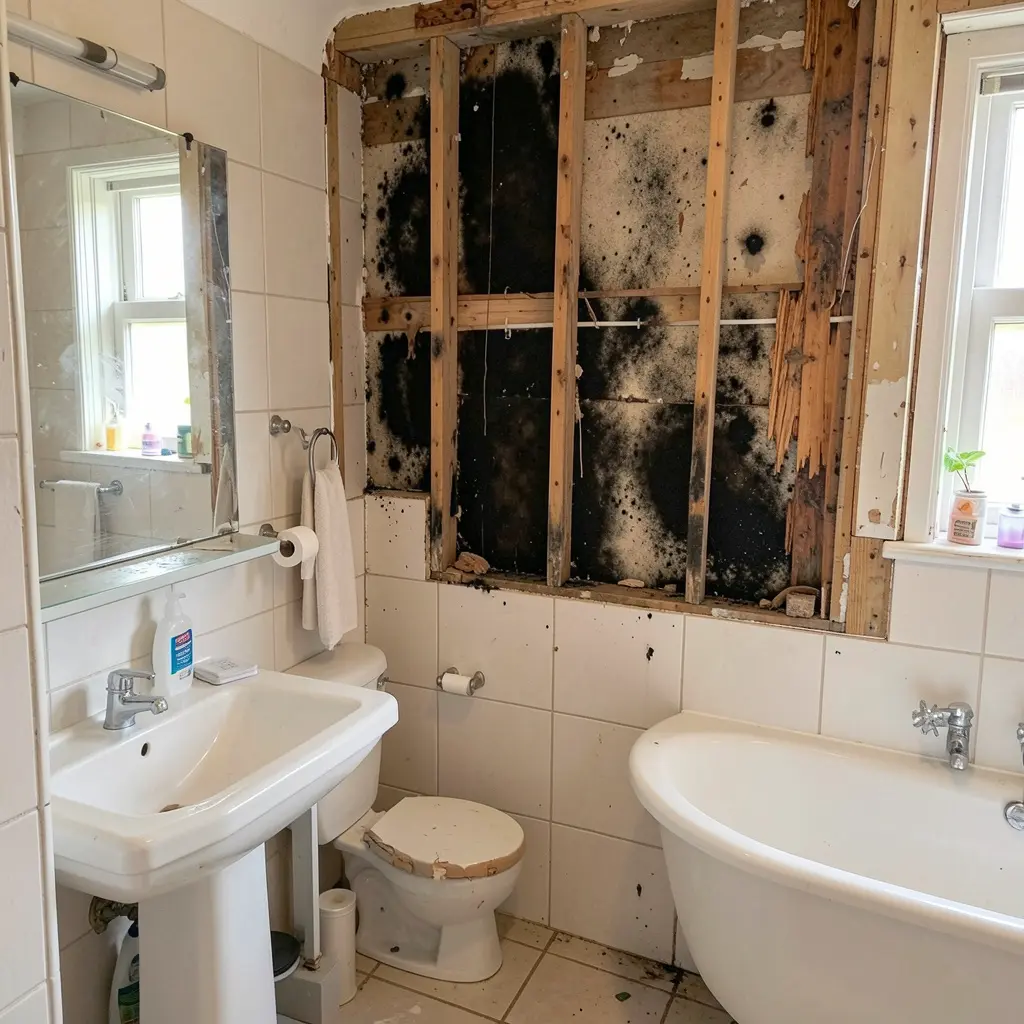
The full extent is revealed at strip-out. When tiles are eventually removed, the full damage is visible — water-stained or mould-colonised cement sheet, saturated wall framing, in serious cases rotted timber studs or deteriorated plasterboard in adjacent areas. This is the remediation scope that a bathroom renovation budget must address before new waterproofing and tiling can proceed. If the tiles themselves are the visible symptom, our tile repair Melbourne guide explains when a repair is enough and when the membrane underneath needs a full inspection.
The cost of remediating failed waterproofing in a Melbourne bathroom — replacing water-damaged cement sheet, treating mould in wall cavities, potentially replacing framing — typically costs $2,000-$8,000 in addition to the cost of the bathroom renovation itself. This is the true cost of inadequate waterproofing.
How to Confirm Your Melbourne Tiler Is Waterproofing Correctly
The most common concern Melbourne homeowners express about waterproofing is that it happens under the tiles where they cannot see it. How do you know the tiler actually did it correctly? Here are the practical steps for confirming compliance.
- 1. Ask for the membrane product name and specification sheet. A tiler who can name the specific waterproofing membrane they use and explain why it is AS 4858 certified is demonstrating the right level of knowledge.
- 2. Ask to see the membrane after application, before tiling proceeds. A properly applied liquid membrane is visibly present on the substrate — grey, green, or cream coloured, covering the entire floor and wall areas to the correct heights, with fabric tape visible at corners.
- 3. Request the inspection for permitted work. If your bathroom renovation requires a building permit (above $10,000 in Victoria), request that the waterproofing inspection is arranged before tiling proceeds.
- 4. Check the silicone joints at completion. The final visible sign of correct wet area practice is flexible silicone — not grout — in all internal corners of the tiled surfaces.
- 5. Confirm the floor waste is sealed. Ask your tiler to confirm the waste penetration is sealed to the fitting as part of their waterproofing scope.
Bathroom Waterproofing Costs in Melbourne 2026
Waterproofing is typically quoted as part of a bathroom tiling project rather than as a standalone scope. Here are the realistic cost ranges for waterproofing components in Melbourne in 2026. For the full cost picture across an entire renovation, see our bathroom tiling cost Melbourne guide.
| Waterproofing Scope | Typical Cost Range | Notes |
|---|---|---|
| Shower zone only (floor + walls to 1,800mm) | $350-$700 | Standard shower waterproofing for a 900x900mm or 1200x900mm shower enclosure. |
| Full bathroom floor + shower walls (AS 3740 compliant) | $500-$900 | The most common full-scope waterproofing for a standard Melbourne bathroom renovation. |
| Full bathroom (floor + all walls to 150mm + shower to full height) | $650-$1,200 | Maximum AS 3740 scope for a single bathroom. Larger bathrooms at the higher end. |
| Membrane product (liquid polymer, per bathroom) | $80-$200 | Material cost for quality polymer membrane for a standard bathroom. Included in most tiler quotes. |
| Fabric reinforcement tape and corner fillet | $20-$50 | Usually included in waterproofing labour. Confirm it is not omitted. |
| Penetration sealing (floor waste, pipe entries) | Usually included | Confirm specifically — some tilers treat this as optional or additional. |
| Building inspector waterproofing inspection (permitted work) | $150-$350 | Where a building permit is obtained, the inspection stage. Worth every dollar. |
These are indicative Melbourne metro ranges. Waterproofing is almost always quoted as part of a bathroom tiling project rather than as a standalone item. Ali Star Tiling includes AS 3740-compliant waterproofing in the scope of every wet area tiling project and provides written itemised quotes — call 0455 233 816 or email [email protected].
Waterproofing for Other Wet Areas: Laundry, Ensuite, Pool
AS 3740 applies to all domestic wet areas, not just bathrooms. Ensuites carry identical requirements to a standard bathroom — the smaller size does not reduce the waterproofing scope; all the same zones, heights, and junction requirements apply.
Laundries are classified as wet areas under AS 3740. The full floor must be waterproofed, plus adjacent walls to 150mm and any wall areas adjacent to the laundry trough to 150mm above the trough height. See the Laundry Tiling Melbourne guide for full details.
Pool tiling waterproofing is a specialised scope beyond AS 3740's domestic wet area standard. The full pool shell interior requires waterproofing to a pool-specific standard using pool-rated membrane systems. See the Pool Tiling Melbourne guide for detailed pool waterproofing requirements.
