Balancing Short-Term Profitability with Long-Term Digital Agility
Author : Ayesha Diaz | Published On : 10 Aug 2026
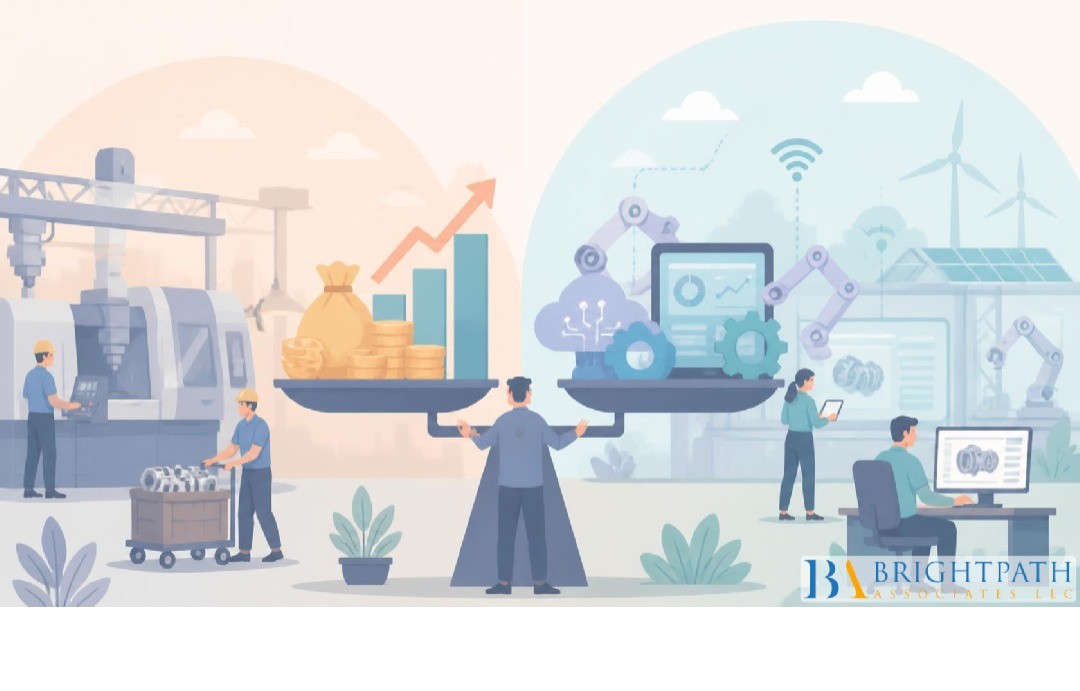
Machinery manufacturers are facing a difficult business equation: protect profitability today while investing in the capabilities required to remain competitive tomorrow. Rising input costs, changing customer expectations, supply chain uncertainty, labor shortages, and pressure for shorter delivery times are making this balance increasingly important. For small and mid-sized machinery companies in particular, every investment must demonstrate a clear business case, yet delaying modernization can create its own long-term costs. The challenge is therefore not choosing between profitability and digital transformation. It is learning how to make investments that strengthen both.
The machinery industry operates under unique conditions. Equipment often has long lifecycles, manufacturing processes can be highly specialized, and customers expect reliable performance long after a machine has been delivered. At the same time, manufacturers are under pressure to improve production efficiency, increase visibility, control costs, and respond faster to market changes. These competing demands mean that traditional approaches to cost control are no longer enough. Companies need strategies that protect current margins without creating systems and processes that become increasingly difficult and expensive to modernize later.
Short-term profitability often depends on decisions that appear relatively small but have a significant cumulative impact. Scrap rates, machine downtime, overtime, expedited shipping, inventory levels, rework, engineering changes, and scheduling disruptions can all affect margins. When these inefficiencies occur repeatedly across a plant, they can significantly reduce profitability. The problem is that businesses under financial pressure sometimes respond by cutting technology investments, maintenance spending, training, or workforce development. Although these decisions may produce immediate savings, they can create larger costs in the future by increasing operational risk and reducing the organization's ability to respond to change.
Digital agility provides an alternative approach. Rather than treating digital transformation as one massive technology project, machinery manufacturers can develop flexibility through smaller, targeted improvements. The objective is to create an operation that can identify problems earlier, make decisions faster, and adapt processes without repeatedly rebuilding its technology infrastructure. This can begin with something as fundamental as improving data accuracy. Consistent bills of materials, inventory records, production routings, quality information, and engineering change processes create the foundation for more advanced analytics and automation. Without reliable operational data, even sophisticated digital systems can produce unreliable results.
One of the most practical ways to connect short-term returns with long-term modernization is through targeted automation. Automation does not necessarily mean investing in an expensive, fully automated production line. Smaller initiatives can often produce measurable improvements much faster. Manufacturers might automate inspection processes, improve material handling, introduce machine monitoring, or use sensors to track equipment performance. The key is to focus on genuine production constraints rather than adopting technology simply because it is available. Automating a non-critical process may look impressive but deliver little financial value. Automating a bottleneck can increase capacity, reduce overtime, and improve delivery performance almost immediately.
Machine connectivity is another area where relatively modest investments can create substantial benefits. Sensors and connected monitoring systems can provide visibility into machine utilization, cycle times, downtime, temperature, vibration, and other performance indicators. This information can help maintenance teams identify emerging problems before they become major failures. Predictive and condition-based maintenance strategies can reduce unplanned downtime while allowing companies to schedule repairs around production requirements. The financial benefit is not limited to lower maintenance costs. Greater equipment reliability can also reduce missed shipments, overtime, production delays, and customer dissatisfaction.
Digital agility also affects the products machinery manufacturers sell. Customers increasingly expect equipment that is easier to monitor, diagnose, maintain, and integrate with their own operations. Building digital capabilities into machinery can therefore create value beyond the factory floor. Remote diagnostics, standardized interfaces, connected service platforms, and better equipment data can improve customer support while creating opportunities for service-based revenue. Manufacturers that think about product digitization alongside factory modernization can build stronger relationships with customers and differentiate themselves in increasingly competitive markets.
However, technology alone cannot create digital agility. The workforce must be capable of using, managing, and continuously improving new systems. Machinery companies need employees who understand manufacturing processes while also possessing knowledge of automation, data analytics, industrial controls, cybersecurity, engineering, and digital operations. Existing employees can often be developed through training and upskilling, but some capabilities may require external recruitment. This is especially important for smaller manufacturers that cannot afford to build large technology departments.
Companies seeking specialized leadership and technical talent can explore Machinery Industry from BrightPath Associates. Developing the right workforce can be just as important as selecting the right technology because skilled professionals are needed to evaluate vendors, manage implementation, interpret operational data, and ensure that digital improvements deliver lasting results.
Another important consideration is capital planning. Machinery manufacturers frequently operate with a combination of newer equipment, legacy machines, specialized assets, and older systems that cannot easily be replaced. Replacing everything at once may be financially unrealistic and operationally disruptive. A more practical approach is to evaluate equipment based on business impact and modernization potential. Critical assets that create significant downtime or quality problems may deserve immediate attention, while reliable equipment can potentially be upgraded with sensors, controls, or connectivity solutions rather than replaced entirely.
This phased approach also makes it easier to measure return on investment. Instead of approving a large transformation program based on broad promises about future efficiency, leaders can define specific outcomes for each project. These might include lower scrap, fewer hours of unplanned downtime, reduced expedited freight, improved on-time delivery, lower warranty costs, or increased production capacity. Measuring these results creates financial evidence for additional investments and helps ensure that digital transformation remains connected to business performance.
Leadership plays a critical role in maintaining this balance. Short-term profitability requires financial discipline and operational accountability, while long-term digital agility requires patience, experimentation, and strategic investment. Successful leaders do not necessarily treat these priorities as competing objectives. Instead, they build a portfolio of initiatives. Some projects should deliver immediate cost savings, while others should develop capabilities that create value over several years. The important factor is understanding how each investment contributes to the organization's broader strategy.
The machinery companies best positioned for the future will likely be those that modernize selectively rather than pursuing transformation for its own sake. They will strengthen operational fundamentals, improve data quality, automate carefully selected processes, modernize maintenance strategies, and invest in employees who can connect manufacturing expertise with digital capabilities. This approach allows companies to defend margins today while creating the flexibility required to respond to tomorrow's challenges.
For a deeper look at these strategies, business leaders can also explore Balancing Short-Term Profitability with Long-Term Digital Agility, which examines how machinery manufacturers can approach cost control, automation, asset management, and workforce development without losing sight of long-term competitiveness.
Ultimately, digital agility is not about having the newest technology. It is about creating an organization that can adapt quickly without sacrificing operational stability. For machinery manufacturers, that means building systems, processes, equipment, and teams that provide better visibility and greater flexibility while maintaining financial discipline.
