Algorithmic Agriculture: Risk of Over Reliance on Black-Box Models
Author : Alex Turner | Published On : 23 Sep 2026
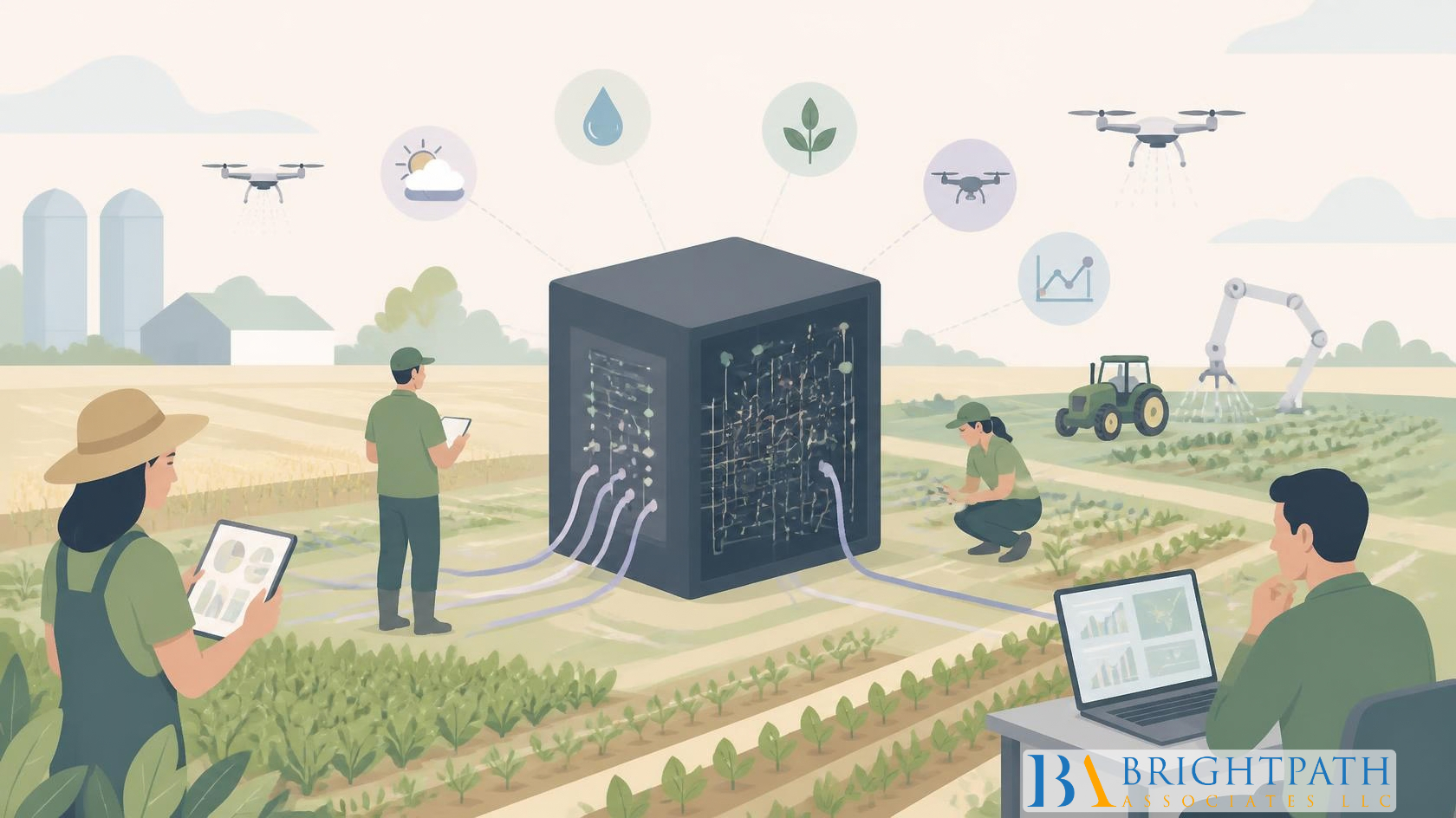
Artificial intelligence is changing agriculture faster than many farm businesses anticipated. Algorithms can analyze weather patterns, estimate crop yields, identify plant diseases, optimize irrigation, monitor livestock, and support decisions about fertilizer and other inputs.
The potential is significant. But as agriculture becomes increasingly data-driven, an important question deserves greater attention: This is the central challenge surrounding so-called black-box AI models. These systems can produce highly sophisticated predictions without offering users a clear explanation of how individual variables influenced the outcome.
For organizations operating across the Farming Industry, this issue is becoming increasingly important. Agricultural decisions are rarely made in a controlled laboratory environment. Weather changes, soil conditions vary, pests evolve, equipment behaves differently, and local farming knowledge can be difficult to capture in datasets.
The Promise of Algorithmic Agriculture
Modern farming generates enormous amounts of information. Sensors can monitor soil moisture. Weather systems can provide forecasts. Drones and satellites can capture imagery. Farm machinery can generate equipment and field data. Historical production records can reveal patterns in crop performance.
A machine-learning model might predict disease risk based on environmental conditions. Another system might recommend irrigation based on soil moisture and weather forecasts. Computer vision can help identify visual indicators of crop stress.
Recent research continues to identify applications such as disease diagnosis, yield modeling, smart irrigation, and AI-supported agricultural decision-making as promising areas of precision agriculture. The challenge begins when prediction becomes confused with certainty.
Accuracy Does Not Automatically Mean Reliability
An AI model can achieve impressive accuracy during testing and still perform poorly in a different environment. Agricultural conditions are highly variable. A model trained using data from one region may encounter different soil characteristics, crop varieties, weather patterns, pest pressures, or farming practices elsewhere.
Research on agricultural AI has highlighted concerns around dataset quality, environmental variation, and the ability of models to generalize to previously unseen conditions. A model's historical accuracy is one useful measurement, but it is not the entire definition of reliability.
Leaders also need to understand where the model was trained, what data it uses, how often it is updated, and what happens when real-world conditions fall outside its historical experience.
Why the "Black Box" Problem Matters
The term black box describes an AI system whose internal decision-making process is difficult for users to understand. A farmer may receive a recommendation that a particular field requires additional irrigation or that a crop is at elevated disease risk. But if the system cannot explain which factors contributed to the recommendation, the farmer has limited ability to evaluate it.
Agricultural research increasingly identifies explainability as an important factor in encouraging farmer confidence and adoption of AI technologies. That does not mean human experience should automatically override technology. It means both sources of knowledge should be part of the decision-making process.
Consider a farmer who has decades of experience observing a particular field. If an AI system produces a recommendation that conflicts with that experience, the farmer needs more than a numerical prediction. The system should ideally provide enough context for the recommendation to be investigated.
Building a More Responsible AI Strategy
A practical AI strategy does not require agriculture companies to reject advanced algorithms. Instead, organizations can establish safeguards around their use. Most importantly, AI should be treated as a decision-support capability rather than an infallible decision-maker.
Models can be tested against local conditions. Human review can remain part of high-impact decisions. Performance can be monitored after deployment. Users can receive explanations for important recommendations. Data quality can be evaluated continuously.
BrightPath Associates explores this broader issue in Algorithmic Agriculture: The Risk of Over-Reliance on Black-Box Models examining why transparency, human judgment, and responsible implementation matter as agricultural businesses adopt increasingly sophisticated algorithms.
The Future of Farming May Depend on Trust
Agriculture has always combined science with experience. AI adds another layer to that equation by providing increasingly powerful analytical capabilities. The opportunity is substantial, but the technology will be most useful when farmers can understand its limitations as well as its capabilities.
The future of algorithmic agriculture should therefore not be about choosing between human expertise and artificial intelligence. For C-suite leaders, that means the AI conversation extends beyond technology procurement. It includes workforce planning, leadership development, governance, risk management, and organizational culture.
If your agricultural organization is adopting AI, automation, precision-farming technologies, or data-driven operations and needs leaders capable of connecting technology with real-world agricultural strategy, connect with BrightPath Associates LLC to explore specialized executive recruitment solutions for the Farming Industry.
