AI, Robotics, and the Human Element: Future of Labor on Modern Dairy Farm
Author : Alyssa Miller | Published On : 16 Oct 2026
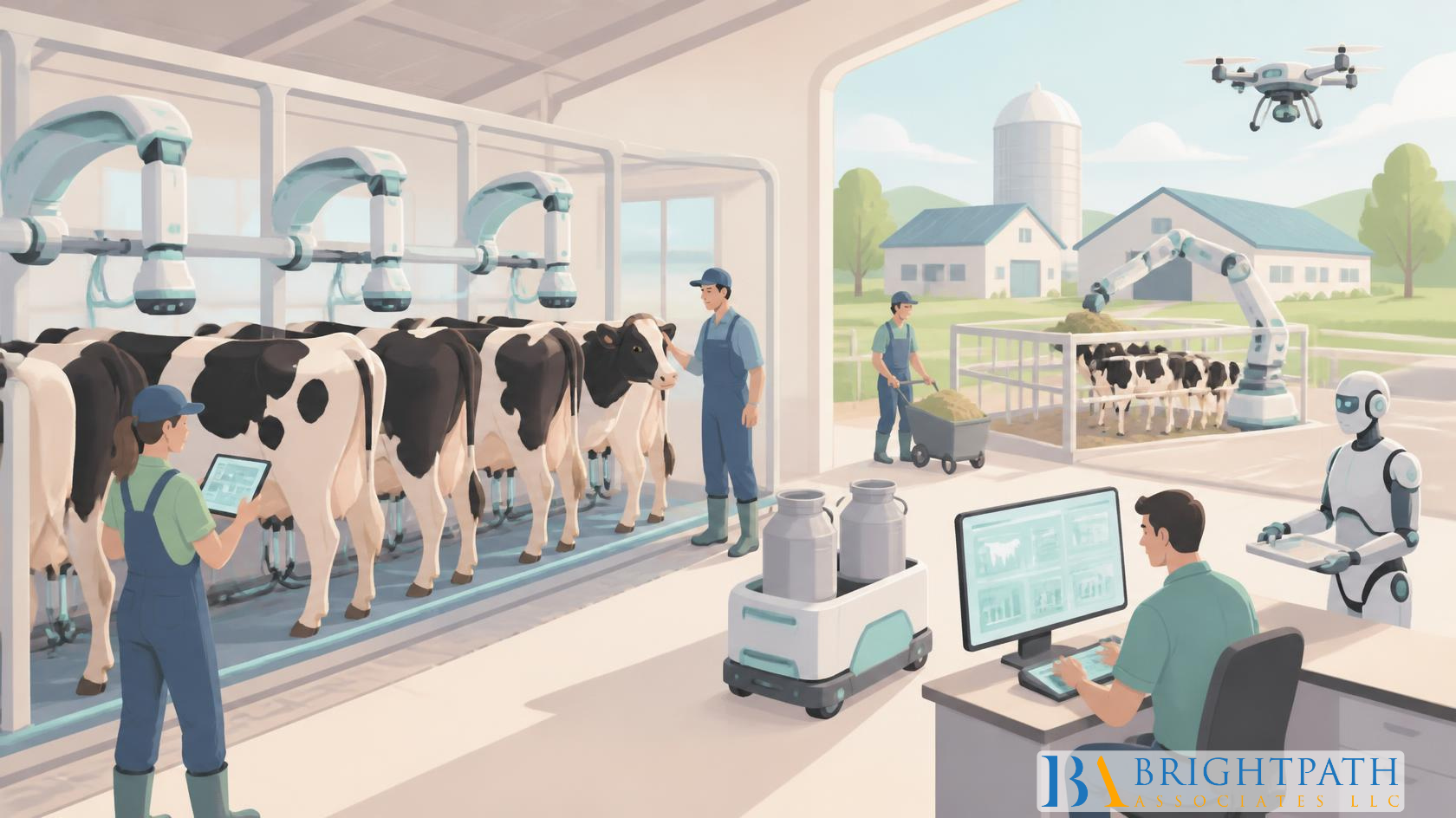
The dairy industry is entering a new era in which artificial intelligence (AI), robotics, and data-driven systems are changing how farms operate. Across the United States, dairy producers are exploring automated milking systems, intelligent feeding equipment, and digital herd monitoring to improve productivity and respond to persistent workforce challenges.
However, technology alone cannot guarantee success. Behind every automated system are people responsible for interpreting data, maintaining equipment, managing animal welfare, and making critical operational decisions. For small and mid-sized dairy businesses, the real opportunity lies in combining technological innovation with experienced employees and effective leadership.
The central question is no longer whether automation belongs on modern dairy farms. It is how dairy businesses can integrate technology while strengthening the human capabilities that keep their operations productive, resilient, and sustainable.
How AI and Robotics Are Transforming Dairy Operations
Automation is changing routine activities throughout dairy farming. Robotic milking systems can perform scheduled milking tasks, while automated feeding equipment helps deliver consistent rations. Sensors and herd management platforms collect information about animal activity, milk production, and other indicators that can help farmers identify emerging problems.
These technologies can reduce repetitive manual work and provide greater visibility into daily operations. For example, an automated monitoring system may flag changes in a cow's activity that warrant further investigation. Farm employees can then examine the animal, assess the circumstances, and determine whether intervention is necessary.
Robotics can also help standardize certain processes, reducing dependence on tasks being completed manually at specific times. This flexibility can be particularly valuable for dairy businesses managing labor constraints, expanding herds, or increasingly complex operational requirements.
Nevertheless, automated equipment requires installation, maintenance, monitoring, and ongoing evaluation. Successful implementation depends on understanding how technology fits into the farm's existing workflows, workforce capabilities, and financial priorities.
Why Human Expertise Remains Essential
Although AI can identify patterns and robotic systems can perform repetitive tasks, dairy farming still requires observation, judgment, and practical experience. Animal behavior is not always predictable, and unusual situations may require decisions that cannot be resolved through automated alerts alone.
Experienced farm workers understand the importance of recognizing subtle changes in animal behavior, responding to equipment failures, and maintaining appropriate hygiene practices. Their knowledge often develops through years of working directly with livestock and understanding the rhythms of farm operations.
For instance, a herd management platform might identify an unusual production pattern, but a knowledgeable employee must evaluate the information alongside the animal's condition and other relevant factors. Similarly, robotic milking equipment may automate routine procedures, but trained personnel remain essential for equipment oversight, troubleshooting, and animal care.
Dairy businesses that recognize the value of experienced employees can create a more balanced operating model in which machines handle suitable repetitive tasks and people concentrate on responsibilities requiring judgment and adaptability.
Leadership Determines the Value of Dairy Technology
The success of automation depends heavily on the people making investment and implementation decisions. Dairy leaders must evaluate equipment costs, expected benefits, maintenance requirements, workforce readiness, and the long-term implications of adopting new systems.
A practical approach begins with identifying specific operational problems. A farm experiencing inconsistent feeding routines may benefit from automated feeding equipment, while another business may prioritize herd monitoring or improvements to milking efficiency.
Leaders should establish measurable objectives before implementation. Relevant indicators may include labor hours devoted to repetitive tasks, equipment downtime, production consistency, maintenance costs, and employee training progress.
They must also communicate the purpose of change clearly. Employees are more likely to participate constructively when they understand how new technology affects their responsibilities and what support will be available.
For decision-makers seeking a broader understanding of the sector's opportunities and challenges, BrightPath Associates LLC provides additional information about the Dairy Industry, including the business environment in which technology adoption and workforce planning intersect.
Building a Future-Ready Dairy Workforce
Preparing for the next stage of dairy farming requires a coordinated approach to recruitment, development, and succession planning. Employers should identify the capabilities their operations will need as automation expands and assess whether current employees can be trained to fill emerging roles.
Partnerships between experienced farm personnel and technically skilled employees can help transfer practical knowledge while building confidence with new systems. Structured training, clear responsibilities, and ongoing performance reviews can further support this transition.
Leadership recruitment is equally important when businesses expand or undertake major modernization initiatives. Executives and operational managers must be able to connect technology investments with commercial objectives, workforce development, animal welfare, and long-term business performance.
BrightPath Associates LLC explores this relationship between technology and people in its article, AI, Robotics, and the Human Element: Future of Labor on Modern Dairy Farm. The broader lesson is clear: successful dairy modernization requires more than advanced equipment. It requires people who can use technology responsibly, adapt to changing processes, and turn new capabilities into lasting operational improvements.
Conclusion: The Strongest Dairy Farms Will Combine People and Technology
AI and robotics are creating new possibilities for dairy producers, from reducing repetitive workloads to improving operational visibility. Yet the long-term value of these technologies depends on human judgment, practical expertise, and effective leadership.
Small and mid-sized dairy businesses can prepare for this future by investing in appropriate automation, developing employee capabilities, and recruiting leaders who understand both agricultural operations and technological change.
If your dairy business is preparing for growth, modernization, or a changing workforce, connect with BrightPath Associates LLC to explore executive recruitment solutions that can help you identify the leadership talent needed for your next stage of development.
