AI-Powered Quality Control: Closing Accuracy Gap in High-Speed Molding
Author : Daniel Sparks | Published On : 24 Sep 2026
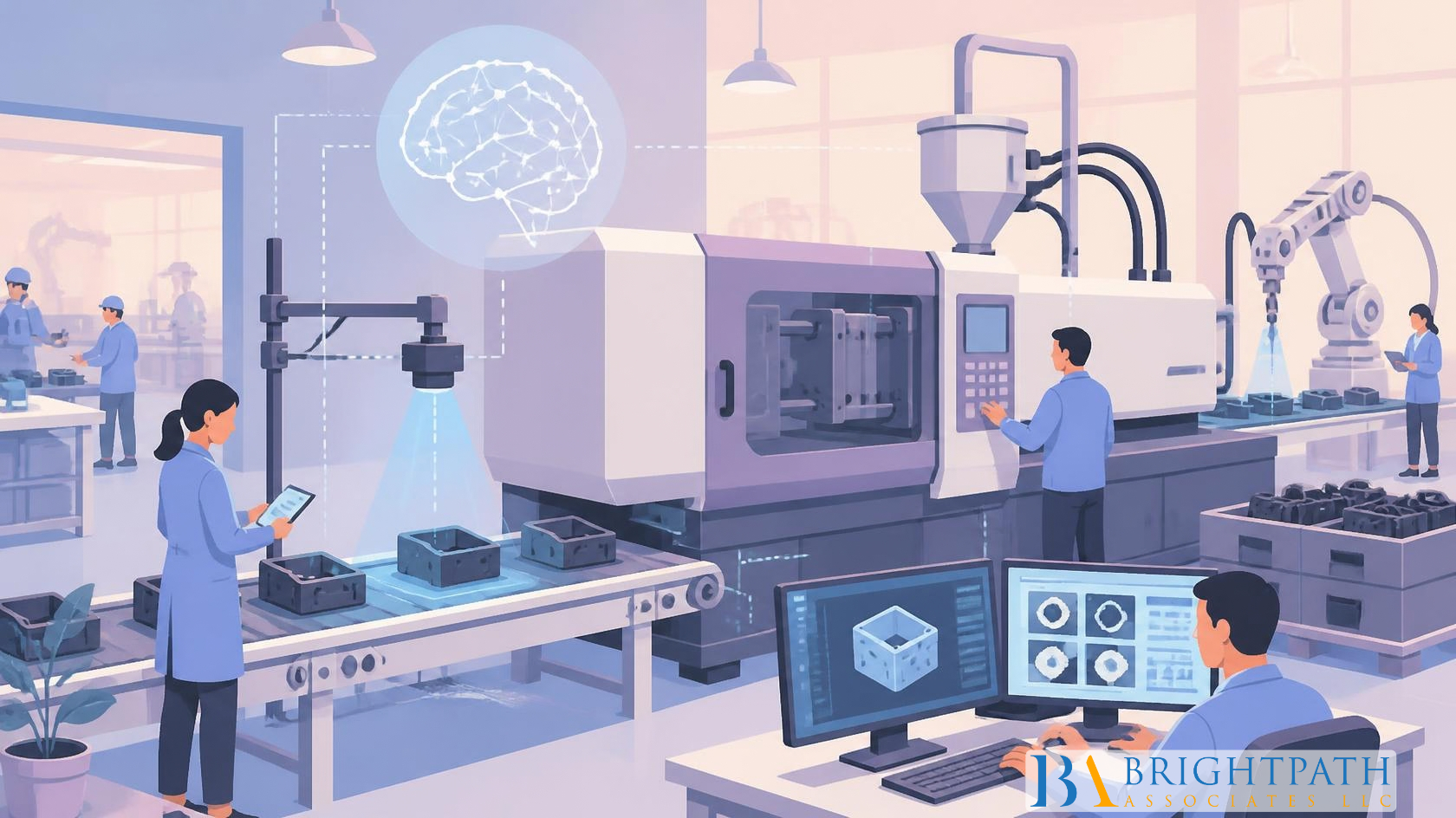
High-speed molding has transformed the economics of plastic manufacturing. Modern injection molding systems can produce thousands of components with remarkable speed, consistency, and repeatability. Yet as production cycles become faster, manufacturers face a familiar challenge: how can quality control keep pace with the machine?
Traditional inspection methods often depend on periodic sampling, manual checks, or rule-based automated inspection. These approaches remain useful, but they can struggle when production speeds increase and product tolerances become tighter. A defect that goes unnoticed for several production cycles can quickly become a significant quality issue.
Artificial intelligence is beginning to change this equation. By combining machine vision, production data, advanced analytics, and machine learning, manufacturers can move toward quality control systems capable of identifying patterns that conventional inspection methods may overlook.
Why High-Speed Molding Creates a Quality Challenge
Injection molding is inherently data-intensive. Temperature, pressure, cycle time, cooling conditions, material characteristics, mold performance, and machine settings can all influence the final product. At lower production speeds, operators may have more time to identify abnormalities and make adjustments. High-speed molding reduces that margin for intervention.
A process can appear stable while subtle changes are occurring beneath the surface. A gradual temperature deviation, a change in material behavior, mold wear, or variations in pressure may eventually produce defects such as warping, short shots, flash, sink marks, discoloration, or dimensional inconsistencies.
The challenge is not simply detecting defects. It is detecting them early enough to prevent large quantities of defective products from being produced. That is where AI-powered quality control becomes particularly relevant.
From Inspection to Intelligent Detection
Traditional automated inspection generally works according to predefined rules. A camera may compare a component against an established image or measure specific dimensions against predetermined tolerances.
Machine-learning models can analyze large quantities of images and production data to identify patterns associated with acceptable and unacceptable products. Instead of relying exclusively on a limited set of predefined conditions, these systems can potentially recognize more complex relationships within production data.
For example, an AI-powered vision system may identify subtle surface variations that would be difficult for a human inspector to consistently detect at high production speeds. When that information is combined with machine parameters, manufacturers can begin investigating not only what defect occurred, but also which process conditions may have contributed to it.
Connecting Machine Vision With Production Data
Imagine a molding operation where cameras inspect every component as it leaves the machine. The inspection system identifies a gradual increase in dimensional variation. At the same time, the manufacturing system records changes in mold temperature, injection pressure, cycle duration, and cooling performance.
When these datasets are connected, manufacturers can look for relationships between process conditions and quality outcomes. Instead of waiting for a batch review or customer complaint, manufacturers can potentially identify deviations while production is still underway.
For small and mid-sized plastics manufacturers, this type of capability can be particularly valuable because reducing scrap and rework can have a direct effect on operating margins.
The Human Element Remains Critical
AI-powered systems still require knowledgeable people to design, monitor, validate, and improve them. Manufacturers need professionals who understand molding processes as well as data-driven technologies. A machine-learning model may identify a statistical relationship, but experienced engineers and operators are often needed to determine whether that relationship reflects a genuine process issue.
This creates an emerging talent requirement within the plastics sector. Companies increasingly need leaders who can operate at the intersection of manufacturing, automation, quality management, data analytics, and digital transformation. BrightPath Associates' dedicated Plastics Industry resource reflects this broader shift toward technology-enabled manufacturing and leadership requirements.
The question for executives is therefore not simply whether their organization should purchase AI-powered inspection equipment. It is whether the organization has the leadership and technical capabilities required to turn that investment into measurable operational value.
The Next Phase of Intelligent Molding
The convergence of AI, machine vision, industrial automation, and manufacturing analytics is gradually redefining quality control in plastics production. The future factory may not simply inspect products after they are produced. Instead, quality systems could become increasingly integrated with the production process itself, continuously monitoring conditions, identifying deviations, and helping teams respond before problems become expensive.
This evolution is consistent with the wider transformation taking place throughout plastics manufacturing, where automation, AI, sustainability, and digital technologies are increasingly influencing competitiveness. BrightPath Associates explores this question in greater depth in AI-Powered Quality Control: Closing the Accuracy Gap in High-Speed Molding.
As plastics manufacturing becomes more automated and data-driven, companies will need more than advanced machines. They will need leaders capable of connecting technology investment with quality, productivity, workforce development, and long-term business strategy.
