AI-Driven Quality Control: Reducing Scrap Rates with Real-Time Vision Systems
Author : Ayesha Diaz | Published On : 02 Oct 2026
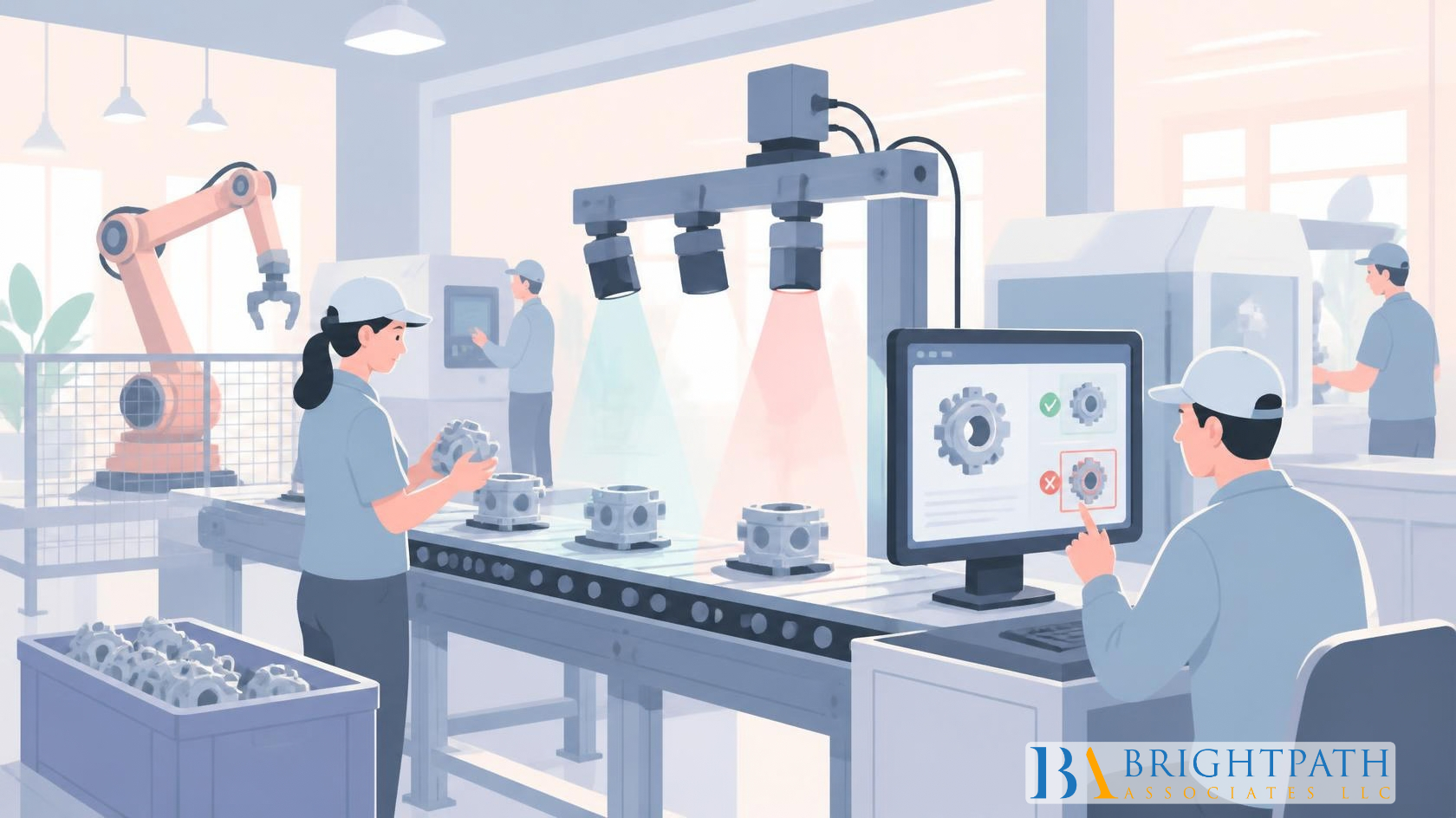
Quality control has always been central to machinery manufacturing, but the economics of defects are changing. A rejected component is not simply a quality issue. It can represent wasted material, machine time, labor, energy, rework, delayed shipments, and potentially damaged customer relationships.
For small and mid-sized machinery manufacturers, these costs can have an especially significant impact on margins. As production environments become more automated and customer expectations for precision continue to increase, manufacturers are exploring artificial intelligence and real-time machine vision as tools for detecting defects earlier and improving consistency.
The shift is significant because traditional quality inspection often identifies problems after value has already been added to a product. AI-driven vision systems offer another possibility: detecting abnormalities during production so corrective action can happen before a defect moves further through the manufacturing process.
Why Traditional Inspection Can Become a Bottleneck
Manual inspection remains valuable in many manufacturing environments because experienced employees can recognize subtle problems and understand the context surrounding production conditions. However, human inspection can also introduce variability.
Fatigue, repetitive work, lighting conditions, production speed, and differences in individual judgment can influence inspection consistency. Sampling-based inspection creates another limitation: if only selected parts are inspected, defects between inspection points may go undetected.
For high-volume or high-speed machinery production, these limitations become increasingly difficult to manage. The objective is not necessarily to eliminate human involvement. Instead, it is to give human quality teams faster and more consistent information.
AI-powered vision systems can continuously analyze images captured by cameras positioned along a production line. Depending on the application, these systems can identify surface defects, dimensional abnormalities, incorrect assembly, missing components, scratches, cracks, alignment problems, and other deviations.
From Detection to Real-Time Intervention
The most important advantage of real-time vision inspection may not be the ability to identify a defective component. It is what happens after the defect is identified. Instead of discovering a problem after dozens or hundreds of additional units have been produced, manufacturers can potentially identify process drift much earlier.
When an inspection system is connected to production controls, a detected defect can trigger an immediate response. A part may be automatically rejected, the line may be paused, or an operator may receive an alert requiring investigation.
If a machining parameter gradually moves outside an acceptable range, for example, an intelligent inspection system can identify the resulting quality deviation and alert production personnel. The sooner the issue is recognized, the fewer potentially defective parts may be produced.
AI Can Recognize More Complex Defect Patterns
Traditional machine vision systems typically depend heavily on predefined rules. These approaches can be effective when defects are highly predictable and environmental conditions remain stable. Machine-learning and deep-learning models can be trained using images of acceptable and defective products. Over time, the system can learn patterns associated with particular quality conditions.
This can be especially useful when manufacturers encounter variations in surface appearance, material characteristics, product configurations, or defect types. The technology should therefore be treated as part of an engineering system rather than a standalone software purchase.
However, successful implementation still depends on good data. An AI model cannot automatically become reliable simply because artificial intelligence has been added to an inspection system. Manufacturers need representative training data, appropriate lighting, suitable cameras, carefully defined quality standards, and ongoing model validation.
AI Quality Control Still Needs Skilled People
One misconception surrounding automation is that advanced technology eliminates the need for skilled manufacturing professionals. In reality, implementing AI-powered quality systems can increase demand for people with specialized capabilities.
Manufacturers may require automation engineers, control specialists, machine-vision engineers, data professionals, quality leaders, maintenance experts, and production managers who understand how digital inspection systems interact with physical manufacturing processes.
Someone must determine which quality problems are worth solving, establish acceptable performance thresholds, manage implementation, evaluate results, and ensure that the technology aligns with broader manufacturing objectives.
BrightPath Associates' Machinery Industry practice highlights the importance of specialized leadership across areas including quality assurance, automation and controls, manufacturing, process improvement, engineering, maintenance, and AI-driven operations.
Building a More Predictive Quality Strategy
Instead of asking only whether a finished product meets specifications, manufacturers can increasingly monitor quality throughout the production process. Instead of discovering recurring problems after production, teams can use inspection data to identify patterns and investigate potential causes earlier.
BrightPath Associates explores this transition in greater detail in AI-Driven Quality Control: Reducing Scrap Rates With Real-Time Vision Systems. The long-term opportunity is not simply fewer rejected products. It is a manufacturing environment in which quality information continuously feeds production decisions, maintenance strategies, process improvement, and leadership planning.
What Should Machinery Leaders Do Next?
The first step does not necessarily require a major technology investment. Manufacturers can begin by mapping their highest-cost quality problems and identifying where earlier detection could produce the greatest impact.
Which defects are discovered too late? Where does manual inspection introduce variability? Which production processes generate the most scrap? Does the organization have the technical and leadership capabilities needed to implement an AI inspection system effectively?
These questions can reveal whether real-time vision technology is appropriate—and where it could deliver the greatest value. AI-driven quality control is ultimately less about replacing inspectors and more about giving manufacturing teams better information at the moment it matters most.
