AI Data Centers: When Server Room Cooling Cannot Keep Up
Author : NPOD Data Center Solutions | Published On : 18 Nov 2026
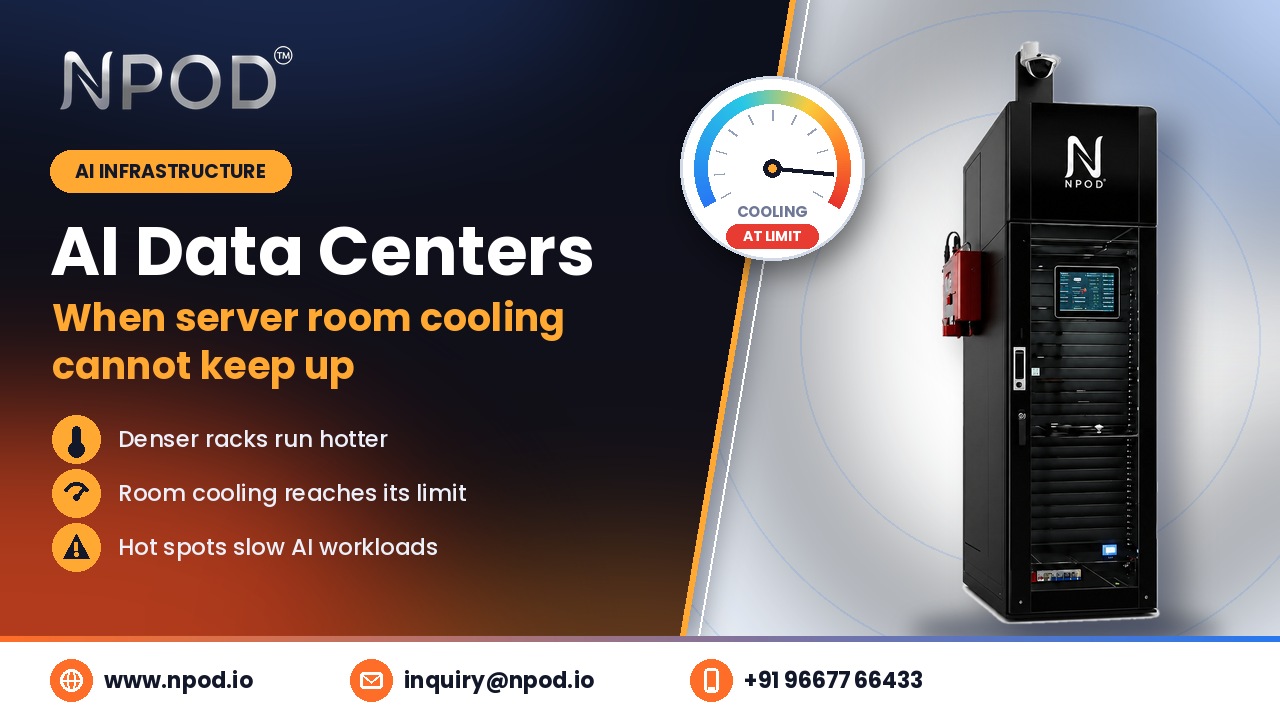
A business may have the budget, software and GPU servers needed to start an AI project but still face one major obstacle: its existing server room cannot manage the heat produced by the new equipment. AI data centers address this infrastructure challenge through cooling systems designed around demanding computing workloads. For companies planning to install or expand AI hardware, choosing an AI-ready data center infrastructure solution can help prevent cooling limitations from becoming a barrier to deployment.
The Problem: Your Server Room Was Not Designed for AI Hardware
Consider a manufacturing company planning to use AI for visual quality inspection. It needs computing systems to process images from production lines and identify defects.
The company already has a server room for its business applications. Its first idea may be to install additional servers in the same space.
But AI hardware can create a different thermal challenge.
GPU-based systems used for AI workloads can concentrate significant computing activity and heat in a small rack area. A cooling setup designed for conventional IT equipment may not be suitable for this higher-density load.
The business then faces a difficult choice. It can limit the amount of AI hardware installed or invest in changes to the existing cooling infrastructure.
Either option can affect the project budget and deployment schedule.
Why Does AI Hardware Create a Cooling Challenge?
AI workloads often use multiple GPUs to train models or process large volumes of data. These processors perform intensive calculations and release heat while operating.
When several high-performance systems run together, the heat generated inside a rack can rise considerably.
The cooling system must remove that heat and maintain suitable conditions for the equipment. It is not enough to keep the overall room comfortable for people. The airflow and temperature around the server equipment also matter.
A conventional room cooling system may struggle if it was not planned for the actual rack density and heat load.
This does not mean every traditional data center is unsuitable for AI. A facility with the right cooling capacity and design may support AI workloads. The problem occurs when the installed equipment exceeds what the existing infrastructure can manage.
What Happens When Cooling Capacity Is Not Enough?
Insufficient cooling is not just a comfort issue. It can affect the way a business operates its computing equipment.
Equipment may need to reduce performance. Many computing systems use thermal protection mechanisms when temperatures approach unsafe limits. This can affect the performance available to an AI application.
AI expansion becomes difficult. A company may have space for more servers but still lack the cooling capacity to install them.
Infrastructure costs can increase. Businesses may need to redesign airflow, upgrade cooling equipment or modify the server room before adding more computing resources.
For an organization working towards an AI deployment deadline, these problems can delay the project even when the software and hardware are ready.
Why an AI Data Center Is a Better Fit for This Challenge
An AI data center is planned around the needs of demanding computing equipment. Cooling is treated as a core part of the infrastructure rather than an afterthought.
The cooling design should match the expected rack density, equipment specifications and heat load. It should also provide suitable airflow and monitoring so that infrastructure teams can track operating conditions.
This approach helps businesses avoid installing powerful AI hardware in a room that was designed for a very different workload.
Before selecting a solution, IT teams should check:
-
The expected heat output of the planned AI equipment.
-
The cooling capacity available at each rack.
-
Airflow around the servers and possible hot spots.
-
Temperature monitoring and alerting.
-
Whether cooling capacity can support future AI expansion.
These checks help decision-makers understand whether their current facility is suitable or whether a purpose-designed AI environment is needed.
How NPOD Addresses the Cooling Challenge
NPOD offers an AI-ready data center solution with integrated power, precision cooling, monitoring and protection.
For businesses that cannot easily adapt an existing server room to new AI requirements, an integrated infrastructure approach provides a way to plan the supporting systems together.
Instead of treating cooling as a separate upgrade after purchasing AI hardware, companies can consider it during infrastructure planning. The configuration should still be matched to the equipment load, site conditions and deployment requirements.
This is relevant to enterprises in manufacturing, healthcare, banking and other sectors that plan to run demanding AI applications.
Do Not Let Cooling Limit Your AI Deployment
An AI project can be ready on paper but remain difficult to deploy if the server room cannot manage the heat generated by its computing equipment.
Before adding more GPUs, check whether the existing cooling system can support the planned rack density. If it cannot, an AI-ready infrastructure solution may be a more suitable option than repeatedly modifying a facility that was not designed for the workload.
Explore NPOD's AI data center solution to understand how integrated precision cooling and infrastructure can support your AI deployment plans.
Frequently Asked Questions
1. Why do AI servers need specialized cooling?
AI servers often use high-performance GPUs that generate substantial heat during intensive computing tasks. Their cooling requirements depend on equipment specifications, rack density and workload.
2. Can a normal server room support AI workloads?
Yes, if its cooling system can manage the heat load of the installed AI equipment. A room designed for conventional IT systems may need upgrades before supporting high-density GPU servers.
3. What should a business check before installing AI servers?
It should review the equipment's heat output, rack density, cooling capacity, airflow and temperature monitoring. These checks help determine whether the existing facility can support the planned AI workload.
