AI Data Centers in India: Why Location and Infrastructure Planning Matter
Author : NPOD Data Center Solutions | Published On : 04 Nov 2026
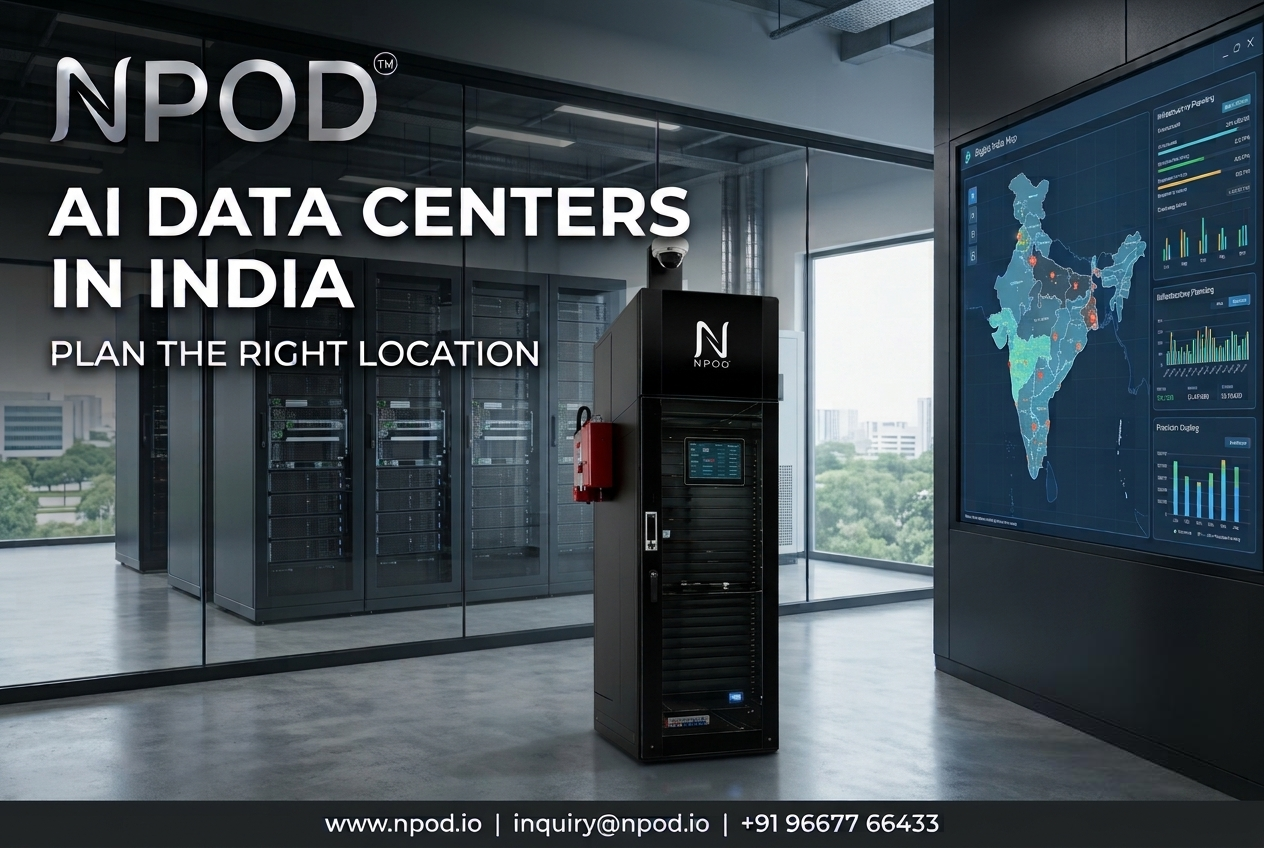
The growth of AI adoption is creating new infrastructure needs across India. Businesses now need computing environments that can handle demanding workloads while managing electricity, cooling and operational costs. Choosing the right location is becoming an important part of this decision. Well-planned AI data center infrastructure in India can help enterprises support AI applications without creating unnecessary infrastructure complexity.
India's AI Expansion Is Changing Data Center Requirements
India's digital economy is creating demand for more computing capacity. AI applications in banking, manufacturing, healthcare, retail and telecommunications require infrastructure that can process large amounts of data.
According to the Ministry of Electronics and Information Technology, India's total data center capacity increased from approximately 375 MW in 2020 to around 1,500 MW by 2025.
The government has also reported that 38,231 GPUs were onboarded through 14 empanelled service providers and data centers under its AI compute capacity framework.
These developments show why infrastructure planning is becoming important for businesses adopting AI.
However, increasing computing capacity also creates new demands on electricity, cooling systems and physical infrastructure.
Why Location Matters When Planning AI Infrastructure
Selecting a location for AI infrastructure involves more than finding an available building or server room. Businesses must evaluate whether the site can support the technical and operational requirements of their workloads.
1. Reliable Electricity Supply
AI computing equipment requires substantial electrical power. Businesses must check the available power capacity before selecting a deployment location.
The assessment should include:
-
Available electrical load at the site.
-
Power distribution and backup arrangements.
-
UPS capacity and redundancy requirements.
-
Provision for future computing expansion.
According to the Ministry of Electronics and Information Technology, electricity demand from data centers is estimated to reach 13.56 GW by 2031–32.
This makes power planning an important consideration for India's expanding data center ecosystem.
2. Cooling and Water Availability
AI servers generate heat during intensive computing operations. Cooling infrastructure must remove this heat while maintaining suitable operating conditions.
Location planning should consider local climate, water availability and the cooling technology being used.
Air cooling may be suitable for some configurations while high-density deployments may require advanced solutions such as direct-to-chip liquid cooling.
The right approach depends on server density, equipment specifications and operating conditions.
Businesses should evaluate cooling efficiency and water requirements together rather than treating them as separate decisions.
3. Network Connectivity and Latency
Not every AI application needs the same network architecture.
A centralized facility may work well for large-scale model training and shared computing resources. However, applications that process data close to factories, hospitals or retail locations may benefit from Edge AI infrastructure.
For example, a manufacturing company using computer vision to inspect products may need local computing to process camera feeds quickly.
A distributed infrastructure model can help place computing resources closer to where data is generated.
4. Space and Future Expansion
Businesses should also consider whether their selected location can support additional racks, cooling equipment and power distribution systems.
A site that meets current requirements may become difficult to expand when AI workloads increase.
Planning for future capacity can reduce the need for major infrastructure changes later.
Why Modular Infrastructure Can Help Indian Enterprises
Building a conventional server room requires coordination between civil construction, electrical systems, cooling equipment and security infrastructure.
This can create additional work for businesses that need to deploy computing infrastructure at multiple locations.
A modular data center offers another approach. It combines essential infrastructure components into an integrated environment that can be configured around business requirements.
Depending on the solution, this may include:
-
IT racks and equipment enclosures.
-
Power distribution and backup systems.
-
Precision cooling.
-
Physical security and fire protection.
-
Environmental monitoring.
NPOD provides AI data center infrastructure for enterprise and edge environments. Its AI-ready solutions bring power, cooling, monitoring and protection into an integrated infrastructure setup.
This approach can be relevant for businesses planning AI deployments across offices, industrial facilities and distributed operational locations.
The final configuration should always be based on actual computing requirements and a technical site assessment.
A Practical Location Planning Checklist
Before selecting a site for an AI infrastructure project, business and IT teams should review five areas:
-
Power: Is sufficient electrical capacity available for the planned computing load?
-
Cooling: Can the site maintain the required operating temperature?
-
Connectivity: Does the location provide suitable network access?
-
Expansion: Can the infrastructure accommodate additional computing equipment?
-
Operations: Can the organization monitor, secure and maintain the facility effectively?
These checks help businesses compare potential deployment locations using practical infrastructure requirements instead of relying only on property availability or construction costs.
Conclusion: Prepare Infrastructure for India's AI Growth
The expansion of AI adoption is changing how Indian businesses plan their IT infrastructure. Power availability, cooling, connectivity and future expansion all influence where and how AI computing resources should be deployed.
A location-first infrastructure strategy can help organizations avoid unsuitable sites and make better long-term investment decisions.
Frequently Asked Questions
1. Why is India seeing increased demand for AI data centers?
Growing AI adoption, cloud computing, digital services and enterprise automation are increasing demand for computing capacity and supporting infrastructure across India.
2. Which factors matter when selecting an AI data center location?
Important factors include electricity availability, cooling requirements, network connectivity, physical security and the potential for future expansion.
3. Can modular data centers support AI infrastructure in India?
Yes. Modular data centers can integrate power, cooling, monitoring and protection systems into a single environment. They can support enterprise and edge deployments depending on workload and configuration requirements.
