Agricultural Consolidation: Staying Relevant as an Independent Proprietor
Author : Alex Turner | Published On : 24 Sep 2026
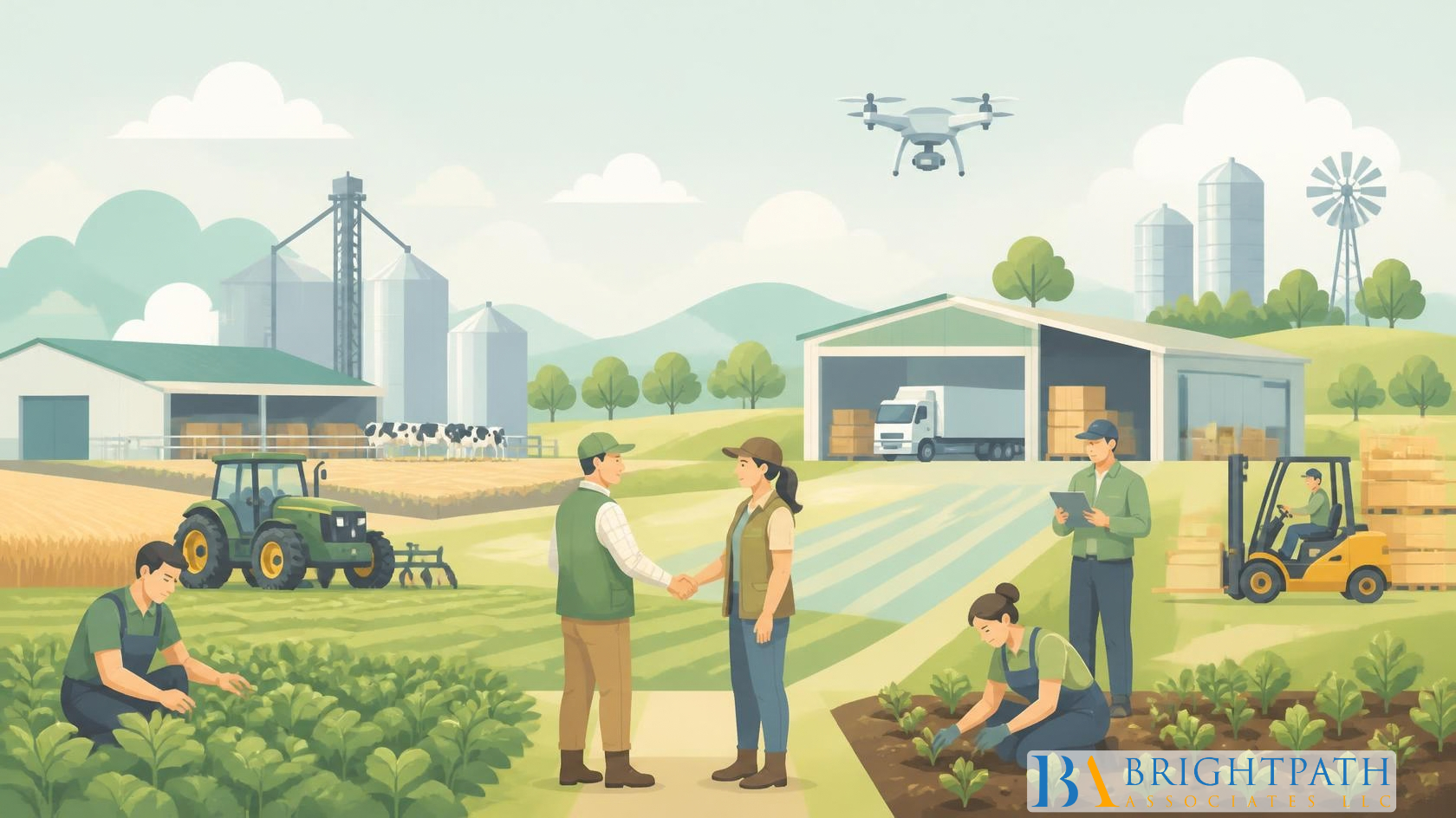
The U.S. farming industry is experiencing a significant transformation. Rising input costs, labor challenges, changing consumer expectations, technological advancement, climate pressures, and shifting market dynamics are reshaping how agricultural businesses operate. At the same time, consolidation is increasing the scale of many farming operations, processors, distributors, and agribusiness organizations.
For independent agricultural proprietors, this raises an important strategic question: how can a smaller operation remain competitive when larger businesses can benefit from greater purchasing power, broader distribution networks, stronger access to capital, and larger technology investments?
The answer may not be to compete with larger organizations on scale alone. Instead, independent farms can build competitive strength through specialization, operational efficiency, technology adoption, sustainability, customer relationships, and effective leadership.
The modern Farming Industry is increasingly demonstrating that competitiveness is not determined exclusively by acreage or production volume. Agility and the ability to respond quickly to market changes can also create substantial value.
Understanding the Impact of Agricultural Consolidation
Agricultural consolidation extends beyond farms becoming larger. It influences the entire agricultural value chain, including input suppliers, food producers, processors, distributors, retailers, logistics providers, and technology companies.
Large organizations can spread fixed costs across greater production volumes and may have more resources available for automation, sophisticated management systems, market expansion, and research. Independent producers often operate with leaner teams and more limited resources.
However, smaller agricultural businesses can possess advantages that are difficult to reproduce at scale. Direct relationships with customers, faster decision-making, local market knowledge, specialized production, and operational flexibility can allow independent proprietors to respond to opportunities that larger organizations may overlook.
Technology Can Narrow the Efficiency Gap
Technology was once viewed primarily as a tool for large agricultural enterprises with substantial capital budgets. That perception is changing rapidly.
Cloud-based farm management platforms, connected sensors, satellite imagery, mobile applications, GPS-guided equipment, drones, automated machinery, and data analytics are becoming more accessible to smaller agricultural operations.
Precision agriculture illustrates how technology can change farm management. Instead of treating every section of a field identically, producers can use information about soil conditions, moisture, crop health, nutrient requirements, and field performance to make more targeted decisions.
The objective is not simply to own advanced equipment. Technology must solve a business problem. Even incremental efficiency improvements can become strategically important when margins are under pressure.
For an independent producer, reducing unnecessary fertilizer application, improving irrigation efficiency, minimizing equipment downtime, optimizing labor utilization, or identifying underperforming areas can have a meaningful impact on profitability.
Farm Management Software Is Becoming More Important
Modern farming involves much more than planting and harvesting. Independent proprietors must often manage purchasing, inventory, equipment maintenance, workforce planning, crop schedules, finances, compliance, sales, and customer relationships.
Farm management software can bring many of these activities into a more connected information environment. Centralized data can give business owners greater visibility into costs, productivity, inventory, equipment performance, and financial outcomes.
This is especially valuable for smaller organizations where the proprietor or senior manager may personally oversee numerous responsibilities. The strategic advantage comes from turning data into decisions rather than simply accumulating more data.
Better information can reveal which crops generate stronger returns, which customers provide sustainable value, where costs are increasing, and which operational activities are consuming resources without delivering proportional benefits.
Conclusion: Redefining Competitiveness in Agriculture
Independent farming businesses can build resilience by combining operational discipline with specialization, technology, sustainability, customer relationships, and capable leadership. The strongest strategies are likely to be those that connect innovation with measurable business outcomes.
As the agricultural sector becomes increasingly data-driven and interconnected, the ability to make informed decisions may become just as important as the ability to produce at scale.
The original discussion on Agricultural Consolidation: Staying Relevant as an Independent Proprietor raises an important question for today's agricultural leaders: when larger competitors have the advantage of scale, where can an independent operation create value that scale alone cannot easily reproduce?
For farming businesses preparing for growth, succession, digital transformation, or operational expansion, the right leadership can be as important as the right technology. Building a capable management team can help turn strategic plans into measurable results.
