After Dental Implant Surgery: Why Long-Term Follow-Up Matters for Implant Success
Author : Dr. ONKAR JABADE | Published On : 17 Aug 2026
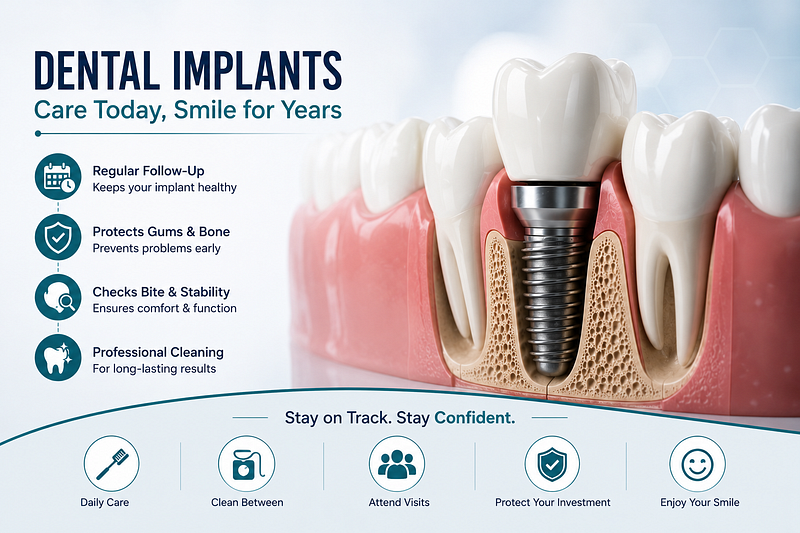
Getting a dental implant is an important step toward restoring a missing tooth, but treatment does not end when the implant is surgically placed.
The healing period, the condition of the surrounding gums and bone, the bite, and the stability of the restoration all need to be monitored over time. Regular follow-up allows your dental team to identify potential concerns early and maintain the health and function of the implant.
For patients considering dental implants, it is therefore important to look beyond the surgery itself and understand what long-term care involves.
Dental Implant Treatment Continues After Surgery
A dental implant is placed into the jawbone and becomes part of the surrounding biological environment.
After surgery, the tissues need time to heal and the implant needs to establish a stable relationship with the surrounding bone.
Once the final crown, bridge or full-arch restoration is fitted, ongoing monitoring remains an important part of maintaining the treatment.
This is why implant care should be viewed as a long-term process rather than a one-time procedure.
What Does Follow-Up Care Include?
Follow-up appointments allow the dentist to evaluate different aspects of the implant and restoration.
Depending on the individual case, your dental team may assess:
- The condition of the gums around the implant
- Bone levels around the implant
- Stability of the implant and restoration
- Bite and occlusal forces
- Condition of screws and prosthetic components
- Oral hygiene
- Areas that may require professional cleaning
The frequency of these appointments can vary depending on the patient’s oral health, type of implant restoration and individual risk factors.
Why Monitoring the Bone Matters
Bone supports the dental implant, making its condition an important part of long-term implant care.
Changes around an implant may not always produce obvious symptoms in the early stages.
Clinical examination and, when indicated, dental imaging can help the dentist monitor the surrounding bone and identify changes that may require attention.
Early identification allows the dental team to evaluate the cause and determine an appropriate response.
Protecting the Gums Around Your Implant
The tissues surrounding an implant need regular attention, just like the gums around natural teeth.
Plaque accumulation and inflammation around an implant can affect the surrounding tissues.
One condition associated with inflammation and bone loss around implants is peri-implantitis.
Maintaining good oral hygiene and attending professional dental examinations can help monitor the tissues around the implant.
Why Your Bite Needs to Be Checked
An implant-supported restoration is exposed to chewing forces every day.
Changes in the bite or excessive forces may place additional stress on the implant or prosthetic components.
During follow-up, your dentist can assess how the implant restoration is functioning within your overall bite.
If necessary, adjustments may be recommended to help manage excessive or uneven forces.
The Crown or Bridge Also Needs Attention
The implant is only one component of the completed restoration.
The crown, bridge or full-arch prosthesis also needs to be examined periodically.
Your dentist may check for:
- Wear
- Damage
- Loosening
- Changes in fit
- Problems with prosthetic components
Monitoring the restoration helps ensure that problems are addressed before they become more complicated.
Professional Cleaning Is Different From Daily Brushing
Good home care is essential, but some areas around implant-supported restorations can be difficult to clean effectively.
Professional dental cleaning can help remove deposits from areas that may be difficult to reach with routine brushing.
Your dental team can also demonstrate appropriate brushing and interdental cleaning techniques based on your particular implant restoration.
Why You Should Not Wait Until the Implant Hurts
One of the challenges with implant complications is that symptoms may not always appear immediately.
A patient may feel that everything is normal while changes are developing around the implant.
This is one reason routine examinations can be useful even when there is no pain or obvious problem.
Instead of waiting for discomfort, mobility or other symptoms to appear, scheduled follow-up allows the dental team to monitor the implant proactively.
A Practical Follow-Up Approach
The exact schedule should be individualised by the treating dentist.
At Jabade Dental Clinic, the source treatment approach describes a structured follow-up programme:
Period
Follow-up schedule
First year
3 visits
Second year
3 visits
Years 3–4
2 visits per year
From year 5 onward
1 visit per year
The purpose of a structured schedule is to maintain regular clinical monitoring rather than relying entirely on patients to return only when they notice a problem.
The appropriate frequency can vary depending on the individual patient’s needs.
Why the First Few Years Deserve Particular Attention
The source treatment approach places greater emphasis on follow-up during the first two years.
During this period, regular assessment can help monitor healing, bone changes, tissue health and the function of the implant restoration.
As treatment progresses, the frequency may be reduced when appropriate, while continuing long-term monitoring.
What Patients Should Ask Before Choosing an Implant Clinic
When comparing dental implant treatment options, patients often focus on the implant brand, procedure cost or surgical technique.
Another useful question is:
“What follow-up care is included after the implant is placed?”
Ask the clinic about:
- Follow-up appointments
- Implant and gum examinations
- Imaging when clinically indicated
- Professional cleaning
- Bite evaluation
- Restoration checks
- Long-term maintenance
A treatment plan that includes ongoing monitoring can help patients understand what happens after the surgical stage.
Is the Cheapest Implant Treatment Always the Best Value?
Price is naturally an important consideration when planning dental treatment.
However, comparing implant treatment solely by the initial price can leave out important parts of the overall care pathway.
Patients should consider what is included in the treatment package, including consultation, planning, surgery, restoration and follow-up.
Long-term maintenance is an important part of protecting the investment made in implant treatment.
When Should You Contact Your Dentist?
Routine follow-up is important, but patients should also contact their dental team if they notice changes such as:
- Implant or crown mobility
- Persistent swelling
- Bleeding around the implant
- Increasing discomfort
- Difficulty chewing
- Changes in the bite
- Damage to the restoration
These symptoms do not necessarily mean that an implant has failed, but they should be professionally evaluated.
Your Role in Long-Term Implant Care
Professional follow-up is only one part of maintaining an implant.
Patients should also:
- Brush regularly
- Clean between teeth and around the restoration as instructed
- Attend scheduled dental visits
- Follow professional cleaning recommendations
- Avoid habits that may damage the restoration
- Report unusual changes promptly
Good daily oral hygiene supports the health of the tissues surrounding the implant.
Long-Term Care for Full-Mouth and Full-Arch Implants
Patients who have received full-mouth or full-arch implant treatment also require regular monitoring.
These restorations contain multiple components that need to function together.
Follow-up may include assessment of:
- Implant-supported prosthesis
- Bite
- Prosthetic components
- Gum tissues
- Bone levels
- Oral hygiene
Regular professional care can help identify maintenance needs as they arise.
Why Experience Matters Beyond Implant Placement
Implant dentistry does not end with surgical placement.
Long-term care requires continued assessment of the biological and mechanical aspects of treatment.
The source material describes Dr. Onkar Jabade as the lead implantologist at Jabade Dental Clinic, Pune, with experience in dental implants and full-mouth rehabilitation, including full-arch All-on-4/6 treatments.
The clinic’s structured follow-up approach is designed to continue monitoring patients after their implant treatment.
Dental Implants Are a Long-Term Commitment
A dental implant can be an important long-term investment in oral function and tooth replacement.
Protecting that investment involves more than choosing an implant and completing surgery.
Regular examinations, professional maintenance, good oral hygiene and timely attention to changes all play a role in long-term care.
Final Thoughts
The completion of dental implant surgery is not the end of treatment — it marks the beginning of the maintenance phase.
Regular follow-up gives your dental team an opportunity to monitor the implant, surrounding tissues, bite and restoration over time.
If you are considering dental implants, ask not only “How will the implant be placed?” but also “How will it be monitored after treatment?”
A comprehensive approach that includes long-term follow-up can help you understand how your implant will be cared for throughout the years.
Jabade Dental — Dr. Onkar Jabade
Law College Road, Pune
Dental Implants Pune | All-on-4 Dental Implants | Full Mouth Dental Implants
🌐 Website: https://jabadedentalpune.in/
📞 Phone: 9226525757
📍 Google Business Profile:
https://share.google/lnmEkfNkvyqknDYAu
#DentalImplant #DentalImplants #DentalImplantSurgery #DentalImplantCost #DentalImplantNearMe #DentalImplantPune #DentalImplantSpecialist #FullMouthDentalImplants #AllOn4 #SameDayDentalImplants #ToothReplacement #Pune
