ADHD Rage in Adults: Symptoms, Triggers, and What It Really Looks Like
Author : sandeep sharma | Published On : 01 Jul 2026
Have you ever found yourself becoming intensely angry over something that seemed minor, only to regret your reaction moments later? For many adults living with Attention Deficit Hyperactivity Disorder (ADHD), these emotional outbursts are not simply a result of having a short temper. They may be a manifestation of ADHD rage, a challenging but often misunderstood aspect of the condition.
While most people associate ADHD with difficulties in attention, focus, or hyperactivity, emotional regulation challenges can be just as significant. At BrainHub Polyclinic, many adults seek help not because they struggle to concentrate, but because they struggle to manage intense emotions that affect their relationships, careers, and overall well-being.
What Is ADHD Rage?
ADHD rage refers to sudden episodes of intense anger, frustration, or emotional overwhelm that can feel disproportionate to the situation. Unlike planned aggression, these reactions are often impulsive and driven by difficulties regulating emotions.
Many people ask, What is ADHD rage? It is not a formal medical diagnosis but rather a term used to describe severe emotional reactions linked to ADHD emotional dysregulation.
What Does ADHD Rage Look Like?
One of the most common questions clinicians hear is, What does ADHD rage look like?
A typical example may involve an adult becoming extremely upset after receiving constructive criticism at work, experiencing road rage over a minor driving inconvenience, or reacting intensely during a disagreement with a loved one.
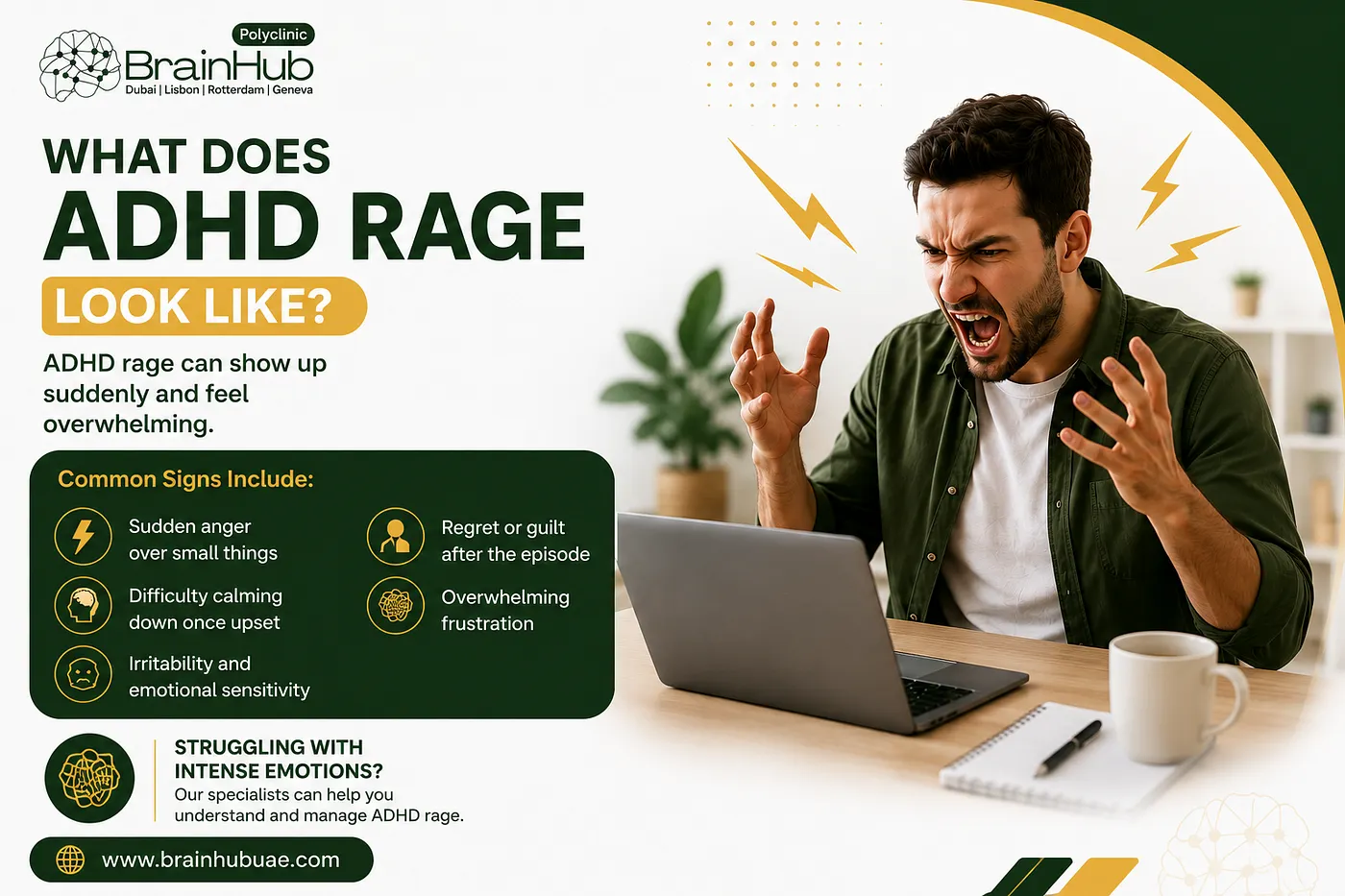
Common ADHD rage symptoms include:
- Sudden anger that appears to come out of nowhere
- Difficulty calming down once upset
- Verbal outbursts or shouting
- Feelings of guilt after the episode
- Irritability and frustration throughout the day
- Emotional sensitivity to rejection or criticism
Also Read - 7 Lifestyle Changes to Help With ADHD Treatment.
For many individuals experiencing ADHD and rage in adults, these reactions can feel uncontrollable, even when they recognize that their response may be excessive.
Why Do I Get So Angry Over Little Things?
If you’ve ever wondered, Why do I get so angry over little things?, you’re not alone.
Research suggests that ADHD affects brain regions responsible for executive functioning, impulse control, and emotional regulation. This can make it difficult for the brain to pause, assess a situation, and respond calmly.
The result is often ADHD emotional dysregulation, where emotions feel stronger, arrive faster, and take longer to settle.
What Causes ADHD Rage?
Several factors contribute to ADHD rage.
Brain Differences
Neuroimaging studies suggest differences in areas of the brain involved in emotional control and impulse regulation.
Impulsivity
Impulsivity is a core feature of ADHD. Instead of processing emotions gradually, individuals may react immediately.
Rejection Sensitive Dysphoria (RSD)
Many adults with ADHD experience extreme emotional pain when they perceive criticism or rejection. This can significantly contribute to ADHD rage symptoms.
Stress and Mental Fatigue
High levels of stress can reduce emotional resilience and make ADHD rage triggers more likely.
What Triggers ADHD Rage?
Many patients ask, What triggers ADHD rage?
Common ADHD rage triggers include:
- Criticism or perceived rejection
- Relationship conflicts
- Work-related pressure
- Feeling misunderstood
- Sensory overload
- Fatigue and sleep deprivation
- Unexpected changes in routine
Understanding personal ADHD rage triggers is often one of the first steps in treatment.
How Is ADHD Anger Different From Normal Anger?
Everyone experiences anger occasionally. However, ADHD rage often feels more intense, more sudden, and harder to control.
Unlike typical anger, ADHD-related anger may:
- Escalate rapidly
- Feel overwhelming
- Be difficult to regulate
- Lead to immediate impulsive reactions
- Cause significant regret afterward
This distinction helps explain why ADHD and rage in adults can have such a profound impact on daily life.
Can ADHD Cause Temper Problems?
Yes. Emotional regulation difficulties can contribute to frequent temper issues.
However, having ADHD rage does not mean someone is aggressive or dangerous. Most individuals experiencing these symptoms are struggling with emotional control rather than intentional hostility.
How Do Doctors Diagnose ADHD-Related Anger?
There is no specific test for ADHD rage.
A comprehensive assessment typically includes:
- Medical history review
- ADHD symptom evaluation
- Mental health screening
- Assessment for anxiety, depression, or trauma
- Discussion of emotional regulation patterns
Emotional regulation challenges can also be seen in other neurodevelopmental conditions such as Autism Spectrum Disorder.
At BrainHub Polyclinic, evaluations focus on understanding the complete patient journey rather than just isolated symptoms.
Can ADHD Medication Help With Anger Issues?
Many patients ask, Can ADHD medication help with anger issues?
In some cases, ADHD medications may improve emotional regulation by enhancing attention and impulse control. However, medication alone is not always sufficient.
Treatment plans may include:
Non-Surgical Treatment Options
- Cognitive Behavioral Therapy (CBT)
- Emotional regulation training
- Mindfulness techniques
- Stress management strategies
- Lifestyle modifications
- ADHD coaching
Advanced Interventions
Some specialized centers may also consider neuromodulation therapies for selected patients when clinically appropriate.
Treatment decisions should always be individualized and made under the guidance of a qualified healthcare professional.
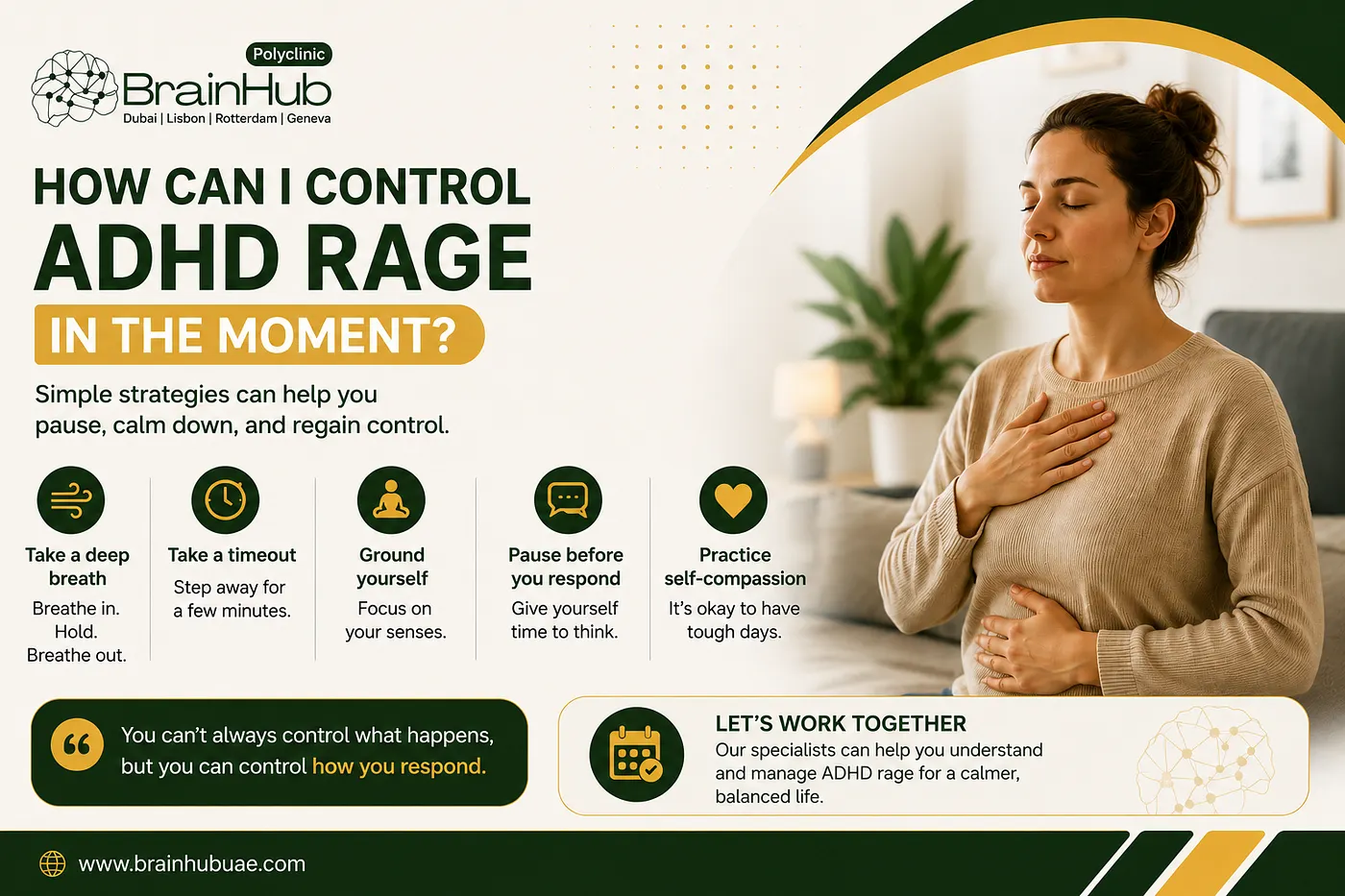
How Can I Control ADHD Rage in the Moment?
Immediate coping techniques can help reduce escalation.
Helpful strategies include:
- Taking a brief timeout
- Practicing deep breathing
- Leaving overstimulating environments
- Delaying responses to upsetting situations
- Grounding exercises
- Physical activity such as walking
These techniques will not eliminate ADHD emotional dysregulation, but they can help reduce the intensity of an episode.
What Are the Risks of Untreated ADHD Rage?
When left unmanaged, ADHD rage symptoms may contribute to:
- Relationship difficulties
- Workplace conflicts
- Anxiety and depression
- Low self-esteem
- Chronic stress
- Social isolation
Seeking professional support early can improve long-term outcomes.
Can Adults With ADHD Develop Better Anger Control?
Absolutely.
Many adults successfully learn strategies that improve emotional regulation over time. While ADHD rage may not disappear completely, treatment can significantly reduce the frequency and intensity of episodes.
Long-term success often involves a combination of therapy, self-awareness, healthy routines, and appropriate medical support.
What Can Patients Expect During a Consultation?
During an ADHD evaluation, clinicians typically explore:
- Current symptoms
- Emotional regulation challenges
- Daily functioning
- Work and relationship concerns
- Personal goals for treatment
At BrainHub Polyclinic, consultations are designed to create a safe, supportive environment where patients can openly discuss symptoms and receive personalized recommendations.
Frequently Asked Questions
What is ADHD rage?
A pattern of intense emotional reactions linked to ADHD-related emotional regulation difficulties.
What triggers ADHD rage attacks in adults?
Common triggers include criticism, rejection, stress, fatigue, and sensory overload.
What causes ADHD rage?
Brain differences affecting impulse control and emotional regulation play a significant role.
Can ADHD cause temper problems?
Yes, emotional dysregulation can contribute to frequent anger outbursts.
What are common signs of emotional dysregulation and anger outbursts in ADHD?
Sudden frustration, irritability, explosive reactions, and difficulty calming down.
How do impulsivity and rejection-sensitive dysphoria contribute to ADHD rage?
They can intensify emotional responses and make criticism feel overwhelming.
What role do brain differences in ADHD play in mood swings and intense anger?
They affect emotional regulation pathways and impulse control mechanisms.
What immediate anger management techniques can help during ADHD rage?
Breathing exercises, grounding techniques, physical movement, and temporary timeouts.
Is ADHD-related anger different from having an anger disorder?
Yes. ADHD-related anger is typically connected to emotional regulation difficulties rather than a primary anger disorder.
Can ADHD medication help with anger issues?
In some individuals, medication may improve emotional regulation as part of a broader treatment plan.
Why do people with ADHD experience more intense anger?
Emotions may be processed more intensely due to neurological differences.
Can adults with ADHD develop better anger control over time?
Yes. Therapy, coping strategies, and appropriate treatment can lead to significant improvement.
Final Thoughts
Living with ADHD rage can feel exhausting and isolating, but it is important to remember that help is available. Understanding ADHD rage symptoms, identifying ADHD rage triggers, and addressing ADHD emotional dysregulation are critical steps toward improving quality of life. If anger, frustration, or emotional outbursts are affecting your daily functioning, seeking evaluation from an experienced mental health professional can provide clarity and effective treatment options.
