Active Packaging: How Oxygen Scavengers and Moisture Control Extend Shelf Life
Author : Todd Beddard | Published On : 03 Sep 2026
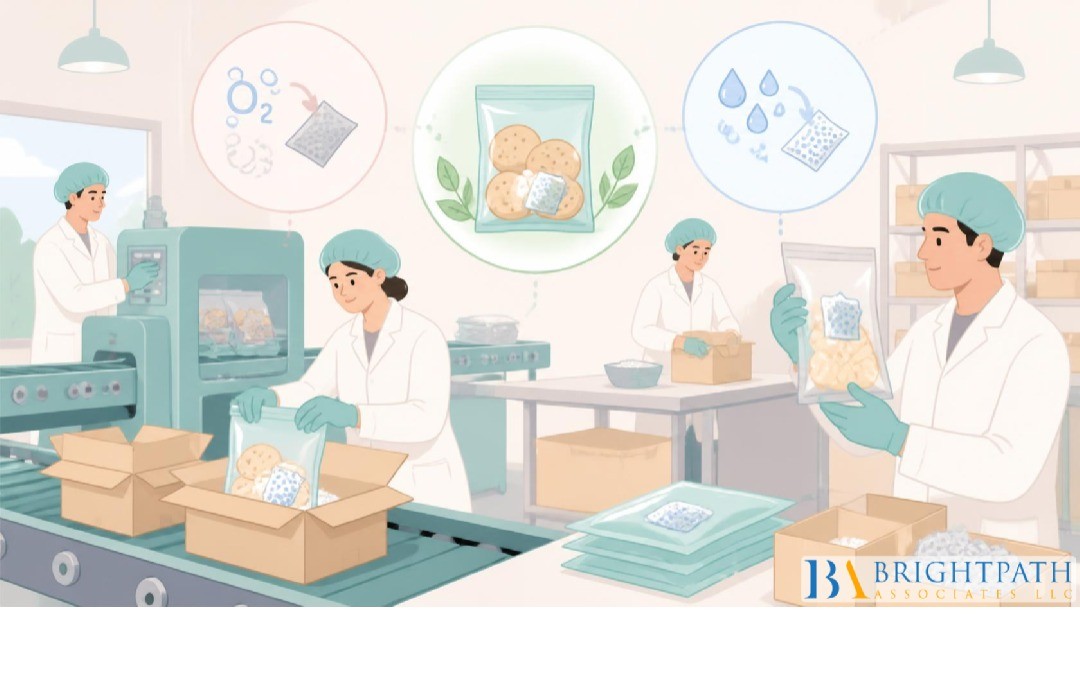
Packaging has traditionally been viewed as a protective shell—a physical barrier separating products from oxygen, moisture, contaminants, and the outside environment. But as supply chains become more complex and manufacturers face increasing pressure to reduce waste, improve product quality, and extend distribution windows, packaging is taking on a more active role.
Modern active packaging does more than contain a product. It can interact with the environment inside the package to help control conditions that contribute to deterioration. Oxygen scavengers, moisture-control technologies, intelligent materials, and data-enabled packaging systems are creating new opportunities for manufacturers to protect products throughout their entire journey from production to consumption.
For companies operating across the Packaging and Containers Industry, this shift represents more than a material innovation. It is changing how packaging is designed, manufactured, evaluated, and managed at the executive level.
Why Oxygen and Moisture Matter So Much
Two of the most persistent threats to packaged products are oxygen and moisture. Even when a package provides a strong barrier, small quantities of oxygen can remain inside the package or gradually migrate through packaging materials. Depending on the product, that exposure can contribute to oxidation, changes in color and flavor, nutrient degradation, or other forms of quality loss.
Moisture presents a similarly complex challenge. Excess humidity can encourage microbial growth, trigger chemical reactions, cause powders to clump, weaken certain packaging structures, and affect the physical properties of sensitive products. For pharmaceuticals, electronics, nutritional products, powdered foods, and specialized industrial materials, moisture management can be essential to maintaining product integrity.
This is where active packaging becomes particularly valuable. Instead of relying exclusively on passive barriers, manufacturers can introduce technologies designed to actively manage the internal environment.
Oxygen Scavengers Add Another Layer of Protection
Oxygen scavengers are designed to react with and remove oxygen within a package. Depending on the application, they can be incorporated into films, closures, labels, inserts, or other packaging components.
Their importance lies in addressing the oxygen that conventional packaging may not completely eliminate. For oxygen-sensitive food products, reducing residual oxygen can help preserve flavor, color, texture, and nutritional characteristics. Similar principles can apply to other products where oxidation can compromise performance or stability.
However, oxygen scavenging is not a one-size-fits-all technology. Packaging developers must consider the volume of the package, expected storage period, oxygen capacity, reaction rate, product characteristics, storage conditions, and distribution environment.
The most successful applications therefore begin with understanding the product rather than simply selecting an advanced packaging material.
Moisture Control Is Becoming Equally Strategic
While oxygen management often receives considerable attention, moisture control can be just as important. Desiccants, moisture-absorbing components, specialized films, coatings, and high-barrier structures can all play a role in controlling humidity.
The challenge becomes particularly significant when products move through different climates and transportation environments. A package designed for a controlled warehouse environment may encounter high humidity during transportation or storage in another region.
Active moisture-control systems can provide an additional layer of protection against these fluctuations. They do not replace appropriate storage and logistics controls, but they can make packaging more resilient when real-world distribution conditions are less predictable.
For a deeper look at how these technologies are being applied, How Oxygen Scavengers and Moisture Control Extend Shelf Life explores the broader relationship between oxygen management, moisture control, sustainability, automation, and packaging innovation.
Shelf-Life Extension Can Support Sustainability—But Not Automatically
When products remain usable for longer periods, businesses may reduce losses caused by spoilage, premature disposal, or damage. Extending shelf life can therefore contribute to resource efficiency, particularly when the environmental cost of producing the product itself is significant.
Additional functional components, multilayer structures, specialized coatings, or difficult-to-separate materials may complicate recycling. A package can deliver excellent preservation performance while creating challenges at the end of its useful life.
The strongest solutions will likely balance preservation performance with material efficiency, recyclability, responsible sourcing, and end-of-life recovery.
Active Packaging Is Becoming a Leadership Issue
The evolution of packaging is ultimately not just a technical story. It is a leadership story. Companies must decide where active packaging fits within their product strategy, manufacturing capabilities, sustainability commitments, and competitive positioning. They must determine which technologies create genuine value and which simply add complexity.
Executive decision-makers must consider questions such as whether a new active technology can scale economically, whether existing production lines can support it, how customers will respond, whether the package can meet sustainability objectives, and whether the organization has the technical talent required to execute the strategy.
These decisions increasingly place packaging leadership at the intersection of innovation, operations, technology, and sustainability.
The Future Is Intelligent, Resilient, and Integrated
Active packaging represents a broader transformation in how manufacturers think about product protection. Oxygen scavengers and moisture-control technologies are only part of a much larger movement toward packaging systems that actively respond to environmental and supply-chain challenges.
The next generation of packaging will likely combine advanced materials with automation, sensors, analytics, sustainable design, and improved manufacturing processes. But technological capability will only create value when companies have the right people to develop, implement, and scale it.
For packaging manufacturers, distributors, and suppliers, the competitive question is no longer simply how well their packaging protects a product. It is how effectively their organization can combine innovation, operational excellence, sustainability, and leadership to create better protection at scale.
