A Hospital, A Hub: How Lifecare Transformed a County’s Medical Landscape
Author : Daniel Mathew | Published On : 28 May 2026
When Lifecare Hospital opened its doors in a mid-sized Kenyan county once known for poor referral networks and chronic understaffing, locals expected another private hospital one that would serve a few and leave the rest behind.
A decade later, that perception has changed completely. The facility is no longer just a hospital; it has become the anchor of an entire county’s medical ecosystem training nurses, employing hundreds, and ensuring patients no longer have to travel hundreds of kilometers for specialized care.
This transformation reflects Jayesh Saini’s vision for regional healthcare equity where every county, no matter how remote, deserves a fully functional hub that connects treatment, talent, and trust.
From Facility to Foundation
Before Lifecare’s arrival, the county’s healthcare map was fragmented. Public hospitals were overrun; clinics handled minor cases but referred anything serious to Nairobi or Nakuru.
That referral chain meant delays, costs, and in many cases, tragedy.
Expectant mothers with complications, road accident victims, and chronic patients all shared one struggle: distance.
Saini’s solution was deceptively simple don’t wait for patients to reach the city; bring the city to them.
When Lifecare Hospital broke ground, it wasn’t built as a branch it was built as a regional base of operations. The design included multiple departments rarely found in mid-tier towns: radiology, surgery, pharmacy, maternity, ICU, and outpatient wings, all linked through a central triage system.
That completeness changed everything.
A Hub of Healing and Hope
Today, the hospital manages thousands of cases monthly from routine maternal care to complex surgeries. But its real impact extends beyond numbers.
By offering specialist services locally, it has slashed medical migration patients no longer need to spend days on the road or thousands of shillings on city referrals.
County health officers report that referral rates to national hospitals have dropped by nearly 40% since Lifecare’s entry, freeing up resources and improving survival rates.
“When our people get treated here, they recover faster because they’re near family,” says a county medical superintendent. “Lifecare didn’t just build a hospital; it built a home for care.”
Training the Next Generation
Recognizing the chronic shortage of skilled personnel in rural areas, Lifecare introduced on-site training programs for nurses, paramedics, and lab technicians.
In partnership with local medical colleges and the Lifecare Foundation, the hospital runs continuous professional development workshops and emergency simulation sessions exposing healthcare workers to real-world skills and mentorship.
Young professionals who once saw rural postings as career setbacks now see them as training grounds for advancement.
As one trainee nurse shares, “Here, I learn more in six months than I would in a classroom. Every day, we handle cases that teach us teamwork, urgency, and empathy.”
This pipeline of trained staff not only fills Lifecare’s needs but also benefits surrounding county facilities, which hire alumni of its programs.
Saini calls it “exporting competence without losing community.”
An Engine of Local Employment
Beyond clinical impact, the hospital has become a significant economic driver for the county.
From doctors and administrative staff to cleaners, drivers, and technicians, Lifecare employs hundreds of residents. Local businesses from food vendors to transport operators benefit from the hospital’s steady demand and patient flow.
According to local economic estimates, every direct Lifecare job supports three additional livelihoods in the surrounding community.
In many ways, healthcare has become a development sector, not just a service one.
Referral Anchor for a Region in Need
One of the greatest achievements of Lifecare’s regional model is how it integrates with the broader healthcare network.
The hospital now acts as a referral anchor for smaller clinics and dispensaries across multiple sub-counties. Through digital health links, doctors in outlying areas can consult Lifecare specialists in real time, share diagnostic reports, and coordinate transfers efficiently.
The system eliminates confusion, reduces duplication, and ensures patients arrive prepared, not panicked.
This collaborative referral structure mirrors Saini’s broader vision of interconnected healthcare ecosystems, where every clinic, hospital, and outreach program supports the others in a continuous loop of care.
Technology as Equalizer
To sustain efficiency, Lifecare integrated electronic health records (EHR) and teleconsultation platforms that allow continuity of care even after discharge.
Patients can access test results, medication reminders, and follow-up schedules via mobile a first for many residents.
These digital tools have streamlined not only clinical coordination but also community trust. Patients feel seen, heard, and remembered long after they leave the ward.
For Saini, that’s the point: “Technology should humanize healthcare, not mechanize it. When data flows, dignity follows.”
Community Outreach and Preventive Programs
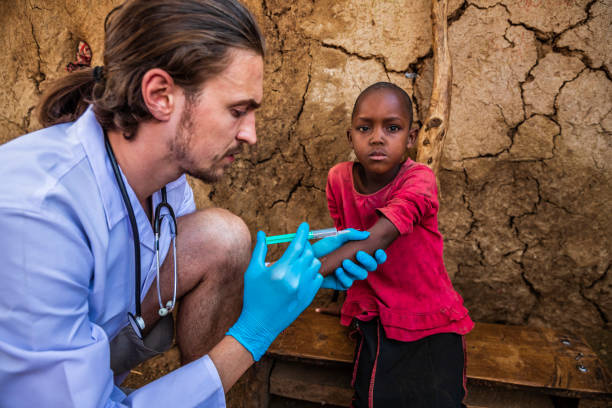
Lifecare’s role doesn’t stop at hospital walls. Its staff conduct monthly outreach in nearby villages focusing on maternal health, vaccinations, diabetes screening, and nutrition education.
These programs have contributed to measurable outcomes: higher immunization rates, fewer preventable emergencies, and improved antenatal attendance.
Each outreach also strengthens relationships with local communities, reinforcing Lifecare’s identity as a healthcare partner, not just a provider.
A Replicable Model for Kenya’s Counties
The success of this county hospital has turned it into a blueprint for replication. Counties like Machakos, Eldoret, and Kisumu have since adopted similar hybrid models a private hospital functioning as a regional hub that strengthens both local access and national resilience.
Health policy analysts note that such public-private synergy could be Kenya’s most effective path toward universal health coverage.
Saini’s approach shows that growth doesn’t have to be vertical (bigger cities, bigger hospitals); it can be horizontal deeper roots, wider reach.
Conclusion: Anchoring a Future of Care
When Jayesh Saini first envisioned Lifecare’s county hospital model, he wasn’t just thinking about beds or buildings he was thinking about balance.
By turning one hospital into a regional hub for treatment, training, and trust, Lifecare has proven that sustainable healthcare systems are built from the ground up, not the top down.
In this county, and now across Kenya, a single hospital’s heartbeat has become a regional pulse a reminder that when care anchors itself in community, transformation follows.
Because in the Lifecare story, the hospital is not the destination it’s the beginning of something larger: a healthcare ecosystem that grows where people do.
