7 Common Myths About Dental Implants and Gum Disease — Debunked by Experts
Author : Dr. ONKAR JABADE | Published On : 28 Jul 2026
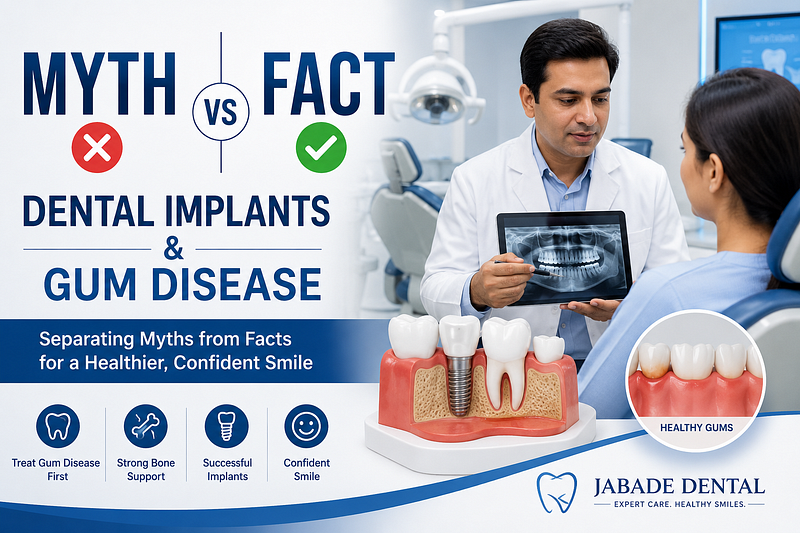
If you’ve been diagnosed with gum disease and are thinking about replacing missing teeth with dental implants, you’ve probably come across plenty of conflicting advice online. Some people believe implants are completely impossible if you’ve ever had gum disease, while others assume implants can be placed immediately without treating the infection.
The reality lies somewhere in between.
Modern dentistry has made dental implant treatment more predictable than ever, even for patients who have experienced gum disease. Success depends on proper diagnosis, timely treatment, and careful planning — not myths.
Let’s separate fact from fiction.
Myth 1: Gum Disease Means You Can Never Get Dental Implants
Fact:
This is one of the biggest misconceptions.
Having gum disease does not automatically mean you’re unsuitable for dental implants. In many cases, patients become excellent candidates once the infection has been treated and the gums are healthy again.
An experienced implant dentist evaluates your oral health before recommending treatment.
Myth 2: Dental Implants Can Be Placed Even If Your Gums Are Still Infected
Fact:
Healthy gums are essential for implant success.
Placing an implant into infected gum tissue increases the risk of complications, including peri-implantitis, poor healing, and implant failure.
Treating the gum disease first provides a healthier foundation for successful implant placement.
Myth 3: If You’ve Lost Bone, Dental Implants Are No Longer Possible
Fact:
Bone loss does not always rule out implant treatment.
Many patients with reduced jawbone can still receive implants after procedures such as bone grafting or guided bone regeneration.
Digital imaging helps determine the amount of available bone and the most appropriate treatment plan.
Myth 4: Dental Implants Fail Frequently in Patients with Previous Gum Disease
Fact:
When gum disease has been successfully treated and patients maintain good oral hygiene, dental implants have high long-term success rates.
Routine dental visits, professional cleanings, and good home care are essential for protecting both implants and natural teeth.
Myth 5: Gum Disease Treatment Is an Unnecessary Delay
Fact:
Treating gum disease first is an investment in long-term implant success.
Rushing into implant surgery before controlling infection may increase the likelihood of complications and additional treatment later.
A staged treatment approach produces more predictable results.
Myth 6: Once Dental Implants Are Placed, You No Longer Need to Care for Your Gums
Fact:
Dental implants require lifelong maintenance.
Although implants cannot develop cavities, the surrounding gums can still become inflamed if plaque accumulates.
Regular brushing, flossing, and professional maintenance remain essential after implant treatment.
Myth 7: Every Patient Receives the Same Implant Treatment
Fact:
No two patients are alike.
Factors such as gum health, bone density, medical history, smoking habits, oral hygiene, and the location of the missing tooth all influence treatment planning.
A personalised treatment plan provides the best chance of long-term success.
Why Professional Assessment Matters
Before recommending dental implants, an experienced implantologist carefully evaluates:
- Gum condition
- Bone quality
- Missing teeth
- Bite alignment
- Overall oral health
- Medical history
Advanced digital imaging allows precise planning, helping reduce risks and improve outcomes.
Why Patients Choose Jabade Dental
At Jabade Dental Clinic, every implant treatment begins with a comprehensive oral examination rather than a one-size-fits-all approach.
Dr. Onkar Jabade has successfully restored thousands of smiles through carefully planned implant procedures. Patients with a history of gum disease receive personalised treatment designed to improve healing, stability, and long-term success.
The clinic combines advanced diagnostic technology with patient-focused care, ensuring every stage of treatment is carried out with precision.
Key Takeaways
- Gum disease does not automatically prevent dental implants.
- Active infection should always be treated before implant placement.
- Bone loss can often be managed with modern regenerative procedures.
- Long-term implant success depends on healthy gums and regular maintenance.
- Personalised treatment planning is essential for achieving predictable results.
Final Thoughts
Believing common myths can prevent people from exploring effective solutions for missing teeth. The truth is that many patients with gum disease successfully receive dental implants after appropriate periodontal care.
If you’re unsure whether implants are right for you, a comprehensive consultation is the best place to start.
At Jabade Dental Clinic, Pune, Dr. Onkar Jabade carefully evaluates every patient to develop a customised treatment plan that supports long-term oral health and a confident smile.
Jabade Dental — Dr.Onkar Jabade, Law Collage Rd |Dental Implants Pune | All on 4 dental implants | Full Mouth Dental Implants
🌐 Website: https://jabadedentalpune.in/
📞 Phone: 9226525757
📍 Google Business Profile:
https://share.google/lnmEkfNkvyqknDYAu
https://share.google/xDmKgfyqK7ypnseRq
#DentalImplant #DentalImplants #DentalImplantSurgery #DentalImplantCost #DentalImplantNearMe #DentalImplantPune #DentalImplantSpecialist #FullMouthDentalImplants #AllOn4 #SameDayDentalImplants #ToothReplacement #Pune
