7 Common Corporate Event Planning Mistakes That Can Disrupt the Schedule
Author : Yuvik Weddings and Events | Published On : 14 Sep 2026
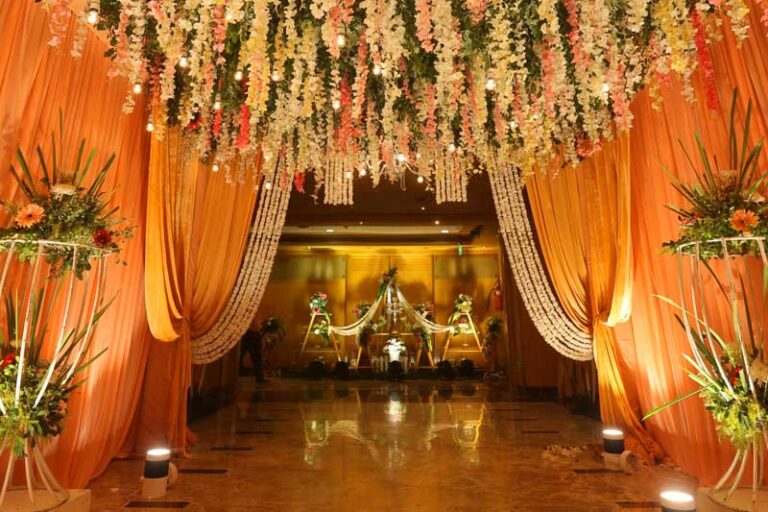
Corporate events are investments with specific objectives, and when they go wrong, they go wrong in visible and consequential ways. The most common problems that disrupt corporate event schedules are not random misfortunes but predictable, avoidable mistakes that experienced planners know to anticipate and prevent. Engaging an experienced corporate event planner in kolkata who has encountered these patterns repeatedly is the most reliable way to ensure your event does not become a case study in how not to run one.
Because the mistakes that most commonly disrupt corporate event schedules are entirely avoidable with the right expertise.
Mistake 1: Underestimating Registration and Arrival Time
One of the most reliable ways to push every subsequent element of an event timeline late is underestimating how long registration and guest arrival will take. An optimistic estimate assumes that guests will arrive on time, move through registration quickly, and be seated or positioned for the event opening as planned. In practice, guests arrive across a range, registration queues develop unevenly, and the first formal programme element consistently begins later than planned when arrival and registration have not been given adequate time.
Building fifteen to twenty percent more time into the arrival and registration window than seems strictly necessary, and ensuring that the registration process itself is fast, well-staffed, and clearly organised, prevents this most upstream of scheduling problems from cascading through the rest of the day.
Mistake 2: Programme Items That Run Consistently Over Time
When a programme is built with tight time allocations and no buffer between items, a single overrun propagates through every subsequent element. Speakers who have not been given and had confirmed a specific time allocation, panel discussions without a moderator who actively manages time, Q&A sessions without a clear closure mechanism, and award ceremonies without a practiced and timed script are all reliable sources of programme overrun.
Every programme item should have a briefed, confirmed time allocation with a named person responsible for managing it. Buffer time between major programme segments should be built in deliberately rather than squeezed out in the interest of a more ambitious agenda.
Mistake 3: Catering Service That Conflicts With the Programme
Catering service that is not carefully sequenced against the programme timeline is a consistent source of disruption. Meal service that begins while a speaker is presenting creates noise and distraction. Catering staff clearing tables during a programme element that requires attention creates the same problem. Coffee and tea service that is not positioned to avoid disrupting transition periods generates unnecessary movement through the room at moments that require it to be still.
Catering service timing should be specified in the master timeline to the level of individual service actions, with explicit agreement from the catering team on exactly when each service activity will occur.
Mistake 4: Technical Setup That Has Not Been Tested Before Guests Arrive
Technical problems during a corporate event programme are among the most damaging schedule disruptions because they stop everything while the problem is resolved and communicate unprofessionalism in a very visible way. The vast majority of technical problems that occur during programme delivery would have been identified and resolved during a pre-event technical run-through if one had been conducted.
A comprehensive technical run-through that tests every presentation file, every microphone, every video playback element, and every AV transition in the actual venue with the actual equipment, completed well before guests arrive, is not optional for any corporate event where technical quality matters.
Mistake 5: Speakers or Presenters Who Have Not Received a Detailed Brief
Speakers who have not been clearly briefed on their specific time allocation, on the event's tone and audience, on the technical setup available to them, and on the logistics of their transition onto and off the stage consistently take longer than planned, use formats that do not work with the available technical setup, and require in-the-moment coordination that disrupts the programme flow.
Every speaker and presenter should receive a specific written brief well in advance of the event, covering all relevant details, and should have confirmed their understanding of the timing expectations before arriving.
Mistake 6: Insufficient Staffing for the Event's Operational Requirements
Under-staffed events consistently run late because every operational task takes longer when there are fewer people to execute it. Registration queues do not move at the required pace. Catering service is slower than planned. Guest queries and requirements take longer to resolve. The cumulative effect of insufficient operational staffing is a schedule that slides progressively later throughout the day.
Staffing requirements should be calculated from the operational tasks that need to be executed, not from a budget-driven reduction of a realistic requirement.
Mistake 7: No Contingency Planning for Predictable Disruptions
Every corporate event encounters something unexpected. The question is not whether something will deviate from the plan but what the response will be when it does. Events that have been planned with no contingency thinking, where the schedule has no flexibility and no identified response to common disruption scenarios, require improvised solutions under pressure that almost always produce worse outcomes than pre-planned responses would.
Conclusion
These seven mistakes are among the most common and most avoidable in corporate event planning. An experienced corporate event planner in kolkata anticipates every one of them and builds the planning, briefing, and contingency structures that prevent them from disrupting the schedule and the guest experience.
Because the corporate event that runs on schedule was planned with the discipline to prevent the mistakes that most commonly stop it from doing so.
