30 Minute DPF Clean Introduces: What You Need to Know About DPF Filter Clamps
Author : 30 Minute DPF Clean | Published On : 08 Apr 2026

If you own a diesel vehicle, you’ve probably heard about Diesel Particulate Filters - those critical components that keep your exhaust system clean and your engine running efficiently. But here’s something many diesel owners overlook: the hardware holding everything together matters just as much as the filter itself. DPF filter clamps are one of those unsung heroes that keep your exhaust system sealed, secure, and functioning properly.
Whether you drive a Cummins-powered rig, a Duramax pickup, or a Sprinter van, understanding DPF filter clamps can save you from unexpected downtime, costly leaks, and poor engine performance. Let’s break it all down.
What Are DPF Filter Clamps?
DPF filter clamps are the mechanical fasteners that connect your Diesel Particulate Filter to the rest of the exhaust system. Think of them as the joints that hold your exhaust pipeline together. They create a tight, leak-proof seal between the DPF housing and the inlet/outlet pipes, ensuring that exhaust gases travel through the filter as designed - not around it.
These clamps come in several styles:
-
V-band clamps – the most common type for modern diesel systems; they wrap around a flanged joint and tighten with a single bolt
-
U-bolt clamps – a simpler, heavier-duty option used in older or commercial trucks
-
Lap joint clamps – used where pipes overlap; common in custom exhaust setups
Each style has specific torque requirements and material specifications. Using the wrong type or an improperly torqued clamp can cause exhaust leaks, vibration damage, and even DPF housing cracks over time.
Why DPF Filter Clamps Matter More Than You Think
Most diesel owners focus on the filter itself and rightly so. A clogged DPF is a serious problem. But here’s the thing: even a perfectly clean filter will underperform if the clamps aren’t doing their job properly.
A loose or failed DPF clamp can cause exhaust gases to bypass the filter entirely. This means unfiltered soot and particulates escape into the atmosphere - defeating the entire purpose of having a DPF. Beyond the environmental impact, a compromised seal will often trigger fault codes, send your dashboard warning lights into a frenzy, and force your engine into limp mode.
It’s also worth noting that exhaust leaks at the DPF connection points can introduce air into the system, which confuses your NOx sensors and oxygen sensors. This leads to incorrect readings, unnecessary regeneration cycles, and added wear on your filter. If you’ve been noticing more frequent regeneration cycles than usual, it might be worth checking your clamps not just the filter itself. You can learn more about the warning signs to watch for in our guide on the top signs your Diesel Particulate Filter needs cleaning.
Common Problems With DPF Filter Clamps
Over time, DPF filter clamps take a beating. They’re exposed to extreme heat cycling, road vibration, moisture, and road salt — especially if you’re operating in the northeastern U.S. Here’s what typically goes wrong:
1. Corrosion and rust — Most clamps are made from stainless steel, but lower-quality aftermarket options can corrode quickly in harsh environments. A rusted clamp loses clamping force and can seize entirely, making removal a nightmare during filter servicing.
2. Loosening over time — Thermal expansion and contraction from heat cycling can slowly back off a clamp’s tension. A clamp that was torqued correctly at installation may become loose after thousands of miles.
3. Cracking at stress points — V-band clamps, in particular, can crack at the band itself if over-torqued or if the flanges they seat against are misaligned.
4. Improper installation — One of the most preventable issues. The clamp must be seated correctly on the flange before tightening. Uneven seating leads to an eccentric load that stresses the band and the weld.
These issues are especially important to address before bringing your vehicle in for DPF cleaning. A technician who spots a damaged clamp can help you avoid a situation where a freshly cleaned filter is undermined by a leaking connection. Neglecting this kind of maintenance can spiral into bigger costs — something we cover in depth in our post about the risks of ignoring DPF maintenance in diesel engines.
How to Choose the Right DPF Filter Clamp
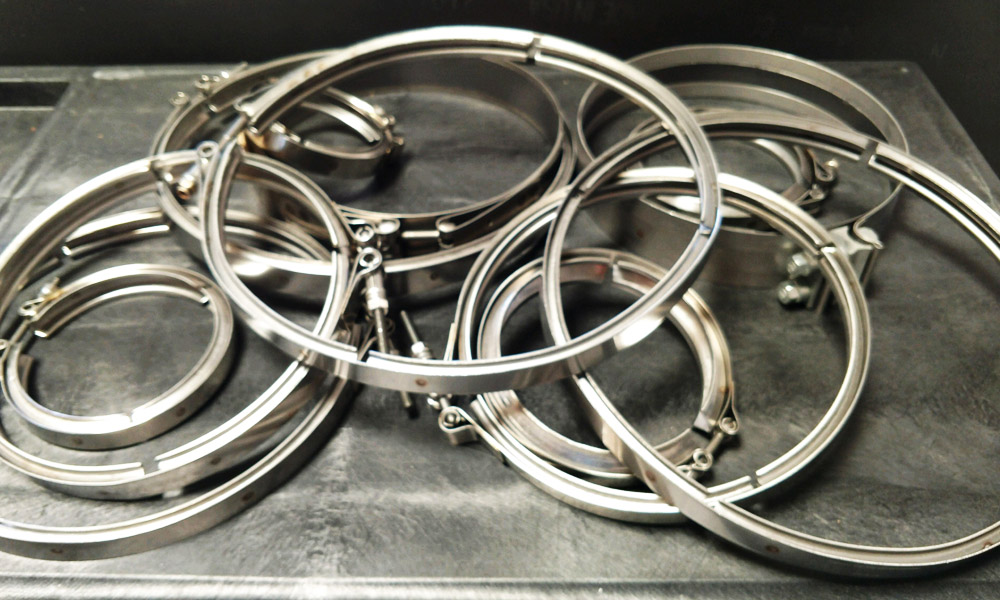
Not all clamps are created equal. When replacing a DPF filter clamp, here’s what to look for:
Material quality — Always opt for 304 or 316 stainless steel. These grades handle the temperature extremes of a diesel exhaust system without warping or corroding prematurely.
OEM spec compatibility — Match the clamp style, band width, and diameter to your vehicle’s original equipment specification. Mixing clamp types between the OEM flange design and an aftermarket clamp often results in sealing issues.
Torque specifications — Every clamp has a specified torque range. Going above this range doesn’t mean a better seal — it means a cracked band or a distorted flange. Going below means an air leak. Always use a torque wrench.
Brand reputation — Stick to established brands in the diesel aftermarket space. While it’s tempting to save a few dollars on a generic clamp from an online marketplace, the failure risk isn’t worth it on a component this critical.
If you’re unsure about compatibility for your specific truck or filter housing, our team at 30 Minute DPF Clean is happy to walk you through it. We’ve worked with every major diesel platform — from Cummins and Duramax to Detroit and Sprinter systems.
DPF Clamps and Your Cleaning Schedule
Here’s a practical tip that many diesel owners miss: whenever you have your DPF professionally cleaned, that’s the perfect time to have your clamps inspected and re-torqued. The filter comes out of the vehicle anyway, so there’s zero extra disassembly required.
Professional DPF cleaning services — like the hydraulic cleaning process we use here — already involve removing the filter, testing it before and after, and reinstalling it. A quick clamp inspection adds only minutes to the process but can catch problems before they become expensive. If you’re wondering what’s involved in professional cleaning versus DIY methods, our blog post on professional DPF cleaning vs. DIY methods is a great place to start.
And if you’re thinking about cost — professional DPF cleaning paired with clamp maintenance is still far cheaper than allowing a leak to cause repeated unnecessary regenerations, sensor damage, or a full filter replacement. To understand what these services typically cost, take a look at our detailed breakdown of DPF filter replacement costs.
Ready to Schedule Your DPF Service? Let’s Talk.
At 30 Minute DPF Clean, a filter cleaning is never just about the filter. Every service includes a full review of your DPF system — clamps included. We test airflow before and after cleaning, check hardware for wear or damage, and make sure everything is reinstalled correctly. You’re not just getting a clean filter; you’re getting a system that’s ready to perform.
Walk-ins are always welcome at our Clarksboro, NJ location, and we also offer pick-up and delivery within 30 miles to keep your schedule on track. Whether you’re a fleet manager trying to minimize downtime or an owner-operator keeping your rig in top shape, we’re here to make the process as smooth and fast as possible. Ready to get started? Contact us online and our team will get you booked in.
Frequently Asked Questions About DPF Filter Clamps
Q: How often should DPF filter clamps be replaced?
A: There’s no fixed interval, but they should be inspected every time your DPF is removed for cleaning — typically every 150,000–200,000 miles or annually for high-use commercial vehicles. If you see corrosion, cracking, or deformation, replace immediately.
Q: Can I drive with a loose DPF clamp?
A: Technically, yes — but you shouldn’t. A loose clamp allows exhaust gases to escape before passing through the filter, which can trigger fault codes, activate limp mode, and result in failed emissions tests. It also puts unnecessary stress on surrounding components.
Q: Are OEM DPF clamps better than aftermarket options?
A: OEM clamps are designed specifically for your vehicle’s flange geometry and heat tolerances, so they’re generally the safest choice. High-quality aftermarket clamps from reputable brands can work just as well if they meet OEM specifications.
Q: What happens if a DPF clamp breaks while driving?
A: If a clamp fails completely, the DPF can partially disconnect from the exhaust piping. This creates a loud exhaust leak, triggers multiple fault codes, and can allow the filter to move in ways that damage the housing or surrounding sensors. Pull over safely and have it towed if this happens.
Q: Can a bad clamp cause my DPF to clog faster?
A: Indirectly, yes. If an air leak causes your sensors to read incorrectly, your engine’s regeneration system may not activate at the right times — leading to excessive soot buildup in the filter.
