2026 IVF Procedure Success Rate in Andhra Pradesh
Author : Pooja gh | Published On : 27 Oct 2026
The first thing most couples do when they start researching IVF is look for success rates. That makes sense—you want to know your chances before you commit emotionally, physically, and financially to the process. But here's the part nobody explains clearly: The IVF procedure success rate in Andhra Pradesh you find on any website is an average. And averages hide everything that's actually relevant to your specific situation.
Your age. Your ovarian reserve. Your husband's sperm quality. How many previous attempts you've had. Whether the clinic uses blastocyst culture or stops at day 3. Whether the stimulation protocol is adjusted to how your body responds—or applied the same way to every patient regardless. At Srujana Multispeciality Hospital & IVF Centre in Kakinada, the conversation about success rate starts with your numbers — not a general figure.
What Is the IVF Procedure Success Rate in Andhra Pradesh at Srujana?
The IVF procedure success rate in Andhra Pradesh at Srujana Hospital varies by age and clinical profile — as it should. Here's what the data looks like honestly:
-
Women under 35 with good ovarian reserve and no major uterine concerns: 50%–65% per cycle
-
Women 35–40: approximately 30%–45% per cycle depending on reserve and response
-
Women above 40 using own eggs: 10%–25% per cycle; significantly higher with donor eggs
These aren't aspirational numbers. They're the realistic ranges that clinical experience across 21,784+ procedures produces when the team is honest about what the data shows.
What pushes your specific outcome toward the higher end of these ranges—or past them—is the combination of advanced technique and protocol personalization that Srujana applies to every cycle.
What Actually Determines Your IVF Success Rate in Andhra Pradesh?
The IVF success rate in Andhra Pradesh isn't a fixed number any clinic can hand you. It's a variable that shifts based on six things — and Srujana's clinical approach addresses every single one:
1. Ovarian reserve evaluation
Before stimulation begins, the team measures your AMH (Anti-Müllerian Hormone) and counts your antral follicles on ultrasound. This tells them exactly how your ovaries are likely to respond and how to design the stimulation protocol from the start — not adjust it mid-cycle when it's already too late.
2. Stimulation protocol personalisation
No two women respond identically to FSH injections. At Srujana, the dose, timing, and type of stimulation medication are adjusted based on your baseline profile and monitored closely during the cycle. What worked for the last patient may be completely wrong for you — and Srujana's team knows the difference.
3. ICSI for male factor
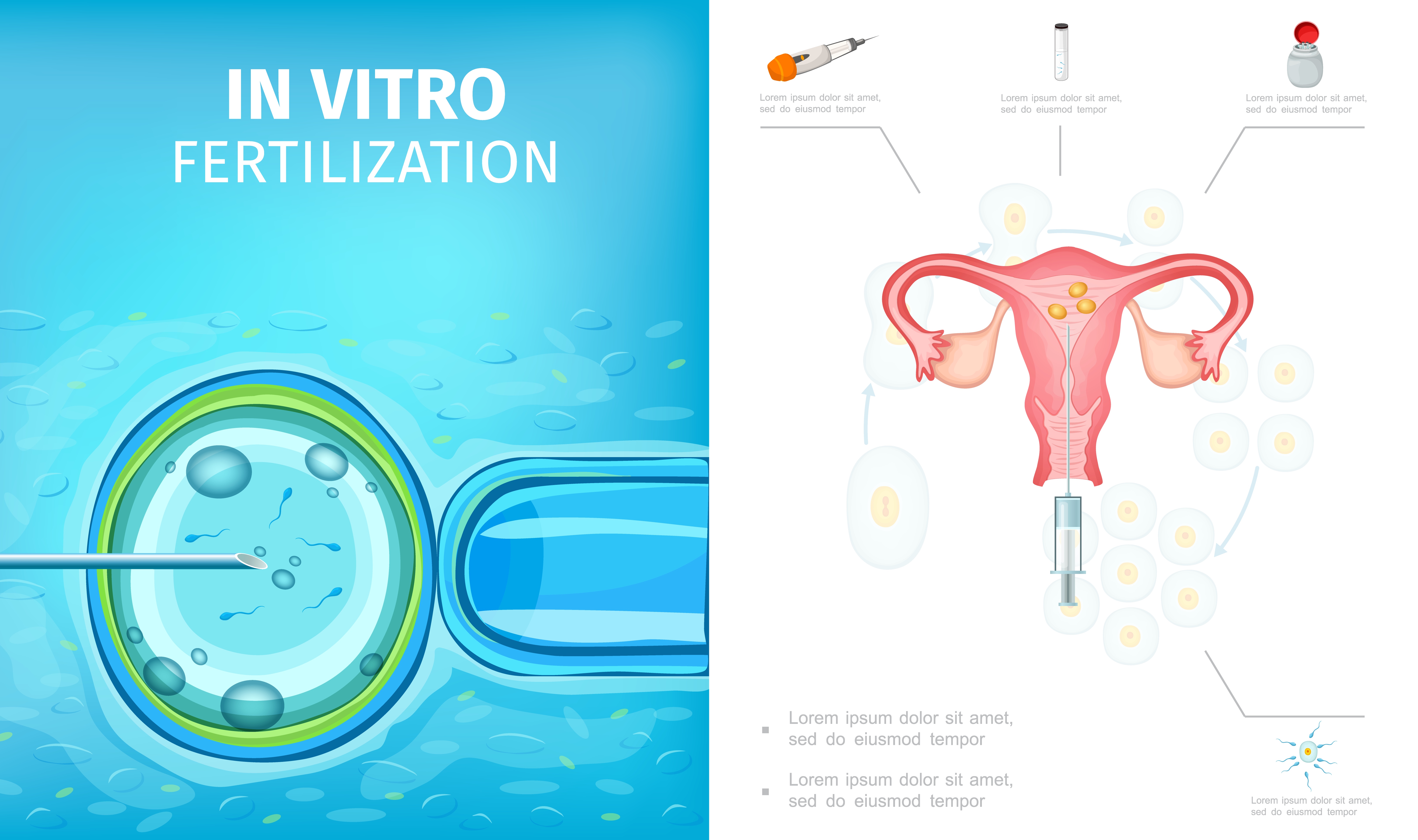
Where sperm count, motility, or morphology is below normal, ICSI — Intracytoplasmic Sperm Injection — injects a single selected sperm directly into each egg. The difference in fertilisation rate between standard IVF and ICSI for male factor cases is significant and well-documented. Srujana offers ICSI as a standard part of the cycle where indicated.
4. Blastocyst Culture
At Srujana, embryos can be cultured to Day 5 (blastocyst stage) rather than transferred at Day 3. The difference matters because only embryos with genuine developmental potential survive to blastocyst. Transferring a blastocyst means transferring an embryo that has already demonstrated its viability — and implantation rates are consistently higher as a result.
5. Uterine preparation
Before transfer, Srujana's team assesses endometrial thickness and quality, identifies any structural issues (fibroids, polyps, adhesions), and addresses them before proceeding. This step alone accounts for a significant number of failed cycles at clinics that skip thorough uterine evaluation.
6. Vitrification
When a fresh transfer isn't optimal — due to ovarian hyperstimulation, timing, or endometrial concerns — vitrification (advanced embryo freezing) at Srujana preserves high-quality embryos for a Frozen Embryo Transfer (FET) cycle. FET success rates at Srujana are strong because the technique is performed in-house with the same clinical attention as fresh cycles.
Why Cumulative Success Rate Matters More Than Single-Cycle Statistics
When couples ask about the IVF procedure success rate in Andhra Pradesh, they're usually asking about a single cycle. But fertility medicine doesn't work in single attempts for most people.
The cumulative success rate — meaning the probability of achieving pregnancy across two or three cycles — is a more meaningful number for most couples than any single-cycle figure. At Srujana, each cycle isn't treated as an isolated event. The response data from cycle one changes how cycle two is approached. The embryo quality from the fresh cycle determines whether a FET is the smarter next step than immediate re-stimulation.
This continuity of care — where the same team uses the information from every cycle to improve the next — is a fundamental reason why Srujana's outcomes hold up across multiple attempts in a way that clinics without this institutional depth cannot replicate.
Conclusion
The IVF procedure success rate in Andhra Pradesh that matters isn't the one on any website. It's the one that applies to you—your age, your reserve, your specific diagnosis—discussed honestly with a team that has the clinical depth to give you a real answer.
The first step is a consultation — without pressure to commit to anything before you're ready. Book Your Consultation With Dr. Ananthalakshmi Satyavati Athaluri today.
Frequently Asked Questions
1. What is the IVF procedure success rate in Andhra Pradesh for a first attempt?
For a first attempt at Srujana Hospital, the IVF procedure success rate in Andhra Pradesh for women under 35 with good ovarian reserve typically falls between 50% and 65% per cycle. The rate varies significantly based on age, ovarian reserve, sperm quality, and whether ICSI and blastocyst culture are used. Your personal probability is discussed during consultation—not averaged from general statistics.
2. Does the IVF success rate in Andhra Pradesh improve with multiple cycles?
Yes. The cumulative IVF success rate in Andhra Pradesh across two to three cycles at Srujana is meaningfully higher than any single-cycle figure. Each cycle provides data that improves the protocol for the next attempt — meaning your chances improve as the team learns more about how your body responds. Most couples who achieve pregnancy at Srujana do so within three cycles.
3. How do I find out my personal IVF success probability at Srujana?
Book a consultation at Srujana Hospital. The appointment includes a complete fertility workup — hormone panel, ultrasound assessment, semen analysis, and uterine evaluation — and gives you a personalised success probability based on your actual clinical profile. No averages. No guesswork. Just your numbers, explained clearly by Dr. Ananthalakshmi's team.
